Alumina Ceramic Plunger Overview
Our premium Alumina Ceramic Plunger (also referred to as a ceramic piston pump core) is engineered for extreme durability in high-pressure environments. Designed to replace traditional metal components, this product significantly extends the service life of fluid handling equipment.
Unlike standard metal options, a high-purity Alumina Ceramic Plunger offers superior resistance to corrosion, high temperatures, and abrasive wear. Whether you need a standard size or a custom-machined assembly with stainless steel fittings, we provide precision solutions tailored to your technical requirements.
Why Choose an Alumina Ceramic Plunger?
Industrial applications demand materials that can withstand harsh conditions. Our ceramic solutions address common failure points:
-
Extreme Hardness: With a Mohs hardness of 9, Alumina is second only to diamond. This ensures the plunger resists abrasion from slurries.
-
Superior Surface Finish: We achieve a surface roughness of رع < 0.1ميكرومتر. A smooth surface minimizes friction and seal wear.
-
Chemical Stability: For detailed chemical properties of Aluminum Oxide, you can reference the properties of Aluminium oxide on Wikipedia.
Material Options: Alumina vs. زركونيا
We offer two primary advanced ceramic materials tailored to your specific operating conditions.
1. High-Purity Alumina (Al2O3)
-
Best for: General high-pressure pumps, cleaning equipment, and chemical metering.
-
Key Feature: Excellent cost-to-performance ratio, high hardness, and superior thermal conductivity.
-
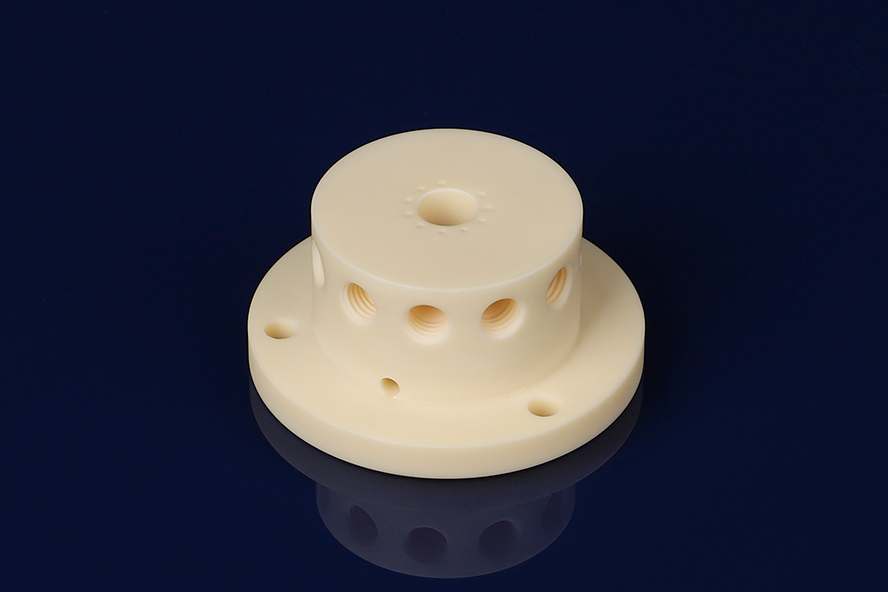
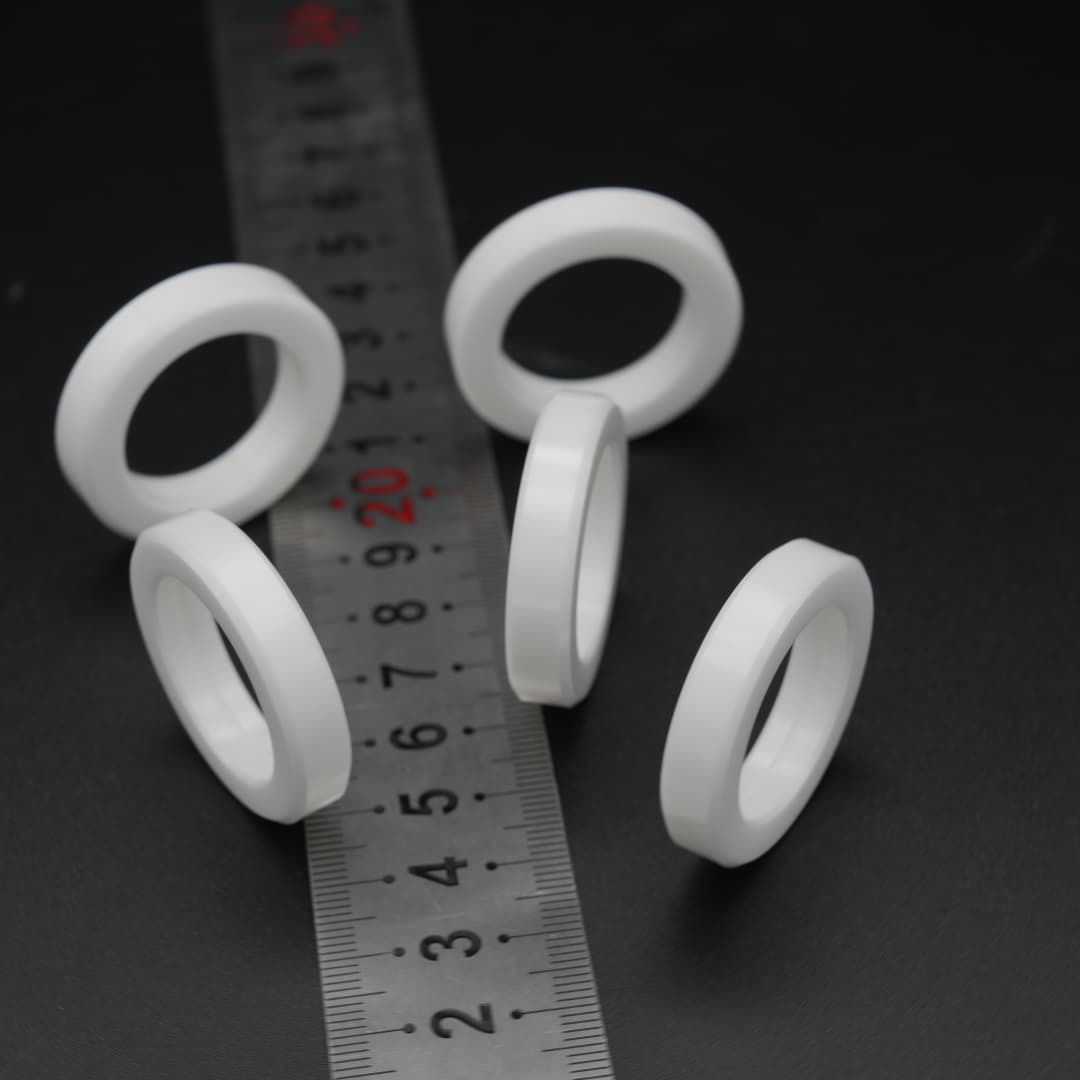
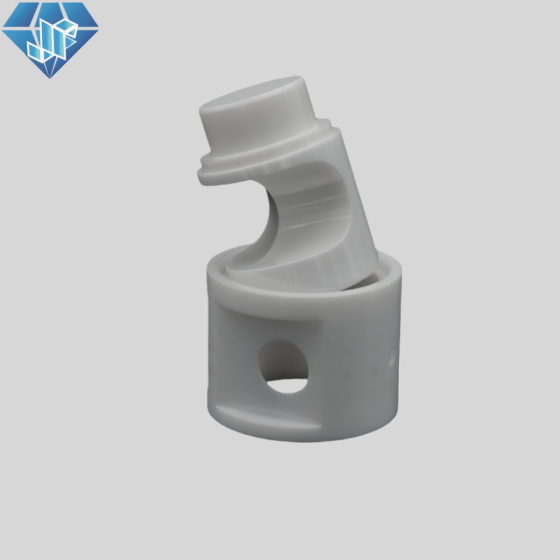
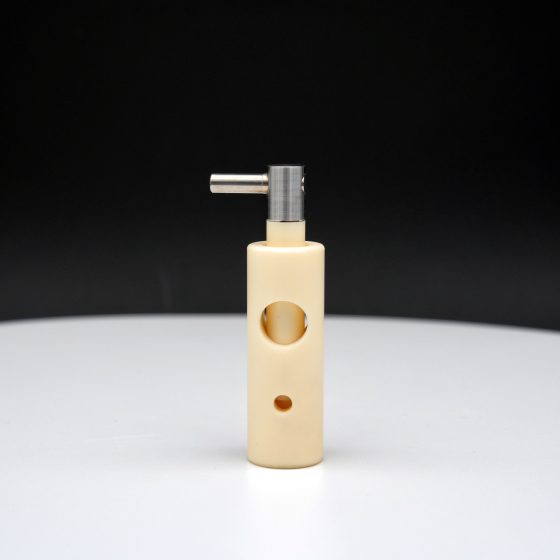
Color: Ivory / White (As shown in product photos).
2. زركونيا (ZrO2)
Detailed Specifications
| Property |
Unit |
99.5% الألومينا (Al2O3) |
زركونيا (ZrO2) |
| كثافة |
g/cm³ |
3.92 |
6.05 |
| Vickers Hardness |
المعدل التراكمي |
16.5 |
12.5 |
| Flexural Strength |
MPa |
350 |
900 – 1200 |
| Surface Finish (Polished) |
رع (ميكرومتر) |
< 0.2 |
< 0.1 |
| Max Working Temp |
درجة مئوية |
1600 |
1000 |
| Corrosion Resistance |
– |
Excellent (Acid/Alkali) |
Excellent |
Manufacturing & Assembly Technology
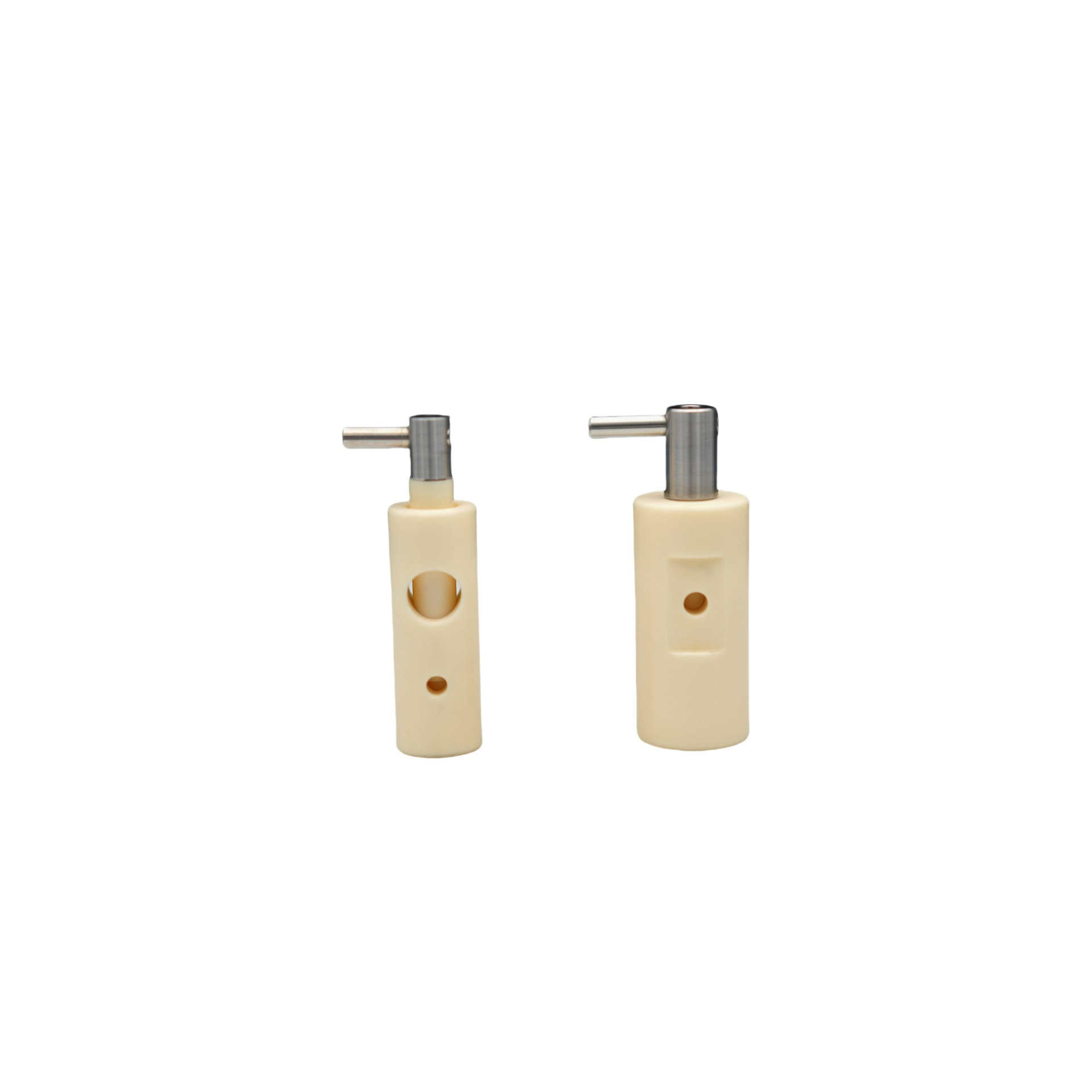
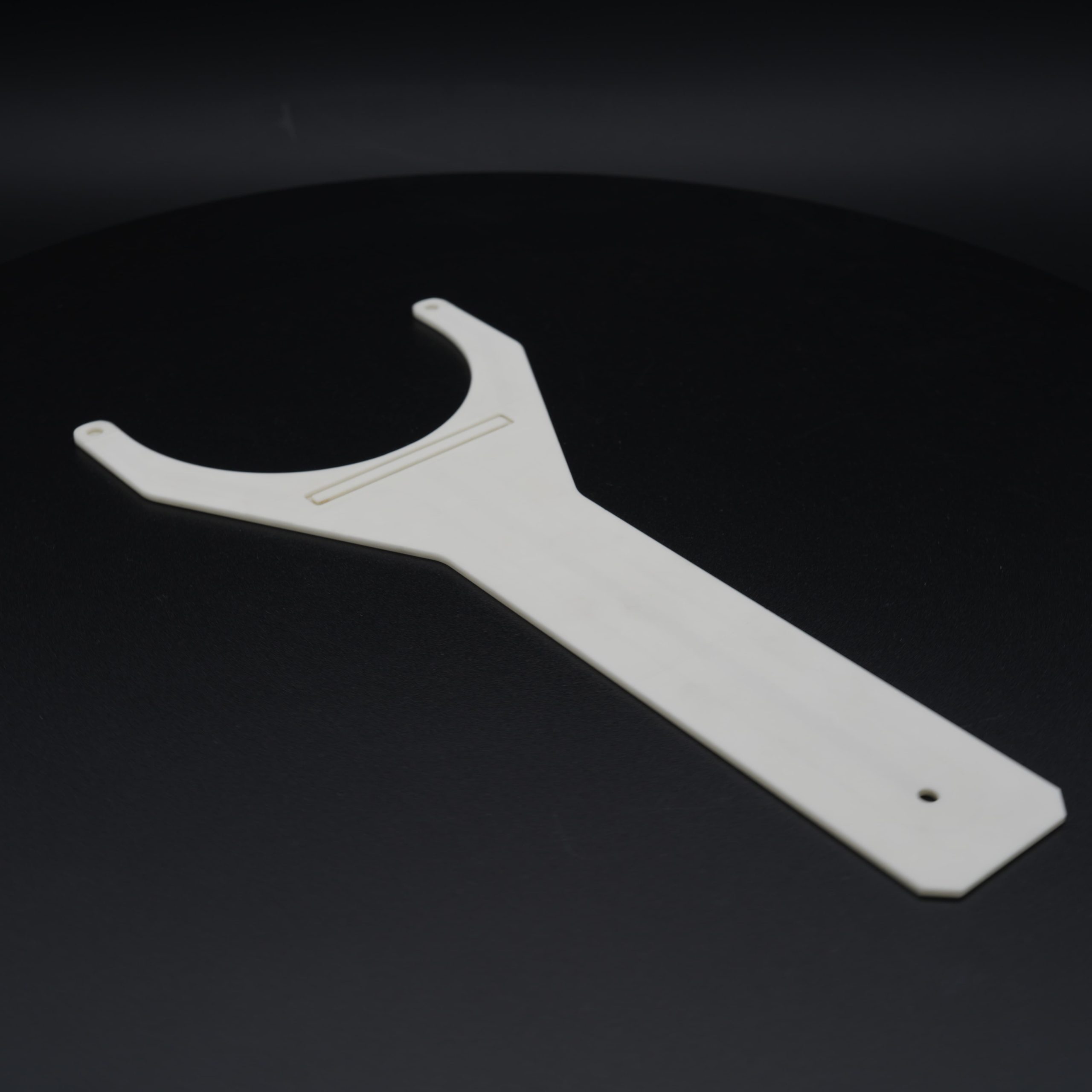
The images above display our capability to provide complete plunger assemblies. We don’t just supply the ceramic rod; we handle the critical interface between the ceramic and the metal.
-
Precision Machining: CNC grinding ensures tight tolerances on outer diameter (OD) and concentricity (up to ±0.005mm).
-
Robust Bonding: We use advanced interference fit or adhesive bonding technologies to secure Stainless Steel (304/316) adaptors to the ceramic body. This ensures the connection withstands high tensile forces and torque without separating.
-
Custom Features: We can machine complex geometries including grooves, cross-holes, and chamfers as seen in the product gallery.
Typical Applications
Our ceramic piston cores are widely used in:
-
High-Pressure Cleaning: Plunger pumps for car washes and industrial descaling.
-
Chemical Dosing: Metering pumps for injecting harsh chemicals.
-
Oil & Gas: Injection pumps handling abrasive drilling fluids.
-
طبي & Food: Filling machines requiring zero metal contamination.
Frequently Asked Questions (FAQ)
س: Can you manufacture the plunger based on my drawing?
أ: Yes, we specialize in OEM/ODM services. Please send us your technical drawing (PDF/STEP format) indicating tolerances and material requirements.
س: How do you ensure the metal part doesn’t detach from the ceramic?
أ: We use a proprietary thermal fitting process and high-strength industrial epoxy designed for dynamic loads, ensuring the assembly remains integral under high pressure.
س: What is the lead time for a custom ceramic plunger?
أ: Typically 25-30 days for tooling and production, depending on the complexity and quantity.
س: Do you offer samples for testing?
أ: Yes, we can provide prototype samples for validation before mass production.
Ready to Optimize Your Pump Performance?
Don’t let equipment downtime cost you money. Switch to our advanced ceramic plungers for extended life and reliability.
[Contact Our Engineering Team for a Quote]
1. Executive Summary: The Material Revolution in Precision Fluid Control
In global high-end manufacturing—specifically within the Pharmaceutical, Lithium-ion Battery, و أشباه الموصلات sectors—the demand for fluid control precision is undergoing an exponential shift. Traditional metal metering pump components (such as 316L Stainless Steel, Hastelloy, and even Tungsten Carbide) are increasingly revealing performance bottlenecks when facing severe chemical corrosion, sub-micron tolerance requirements, and zero-metallic-ion contamination standards.
This report serves as a comprehensive technical guide on الألومينا (آل₂O₃) و زركونيا (زرو₂) Ceramic Plungers and Pistons for global procurement managers, ر&D engineers, and production supervisors. We deeply analyze how these advanced ceramic materials—through their superior tribological properties, chemical inertness, and thermal stability—resolve critical industrial pain points, such as "pump seizing" in lithium battery electrolyte injection, particulate shedding in pharmaceutical filling, and thermal shock failure during CIP/SIP processes.
This report specifically incorporates proprietary manufacturing data from Chongqing Jifeng Technology Co., المحدودة. As an advanced ceramic manufacturer with "Full Supply Chain" capabilities, Jifeng Technology masters everything from nano-powder synthesis to final forming, utilizing world-class equipment like the Swedish Quintus Hot Isostatic Pressing (HIP) furnace to achieve theoretical density and zero-defect surface quality.
By benchmarking against global competitors (على سبيل المثال, Hibar, Neoceram, Innovacera), this report elucidates why ceramic plungers manufactured via Isostatic Pressing and nano-level finishing have become the only reliable choice for high-precision fluid metering systems.
2. Core Material Science: Microstructure Determines Performance
The performance limit of a ceramic plunger is not defined merely by machining precision, but is locked in by the material's microscopic crystal structure. Understanding the physicochemical nature of Alumina and Zirconia is the first step in correct selection.
2.1 High-Purity Alumina ($Al_2O_3$): The Cornerstone of Industrial Standards
In the ceramic pump core sector, Alumina with a purity of 99.5% or higher (often referred to as "995" أو "999" ceramic) dominates the market. Its primary advantage lies in the perfect balance between hardness and thermal conductivity.
2.1.1 Crystal Structure & Hardness Mechanism
High-purity alumina ceramics are primarily composed of $alpha$-phase alumina (اكسيد الالمونيوم), featuring a hexagonal close-packed lattice structure. This structure endows the material with extremely high bond energy, resulting in a Vickers Hardness (الجهد العالي) of typically 1600-2000 الجهد العالي—roughly 8 ل 10 times that of 316L Stainless Steel (~200 HV).
-
Impact on Wear Resistance: In high-speed reciprocating motion of valveless pumps (up to 500-1000 strokes/min), Alumina's high hardness ensures that surface abrasion or scoring does not occur even in "dry run" critical states. This directly guarantees that pump metering accuracy remains within ±0.5% even after millions of cycles.
-
كثافة & Porosity: Jifeng Technology's Alumina plungers achieve a density of 3.8-3.95 g/cm³. Utilizing Cold Isostatic Pressing (CIP), density gradients caused by uniaxial pressing are eliminated, resulting in a near-zero porosity structure after sintering. This is critical for preventing liquid permeation and cross-contamination.
2.1.2 Friction Heat Management & الموصلية الحرارية
Alumina possesses a thermal conductivity of approximately 30 W/(m·K), which is relatively high for ceramic materials.
-
Anti-Seizing Principle: In precision-fit pump systems (clearance <5 microns), high-speed friction generates significant heat. If not dissipated, localized temperature spikes can cause the inner plunger to expand and seize within the sleeve. Alumina's superior thermal conductivity allows rapid heat transfer to the fluid or pump housing, significantly mitigating the risk of thermal seizing. This is why Alumina is often preferred over lower-conductivity materials in high-speed Rotary Valve Pump applications.
2.2 Yttria-Stabilized Zirconia ($Y-TZP$): The Pinnacle of Toughness & Surface Quality
When applications involve high mechanical shock, extreme surface finish requirements, or specific tribological matching, زركونيا (specifically 3mol% Yttria-Stabilized Tetragonal Zirconia Polycrystal, 3Y-TZP) becomes the material of choice.
2.2.1 Transformation Toughening Mechanism
Zirconia is often termed "Ceramic Steel" due to its unique phase transformation toughening effect. When the material is subjected to external stress (such as the stress field at a crack tip), the metastable tetragonal phase (t-phase) transforms into the monoclinic phase (m-phase), accompanied by a 3-5% volume expansion. This expansion creates a compressive stress zone at the crack tip, effectively clamping the crack shut and arresting its propagation.
-
Fracture Toughness: Zirconia's Fracture Toughness ($K_{IC}$) reaches 8-12 MPa·m$^{1/2}$, more than double that of Alumina (3-5 MPa·m$^{1/2}$). This means Zirconia plungers are far less likely to suffer catastrophic brittle failure during installation, disassembly, or accidental impact, greatly reducing maintenance risks.
2.2.2 Nano-Grains & Mirror Polishing
Jifeng Technology utilizes proprietary synthesized nano-grade Zirconia powder (particle size 50-100nm) combined with HIP sintering to control grain size at the sub-micron level.
-
Surface Finish: The fine grain structure allows Zirconia to be machined to an exceptional finish (Ra ≤ 0.05 ميكرومتر, often reaching 0.02 μm super-mirror grade). This jade-like, ultra-smooth surface exhibits an extremely low coefficient of friction (self-lubricating properties). When handling high-viscosity fluids (glues, pastes) or fluids prone to crystallization (battery electrolytes), this finish prevents material adhesion and crystal nucleation, effectively preventing pump seizure.
2.3 Material Selection Guide: Al₂O₃ vs. زرو₂
| Feature |
99.9% الألومينا (Al2O3) |
زركونيا (Y−TZP) |
Procurement Advice |
| كثافة (g/cm³) |
3.9 |
6.05 |
Zirconia is heavier; provides a premium feel but has higher inertia in high-speed reciprocation. |
| صلابة (الجهد العالي) |
1,800 - 2,000 |
1,200 - 1,300 |
Alumina is harder and more resistant to abrasive wear; Zirconia is excellent but slightly softer. |
| Fracture Toughness ($K_{IC}$) |
3.5 - 4.5 |
8.0 - 12.0 |
Choose Zirconia for environments with risk of impact or breakage. |
| الموصلية الحرارية |
~30 W/(m·K) |
~2.5 W/(m·K) |
Choose Alumina for high-speed friction where heat dissipation is critical. |
| Thermal Expansion ($10^{-6}$/K) |
8.0 |
10.5 |
Zirconia's expansion is closer to steel, making it suitable for metal interference fits. |
| Corrosion Resistance |
Excellent (except HF) |
Excellent (may age in strong acids) |
General chemical compatibility is high; Alumina is slightly superior in extreme corrosive environments. |
| Surface Finish Potential |
Excellent (رع 0.1) |
Superb (رع 0.02) |
Choose Zirconia for ultra-cleanliness and anti-sticking requirements. |
3. Full Supply Chain Manufacturing: Jifeng Technology's Competitive Edge
In B2B procurement, comparing datasheet parameters is insufficient. Quality consistency depends entirely on process control. Jifeng Technology demonstrates vertical integration from powder to finished product, establishing a significant E-E-A-T barrier.
3.1 Powder Preparation: Source Control
Most ceramic machine shops purchase ready-made powder or blanks, leaving batch stability out of their control. Jifeng possesses an in-house powder synthesis line capable of producing >99.9% purity nano-grade Alumina and Zirconia powders.
-
Particle Size Control: Precise control of the D50 particle size distribution ensures uniform shrinkage during sintering and minimizes internal stress.
-
Additive Modification: Specific trace elements (على سبيل المثال, MgO to inhibit abnormal grain growth in Alumina) can be doped at the powder stage to customize material performance, such as enhancing wear resistance or adjusting color (Ivory vs. Pure White).
3.2 Forming Process: The Necessity of Cold Isostatic Pressing (CIP)
For plunger components with high aspect ratios requiring extreme straightness, traditional Dry Pressing can create density gradients, leading to warping ("banana effect") after sintering.
-
Jifeng Solution: Utilization of Cold Isostatic Pressing (CIP). Powder is placed in a flexible mold and subjected to uniform ultra-high pressure (>200 MPa) from all directions via a liquid medium. The resulting green body has uniform density throughout, ensuring uniform shrinkage during sintering and guaranteeing straightness and structural homogeneity for long-shaft parts.
3.3 Sintering & Densification: The HIP Advantage
Sintering transforms powder into a solid ceramic. Jifeng Technology has introduced the Hot Isostatic Pressing (HIP) furnace from Quintus Technologies (Sweden), the industry's gold standard.
-
Process Advantage: Sintering at temperatures up to 2000°C while simultaneously applying 200 MPa of gas pressure. This pressure forces any residual microscopic pores within the ceramic to close, achieving near 100% theoretical density.
-
Product Impact: HIP-treated plungers show zero "pitting" or voids after precision grinding. In the pharmaceutical industry, even microscopic pits can harbor bacteria or drug residue. HIP eliminates this risk, ensuring the highest sanitary standards.
3.4 Ultra-Precision Machining: The Art of Microns
Ceramics are extremely hard and brittle, making machining difficult. Jifeng utilizes imported high-precision CNC internal/external cylindrical grinders (comparable to Studer class) to achieve micron-level precision.
-
Dimensional Tolerance: Outer diameter tolerance controlled within ±0.001mm (1 micron).
-
Geometric Tolerance: Cylindricity and Roundness reach 0.002مم. This is vital for valveless pumps, which rely entirely on the microscopic gap (2-5 microns) between the plunger and liner for sealing, without any rubber O-rings.
-
Surface Treatment: Multi-stage grinding and polishing achieve Ra 0.1μm or better, drastically reducing friction coefficients and extending service life.
4. Product Design & Structure Analysis (Image Based)
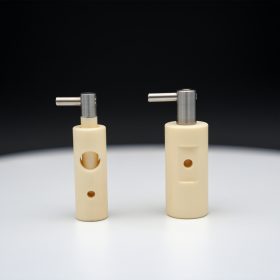
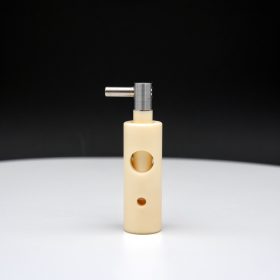
The images provided (Image 1, 2, 3) depict typical Valveless Ceramic Rotary Piston Pump components.
4.1 Structural Feature Analysis
-
Ceramic Piston/Plunger: The white cylindrical rod. The head features a distinct Cut/Flat design. This is the hallmark of a rotary valve pump.
-
Working Principle: The plunger rotates while reciprocating. The cut on the head acts as a switch, aligning with the inlet during the intake stroke and rotating to align with the outlet during the discharge stroke. This design eliminates traditional check valves (balls/springs), removing the risk of valve clogging or spring fatigue.
-
Ceramic Liner/Sleeve: The outer white ceramic cylinder with side ports (Inlet/Outlet). The images show precision milling on the side for orientation/mounting.
-
Metal Stem: The stainless steel component connected to the tail of the plunger, featuring a drive pin.
-
Joining Technology: Connecting ceramic to metal is a technical challenge. Jifeng uses interference fit, high-strength bonding, or mechanical locking to ensure the joint handles high-speed torque without loosening, while maintaining perfect concentricity.
4.2 Standard Series Specifications (TA/TB/TC/TD)
The industry typically categorizes pumps by dispense volume, often corresponding to international standards (like Hibar) :
-
TA Series (Micro Volume): Range 0.1ml - 2ml (down to 0.02ml). Used for high-potency drugs, reagent dosing. Requires extreme gap control (<3ميكرومتر).
-
TB Series (Small Volume): Range 2ml - 20ml. The most common type for vials, ampoules, eye drops.
-
TC Series (Medium Volume): Range 20ml - 100ml. Used for syrups, oral liquids, cosmetic lotions.
-
TD Series (Large Volume): Range 100ml - 500ml+. Used for IV bags, shampoos, food pastes.
4.3 Customization Capabilities
Beyond standard models, Jifeng offers non-standard customization based on customer drawings.
-
Slot Design: Custom fluid path geometries.
-
Dimensions: OD from 2mm to >50مم; Lengths up to hundreds of mm.
-
Material Pairing: Alumina Piston + Alumina Liner, or Zirconia Piston + Alumina Liner (heterogeneous pairing can sometimes reduce friction).
5. Deep Dive: Critical Application Scenarios
5.1 Lithium Battery Electrolyte Injection: Solving "Pump Seizing"
Electrolyte injection is a core process in Li-ion battery manufacturing. Electrolytes contain Lithium Hexafluorophosphate (LiPF₆), which decomposes upon contact with moisture to form Hydrofluoric Acid (HF) and Lithium Fluoride (LiF) precipitates.
5.2 Pharmaceutical Aseptic Filling: GMP & FDA Compliance
For vaccines, antibodies, and insulin, filling pumps must meet stringent hygiene standards.
6. Competitive Analysis: Jifeng vs. Global Market
| Dimension |
Traditional Ceramic Shop |
Global Brands (Hibar, Neoceram) |
Jifeng Technology |
| Raw Material |
Outsourced powder, variable quality |
Global top-tier sourcing |
In-house Powder Synthesis, source control of purity & formula 1
|
| Forming |
Dry Pressing (density gradients) |
Isostatic Pressing |
Cold Isostatic Pressing (CIP) for homogeneity |
| Sintering |
Standard Kilns |
Specialized Kilns |
Swedish Quintus HIP, eliminating micro-pores |
| Precision |
5-10 microns |
1-2 microns |
1-2 microns (µm), matching top global standards |
| App. Knowledge |
Just a machine shop |
Deep application know-how |
Japanese Lab & ر&D Team, مادة + application solutions 1
|
| Lead Time |
Fast |
Very Long (Months) |
Flexible & Efficient, rapid response to custom needs |
| Cost |
Low |
عالي (Brand Premium) |
High Value, International quality at competitive pricing |
7.Appendix: Technical Data Sheet (TDS)
| Parameter |
Unit |
99.5% الألومينا |
99.9% الألومينا |
Y-TZP Zirconia |
| Main Component |
- |
α−Al₂O₃ |
α−Al₂O₃ |
ZrO₂+Y₂O₃ |
| Color |
- |
Ivory |
Pure White |
White |
| كثافة |
g/cm³ |
≥3.85 |
≥3.90 |
≥6.00 |
| Vickers Hardness |
المعدل التراكمي |
16 - 18 |
18 - 20 |
12 - 13 |
| Fracture Toughness |
MPa⋅m¹/² |
3.5 - 4.0 |
4.0 - 5.0 |
8.0 - 12.0 |
| Flexural Strength |
MPa |
350 |
400 |
> 1000 |
| Max Use Temp |
درجة مئوية |
1600 |
1700 |
1000 |
| الموصلية الحرارية |
W/(m⋅K) |
25 - 30 |
30 - 35 |
< 3.0 |
| Machining Tolerance |
مم |
±0.001 |
±0.001 |
±0.001 |
| خشونة السطح |
ميكرومتر(رع) |
0.1 - 0.2 |
0.1 |
< 0.05 |
| Key Application |
- |
General Chemical, High Temp |
High-end Metering, Semi |
Pharma, Battery, Impact |
Contact Information: Chongqing Jifeng Technology Co., المحدودة. عنوان: No. 62 Sanxi Road, Qinggang Street, منطقة بيشان, Chongqing, China Focus: Advanced Ceramic R&د, Manufacturing, Precision Machining, and Fluid Control Solutions.
 جيفينج سيراميك