 Céramique JiFeng

Lorsque des gaz de combustion à haute température heurtent des canalisations industrielles à 900 °C, et les liquides corrosifs parcourent les équipements chimiques à des vitesses de 3 MS, quel type de matériau peut résister au triple défi de la chaleur extrême, haute pression, et corrosion chimique?
The answer lies in a material that appears fragile yet possesses hardness second only to diamond: porous silicon carbide (SiC) céramique.
In this article, we specifically explore how this “industrial armor” achieves an exceptional balance between mechanical strength and filtration performance, even with porosities exceeding 50%.
Overview of Silicon Carbide Ceramics
Silicon carbide ceramics rank among the most advanced engineering ceramics available today. Notably, with hardness levels second only to diamond, SiC exhibits:
-
Low thermal expansion coefficient
-
High thermal conductivity
-
Excellent chemical stability
-
Outstanding wear resistance
-
Strong mechanical properties at elevated temperatures
-
Superior oxidation resistance
Consequently, these properties make silicon carbide one of the most promising structural ceramic materials. Industries currently utilize them extensively in petrochemical processing, metallurgy, mechanical engineering, microelectronics, and aerospace applications.
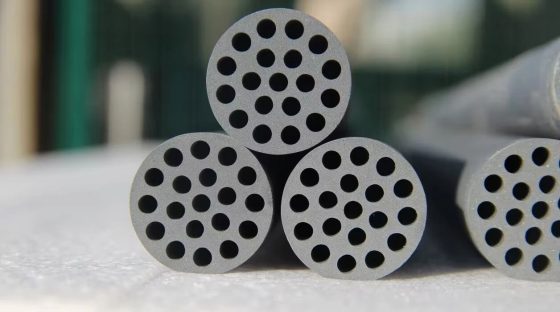
Unique Properties of Porous Silicon Carbide Ceramics
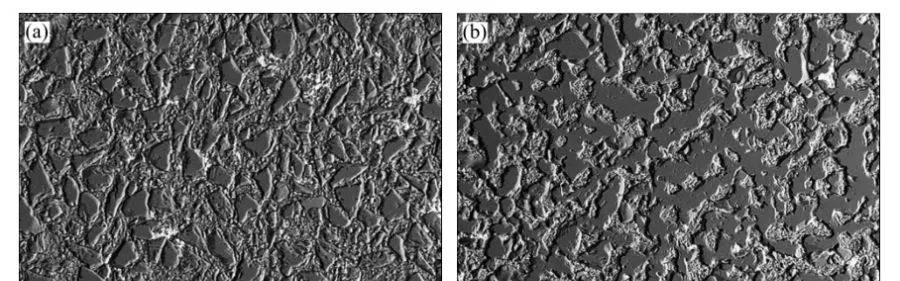
The exceptional performance of porous SiC ceramics originates from their engineered pore structures. Specifically, precise control over porosity, pore size, pore distribution, and pore morphology allows engineers to optimize the material for specific industrial challenges.
1. Pore Characteristics
-
Porosity: Porosity refers to the percentage of pore volume relative to the total material volume. This includes open pores, semi-open pores, and closed pores. Research indicates that porosity acts as a primary factor governing the overall performance of porous materials.
-
Pore Morphology: Pore morphology describes the shape and orientation of pores. For instance, materials with equiaxed pores exhibit isotropic properties. In contrast, elongated or directional pores—such as those derived from carbonized wood templates—demonstrate anisotropic behavior.
-
Pore Size and Distribution:
-
Microporous: < 2 nm
-
Mesoporous: 2–50 nm
-
Macroporous: > 50 nm Furthermore, pore size and distribution significantly influence permeability, flow rate, and filtration efficiency.
-
Image Optimization Note:
Alt Text: Microstructure comparison of reticulated porous SiC ceramics showing different pore sizes.
Caption: Reticulated porous SiC ceramics prepared by different processes.
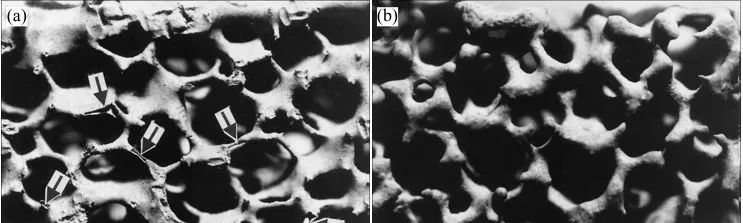
Reticulated porous SiC ceramics prepared by different processes
2. Propriétés mécaniques
Since porous SiC ceramics exhibit inherent brittleness, engineers typically evaluate their mechanical performance using flexural strength or compressive strength. Crucially, both the degree of porosity and the specific fabrication method have a pronounced impact on mechanical behavior.
3. Conductivité thermique
Porosity and pore morphology strongly affect thermal conductivity. Generally, for materials with uniformly distributed pores, increasing porosity leads to reduced thermal conductivity. However, variations in pore geometry arising from different fabrication processes result in complex heat transfer mechanisms.
Fabrication Methods of Porous SiC Ceramics
Manufacturers fabricate porous silicon carbide ceramics using either physical methods or chemical methods, depending on how they form the pore structure.
I. Physical Methods
Physical methods rely on physical phenomena—such as particle packing, phase evaporation, or sublimation—without introducing new chemical reactions.
1. Particle Packing Method This technique stands out as one of the simplest fabrication processes. It involves sintering SiC particles together, forming necks between particles and leaving interparticle voids as pores. By adjusting particle size, binder type, and sintering parameters, technicians can effectively control porosity.
-
Advantages: Simple process; no pore-forming agents required.
-
Limitations: Typically yields low porosity; limited control over pore shape.
2. Freeze-Drying Method First, operators rapidly freeze a slurry composed of ceramic powders, binders, and solvents. Then, sublimation removes the frozen solvent under vacuum. As a result, this process creates directionally aligned pore structures, which sintering then consolidates.
3. 3D Printing Method Additive manufacturing enables the direct fabrication of complex porous SiC structures based on digital models. When combined with reaction sintering, 3D printing allows for near-net-shape production without molds.
-
Advantages: High design freedom; uniform microstructure; controllable porosity.
-
Challenges: Higher cost; difficulty achieving high strength in a single step.
4. Foaming Method Manufacturers introduce gas or gas-generating agents into ceramic precursors. Subsequently, this produces pores during heat treatment. This method proves particularly effective for manufacturing closed-cell porous ceramics.
II. Chemical Methods
Chemical methods create pores through decomposition or reactions of added substances, intentionally leaving voids within the ceramic matrix.
1. Organic Foam Impregnation In this process, technicians coat ceramic slurry onto organic foam templates. Après séchage, high-temperature firing burns off the organic template, leaving behind a porous ceramic structure.
-
Limitations: Difficult to produce small closed pores; mechanical properties remain hard to control.
2. Pore-Forming Agent Method We mix pore-forming agents—such as polymers, salts, liquids, or powders—with SiC powders. Later, thermal decomposition or leaching removes these agents, enabling precise control of porosity and pore size distribution.
3. Bio-Template Method This method utilizes natural biological materials with unique pore structures as templates. After carbonization and silicon infiltration, we obtain porous SiC ceramics that replicate biological architectures.
Applications of Porous Silicon Carbide Ceramics
1. Filtration Materials
-
High-Temperature Metal Melt Filtration: Foundries widely use porous SiC filters in iron and aluminum melt filtration. This is due to their high refractoriness (>1700 °C) and excellent wettability with molten metals.
-
Gas Filtration: Porous SiC ceramics offer low pressure drop, excellent thermal shock resistance, and high filtration efficiency. Therefore, they serve as ideal materials for diesel particulate filters (DPF) and industrial exhaust treatment.
Image Optimization Note:
Alt Text: Diesel particulate filter (DPF) made of porous silicon carbide next to a cross-section microscope view.
Caption: Macroscopic image of a diesel particulate filter and the morphology of a porous SiC cross-section.
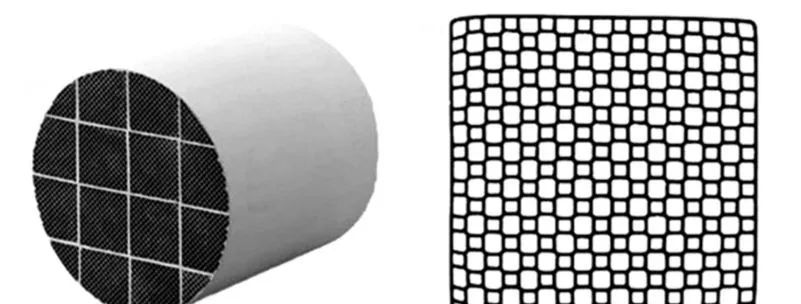
Macroscopic image of a diesel particulate filter and the morphology of a porous SiC cross-section.
2. Catalyst Supports
With high porosity, excellent thermal conductivity, and chemical resistance, porous SiC ceramics provide large surface areas. Consequently, they facilitate rapid heat transfer, significantly enhancing catalytic reaction efficiency.
3. Acoustic and Electromagnetic Absorption Materials
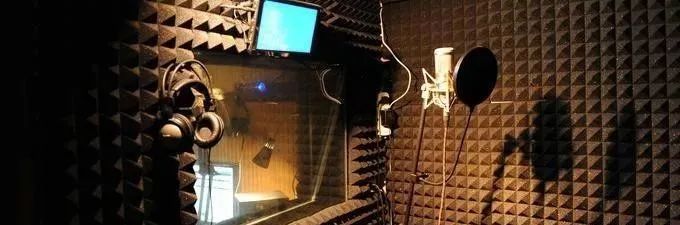
Interconnected pore structures dissipate sound energy through viscous and damping effects. En outre, porous SiC exhibits promising microwave absorption properties, making it a potential electromagnetic shielding material.
4. Biomedical Materials
Due to adjustable porosity, interconnected pore networks, and good biocompatibility, porous SiC ceramics stand out as promising candidates for bone tissue scaffolds and biomedical implants.
5. Thermal Engineering Materials
Engineers use porous SiC ceramics as thermal insulation materials (closed pores) and heat exchangers. Specifically, these applications benefit from the material’s high surface area, stabilité thermique, et résistance à la corrosion.
6. Reinforcement Skeletons for Composite Materials
Three-dimensional continuous porous SiC skeletons significantly enhance the mechanical and thermal performance of metal matrix composites, especially when compared to powder-based reinforcements.
Frequently Asked Questions (FAQ)
Q1: What is the maximum operating temperature for porous SiC ceramics? Porous SiC ceramics can typically withstand temperatures up to 1650°C in oxidizing atmospheres and even higher in inert atmospheres, making them superior for high-heat filtration and kiln furniture.
Q2: Can you customize the pore size for specific filtration requirements? Oui. By adjusting the particle size of the raw material and the type of pore-forming agents, we can precisely engineer pore sizes ranging from nanometers (mesoporous) to millimeters (macroporous) to meet your specific flow rate and filtration efficiency needs.
Q3: How does porous SiC compare to alumina ceramics? While alumina is cost-effective, porous SiC offers significantly better thermal shock resistance, higher thermal conductivity, and superior hardness. This makes SiC the preferred choice for environments with rapid temperature changes or extreme abrasion.
Conclusion
From precision filtration in electronics to thermal protection in aerospace systems, porous silicon carbide ceramics are redefining industrial boundaries through their unique combination of strength and permeability. Looking ahead, with ongoing advances in 3D printing and microstructural control, porous SiC ceramics are poised to play a critical role in the carbon-neutral industrial era.
As global research progresses, optimizing pore architecture and fabrication techniques will remain key to unlocking the full performance potential of this material.
Ready to upgrade your thermal or filtration systems? For technical datasheets (ASTM standards), samples, or custom solutions, contact our engineering team today. We guarantee a reply within 24 hours.