 Céramique JiFeng
Matériaux céramiques avancés – Propriétés, Types et applications industrielles
Matériaux céramiques avancés, également appelés céramiques techniques, les matériaux sont performants, matériaux d'ingénierie conçus pour résister aux conditions industrielles les plus difficiles. Par rapport à la céramique conventionnelle, métaux et polymères, Les matériaux céramiques avancés offrent une résistance supérieure en termes de mécanique et de durabilité., stabilités thermiques et efficacité électrique.
En raison de ces caractéristiques remarquables, les produits en matériaux céramiques avancés sont largement utilisés dans une variété de domaines, et les applications de matériaux céramiques incluent des industries comme l'aérospatiale, fabrication de semi-conducteurs, dispositifs médicaux, l'électronique ainsi que les applications énergétiques et industrielles.
Que sont les matériaux céramiques avancés?
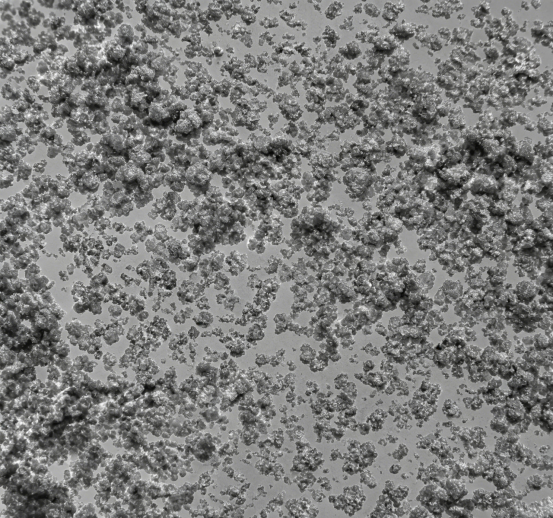
Le matériau céramique avancé est un matériau non organique, matériau non métallique spécialement développé et traité pour obtenir une mécanique précise, électronique thermique, et performances chimiques. Contrairement aux céramiques conventionnelles utilisées dans les produits ménagers ou de construction, le matériau céramique technique est fabriqué avec un contrôle de qualité strict afin de garantir qu'il répond aux normes technologiques les plus élevées.
Les avantages des matériaux céramiques avancés sont:
- Robustesse et résistance à l'usure extraordinaires
- Stabilité à haute température et résistance aux chocs thermiques
- Excellente résistance aux produits chimiques et à la corrosion
- Conductivité fonctionnelle ou isolation électrique
- Longue durée de vie dans des environnements extrêmes
Ces attributs Ces caractéristiques font des matériaux céramiques avancés l'option idéale lorsque les matériaux conventionnels échouent. Ils peuvent également élargir la portée des applications des matériaux céramiques dans les domaines haut de gamme de la production industrielle..
Classement de Céramique Matériels
Jifeng Ceramics est spécialisé dans les matériaux céramiques avancés hautes performances spécialement conçus pour les applications industrielles de haute précision.. Nos catégories de produits comprennent la zircone, alumine, nitrure d'aluminium, carbure de silicium ainsi que carbure de silicium, chacun étant conçu pour avoir une durabilité et une stabilité thermique extraordinaires, ainsi que la résistance à la corrosion, ainsi que l'isolation électrique.
Nous proposons des poudres céramiques de haute pureté, composants structurels usinés et substrats de grandes dimensions. Nous proposons également des céramiques transparentes, ainsi que des pièces de précision personnalisées. Ces produits en matériaux céramiques avancés offrent des performances de haute qualité dans le domaine de l'électronique à semi-conducteurs., aérospatial, médical et énergétique, ainsi que l'automobile, et zones de machines textiles. R interne&Traitement D et précision et contrôle qualité de la chaîne complète Nos solutions pour les matériaux allient la plus haute qualité et cohérence, avec une très haute précision dans la mesure dimensionnelle, et un haut degré de personnalisation pour répondre aux besoins techniques les plus élevés et améliorer les matériaux céramiques pour une variété de situations.
| Céramiques d'oxyde | Céramiques sans oxyde | Composites à matrice céramique (CMC) | Céramiques Fonctionnelles |
|---|---|---|---|
| Alumine (Al2Ô3) | Carbure de silicium (SiC) | Composants CMC | Céramiques piézoélectriques |
| Zircone (ZrO2) | Nitrure de Silicium (Et3N4) | Céramique renforcée | Biocéramique |
| Nitrure de bore (NE) | Céramiques diélectriques | ||
| Nitrure d'aluminium (AIN) |
Tableau des performances des matériaux céramiques
Article | Unité | Alumine | Zircone | SiC | Nitrure de Silicium |
| ||||||||
Grade | — | A-100 | A-200 | A-300 | AZ-100 | Z-100 | Z-200 | Z-300 | ZM-100 | ZB-100 | SC-200 | SN-200 | SN-100 | SN11000 |
Matériel | — | Al₂O₃ 97% | Al₂O₃ 99.5% | Al₂O₃ 99.7% | Al₂O₃–ZrO₂ | ZrO₂–Y₂O₃ | ZrO₂–Y₂O₃ | ZrO₂–Y₂O₃ | ZrO₂–Y₂O₃ | ZrO₂–Y₂O₃ | SiC | Si₃N₄ | Si₃N₄ | Si₃N₄ |
Couleur | — | Ivoire blanc | Blanc | Blanc ivoire | Blanc | Blanc | Blanc | Blanc | Jaune | Bleu | Noir | Gris noir | Gris noir | Jaune |
Densité | g/cm³ | 3.75 | 3.9 | 3.92 | 4.2 | 6.0 | 6.03 | 6.04 | 5.7 | 6.03 | 3.15 | 3.2 | 3.2 | 3.2 |
Résistance à la flexion | MPa | 280 | 320 | 370 | 480 | 900 | 950 | 1100 | 450 | 1100 | 400 | 680 | 850 | 750 |
Résistance à la compression | MPa | 2250 | 2300 | 2450 | 2700 | 2100 | 2200 | 2300 | 1600 | 2300 | 2000 | 3000 | 3800 | 3000 |
Module de Young | GPa | 330 | 370 | 380 | 350 | 200 | 210 | 220 | 210 | 220 | 430 | 290 | 300 | 300 |
Résistance à la rupture | MPa·m¹ᐟ² | 3.0 | 4.0 | 4.5 | 5.5 | 9.0 | — | 9.0 | 5.5 | 7.0 | — | 6.0 | 7.0 | 7.5 |
Coefficient de Poisson | — | 0.23 | 0.22 | 0.22 | 0.24 | 0.30 | 0.30 | 0.30 | 0.30 | 0.30 | 0.16 | 0.28 | 0.28 | 0.28 |
Dureté HRA | HRA | 90 | 91 | 91 | 91 | 89 | 90 | 90 | 88 | 90 | 93 | 91.5 | 92 | 92 |
Dureté Vickers | HV1 | 1450 | 1550 | 1600 | 1600 | 1250 | 1450 | 1450 | 1240 | 1450 | 2100 | 1600 | 1650 | 1650 |
Coefficient de dilatation thermique | 10⁻⁶K⁻¹ | 7.1 | 6.8 | 6.8 | 9.2 | 10.0 | 10.0 | 10.0 | 10.0 | 10.0 | 4.5 | 3.2 | 3.2 | 3.2 |
Conductivité thermique | Avec(m·K) | 25 | 32 | 32 | 8 | 3 | 3 | 3 | 3 | 3 | 100 | 26 | 40 | 70 |
Résistance aux chocs thermiques | ΔT, °C | 200 | 220 | 220 | 470 | 400 | 400 | 400 | — | 400 | 400 | 600 | 800 | 800 |
Température d'utilisation maximale. (Oxydant) | °C | 1200 | 1400 | 1650 | 1000 | 1000 | 1000 | 1000 | 850 | 1000 | 1400 | 1000 | 1300 | 1300 |
Température d'utilisation maximale. (Réducteur/Inerte) | °C | 1200 | 1400 | 1700 | 1000 | 1000 | 1000 | 1000 | 850 | 1000 | 1650 | 1200 | 1400 | 1400 |
Résistivité volumique (20 °C) | Oh·cm | 10¹⁴ | 10¹⁵ | 10¹⁵ | 10¹⁴ | 10¹³ | 10¹² | 10¹² | 5×10¹³ | 10¹² | 10⁵ | 10¹⁴ | 10¹⁴ | 10¹⁴ |
Rigidité diélectrique | kV/mm | 16 | 20 | 22 | 16.5 | 19 | 15 | 17 | 19 | 17 | 0 | 10 | 12 | 16 |
Constante diélectrique (1 MHz) | — | 11.5 | 11.0 | 10.0 | 11.0 | 28 | 30 | 30 | 27 | 30 | — | 12 | 11 | 10 |
Angle de perte diélectrique (20 °C, 1 MHz) | bronzageδ | 3×10⁻³ | 1×10⁻³ | 1×10⁻³ | 2×10⁻² (9 GHz) | 2×10⁻³ | 2×10⁻³ | 2×10⁻³ | 2×10⁻³ (1 GHz) | 2×10⁻³ | — | 4×10⁻³ (1 GHz) | 5×10⁻³ (1 GHz) | 3×10⁻³ (1 GHz) |
Applications industrielles des matériaux céramiques
Semi-conducteur & Électronique
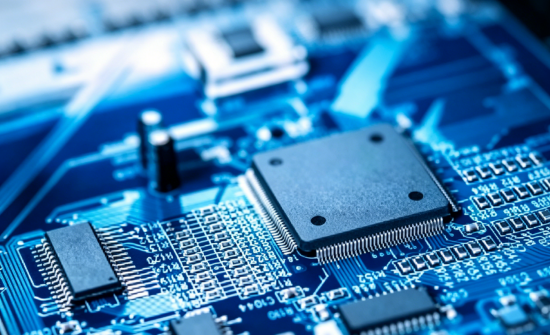
Les matériaux céramiques avancés servent de substrats isolants essentiels ainsi que de composants de manipulation de plaquettes de haute précision. Leur conductivité thermique exceptionnelle ainsi que leur résistivité électrique permettent un contrôle efficace de la chaleur dans les micropuces à hautes performances ainsi que dans les circuits électroniques sensibles.. C'est l'une des applications les plus importantes des matériaux céramiques.
Aérospatial & Aviation
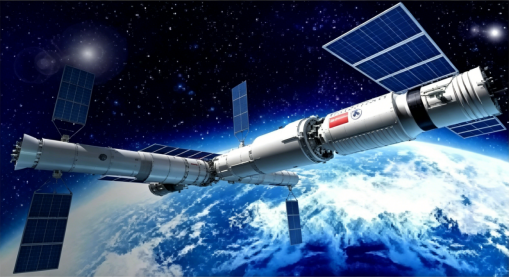
Les céramiques techniques sont cruciales pour la création de structures légères et résistantes à haute température comme des aubes de turbine ou des boucliers thermiques.. Ils peuvent résister à des températures extrêmes et à l’oxydation, améliorant considérablement les performances des moteurs ainsi que la sécurité en vol, et également en élargissant la conception et la disposition des matériaux céramiques avancés.
Dispositifs médicaux
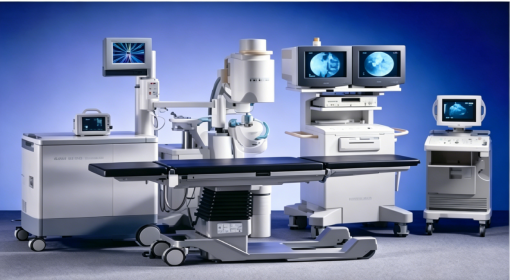
En raison de leur haute biocompatibilité, les produits céramiques de haute technologie sont largement utilisés dans les implants dentaires., prothèses orthopédiques, ainsi que des instruments chirurgicaux de haute qualité. Ils offrent une résistance élevée à l’usure et une stabilité dans l’environnement du corps, ce qui en fait un élément essentiel des applications de matériaux céramiques..
Pièces d'usure industrielles
Matériaux céramiques avancés tels que les vannes, scellés, et buses, offrent des performances exceptionnelles contre la friction et les hautes pressions. Leur dureté est extrêmement élevée, ce qui augmente considérablement la durée de vie des équipements, tout en réduisant le coût de maintenance dans les procédés hautement industriels.
Énergie & Industrie chimique
Ces matériaux sont indispensables pour manipuler des produits chimiques agressifs à des températures élevées. Les revêtements et membranes en céramique offrent une résistance à la corrosion inégalée, garantir l’intégrité structurelle et la fiabilité des infrastructures critiques de production d’énergie.