 JiFeng Ceramics

Stripping, clogged tips, drifting dot sizes are easy to blame on the dispenser. Usually, the nozzle itself is the true enemy. More and more precision assembly lines select ceramic nozzles due to its smooth bore, strong wear resistance and chemical stability. But a bad ceramic nozzle can waste as much time as a worn steel nozzle. This guide takes you through five steps to help you make the right choice – adhesive, material, bore geometry, interface and cleanliness.
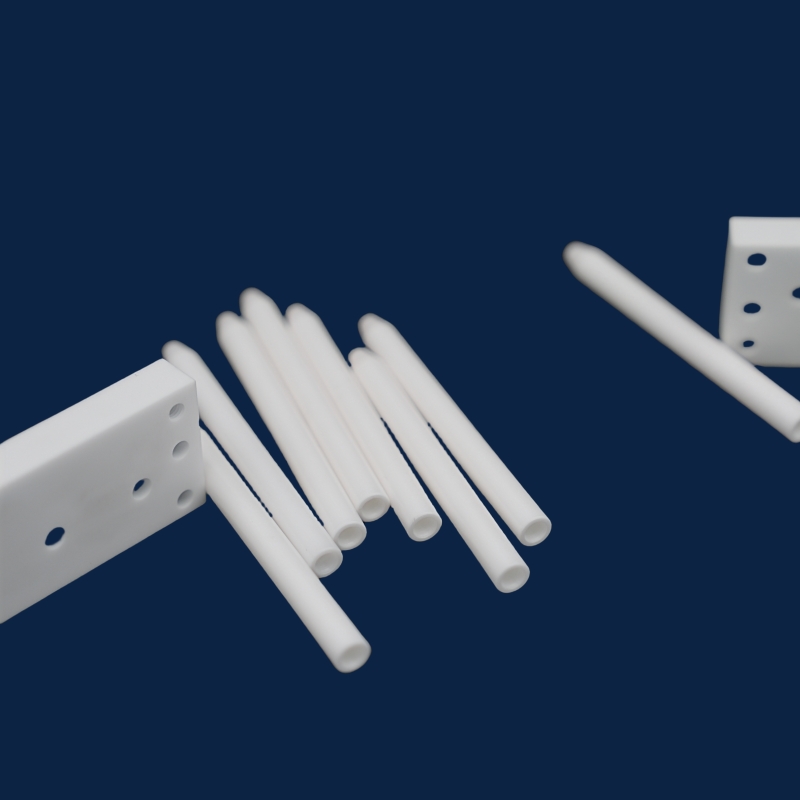
Why Switch to a Ceramic Nozzle in the First Place?
The Issue With Metal and Plastic Nozzles
Metal tips wear. The bore wears and the dispensing diameter wanders . Aggressive solvents can cause the plastic tips to swell or soften. Residue on the rough inner walls causes stringing and clogging. Metal tips can also introduce metal contamination, which is a concern in semiconductor and medical work.
What Ceramic Changes
Kyocera tested nozzle types for dispensing stability. Ceramic and ruby nozzles kept a stable dispensing diameter during continuous dispensing, while a precision metal nozzle showed large variation. The same source also measured bore roughness: the precision metal nozzle came in at 0.858 μm, with the ceramic nozzle noticeably smoother.
Surface behavior matters, too. PVA observes that for certain materials, the lower surface tension of ceramic nozzles can produce better results than stainless steel.
When Ceramic Might Not Be Worth It
The answer isn’t always ceramic. A plastic tip is often less expensive and perfectly suitable for low-precision work, non-abrasive fluids or single-use disposable dispensing. Select ceramic when precision, repeatability or cleanliness are driving factors.
Step 1: Begin with Your Adhesive
The adhesive is what determines almost everything else, so start here. Material viscosity, dispensing speed, component size, and application requirements are identified by industry guidance as the core selection factors.
| Adhesive type | Typical challenge | What to look for in a nozzle |
| UV-cure adhesive | Curing in the tip, tiny deposits | Smooth, non-stick bore; fine inner diameter |
| Two-part epoxy | Hard to flush, solvent cleaning | Solvent-resistant material |
| Filled or conductive paste | Abrasion from particles | Hard, wear-resistant ceramic |
| Silicone | Residue and stringing | Low-friction bore, clean cutoff |
Ceramic is the best choice in abrasive fillers. The ceramic tips are said to be effective with fine particle-filled materials and UV-cure adhesives and can be cleaned and flushed with acetone repeatedly, says Nordson.
Step 2: Selecting the Ceramic Material
Two materials cover most of the dispensing needs.
Alumina (99% Al₂O₃) is a hard, stable and cost effective material. It is the most popular choice for most precision dispensing applications.
(Y-TZP ZrO₂) zirconia is tougher. For JIfeng Ceramic product, we specify for alumina ≥400 MPa and for zirconia ≥1,200 MPa for bending strength. Therefore, zirconia will not chip as easily.
| Alumina | Zirconia (Y-TZP) | |
| Bending strength | ≥400 MPa | ≥1,200 MPa |
| Chip resistance | Good | Higher |
| Cost | Lower | Higher |
| Best for | Standard, controlled handling | Frequent changeovers, impact risk |
Simple rule: If your tips get bumped or swapped often or handled roughly, choose zirconia. Otherwise alumina is usually the best value. For material details, see alumina and zirconia pages.
Step 3: Match Inner Diameter and Taper Angle
This is the technical heart of selection.
Inner Diameter
The bore must suit your deposit size and adhesive viscosity. Too fine and a thick paste starves or clogs; too large and you lose control of small deposits. Our nozzles cover 0.01–2 mm, from micro-dispensing to higher-flow work.
Taper Angle
A tapered flow channel helps the fluid move smoothly. Nordson says the tapered inner diameter reduces back pressure. It also supports steady deposits and a clean cutoff. We provide tapers at 15°, 30°, and 60°. The right angle can change with viscosity and flow rate. Test it briefly instead of making a guess.
Surface Texture
Less residue and fewer strings mean less roughness. Jifeng Ceramics nozzles are rated to Ra max 0.1 μm. The shape of the outlet also matters. PVA says a precision chamfer on the tip breaks the fluid more cleanly and reduces build-up and wicking up the side of the tip.
Step 4: Verify interface and equipment compatibility
The best nozzle is worthless if it doesn’t fit. Please confirm the connection style (thread, snap-fit or Luer lock) and your dispenser brand. Jifeng Ceramics nozzles are configured to common platforms like Nordson EFD, Musashi and I&J systems.
The hub design also affects chemistry compatibility. Polypropylene hubs are suitable for moisture sensitive materials such as cyanoacrylates Stainless steel hubs are rugged and machined to tight tolerances. When ordering please send your equipment model or a photo of the current tip to avoid fitment errors.
Step 5: Cleanliness and rules
In semiconductor packaging, LED die bonding, and medical catheter bonding, you must control contamination. Ceramic is not magnetic and it does not conduct electricity. It also does not add metal ions to the process.
For medical use, you should ask about biocompatibility tests and quality-system checks during the quoting stage. On Jifeng Ceramics page, we list ISO 10993 and ISO 13485 as certifications. Still, ask for the latest papers for your exact order.
Quick Selection Checklist
| Step | Confirm |
| 1. Adhesive | Type, viscosity, filler content |
| 2. Material | Alumina or zirconia |
| 3. Geometry | Inner diameter, taper angle, surface finish |
| 4. Interface | Thread, snap-fit, or Luer lock; equipment brand |
| 5. Cleanliness | Contamination limits, certifications |
Customization and Ordering
Standard sizes do not fit every process. JiFeng Ceramics can customize inner diameter, length, taper angle, and interface, with drawing review and sample approval before production. To get a fast recommendation, send us:
- Your drawing or key dimensions
- Adhesive type and viscosity
- Dispenser model and interface
- Quantity and any compliance requirements
Browse the Dispensing Ceramic Nozzle page or request a quote.
Frequently Asked Questions
Is ceramic better than stainless steel for dispensing adhesives?
Yes. Many times. For delicate work. Kyocera testing showed ceramic nozzles dispense a more consistent diameter than precision metal nozzles. For simple low precision work steel or plastic may be acceptable.
Alumina vs zirconia: which one should you pick?
Alumina is stable and controllable and cheaper. Select alumina. Zirconia has a higher bending strength, better for tips that will experience frequent changes or impact.
Acetone to clean ceramic nozzles?
Solvent cleaning is generally compatible with ceramic tips. Nordson says its ceramic tips can be flushed over and over again with acetone. Always check your specific glue & cleaning process.
What size inside is needed for UV adhesive?
It is determined by the size and viscosity of the deposit. Send us your target dot size and adhesive data and we will advise bore and taper.
Can I personalize nozzles for my dispenser?
Yeah. We can customize the inner diameter, length, taper and interface according to your drawing.
