 جيفينج سيراميك

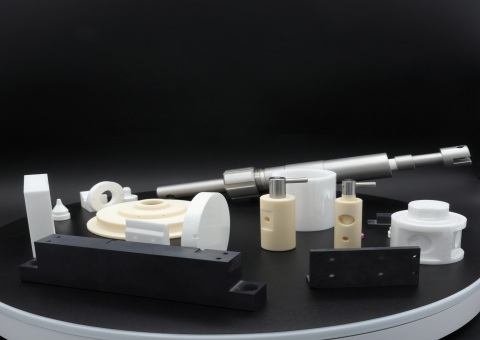
تُستخدم الأجزاء الخزفية المخصصة على نطاق واسع في معدات أشباه الموصلات, الأجهزة الطبية, الأنظمة البصرية, الأتمتة الصناعية, ومعدات درجة الحرارة العالية. على عكس منتجات السيراميك القياسية, يجب تصنيع الأجزاء المخصصة وفقًا لرسومات العملاء, مواد, أبعاد, التسامح, وبيئات التطبيق المحددة.
لذا, كيف يتم تصنيع قطع السيراميك المخصصة?
The complete process typically includes requirements and design, material selection, powder preparation, تشكيل, debinding and sintering, الآلات الدقيقة, quality inspection, and delivery. من بين هؤلاء, the final precision and performance of the part are not determined solely by the last machining step, but by the entire manufacturing process as a whole.
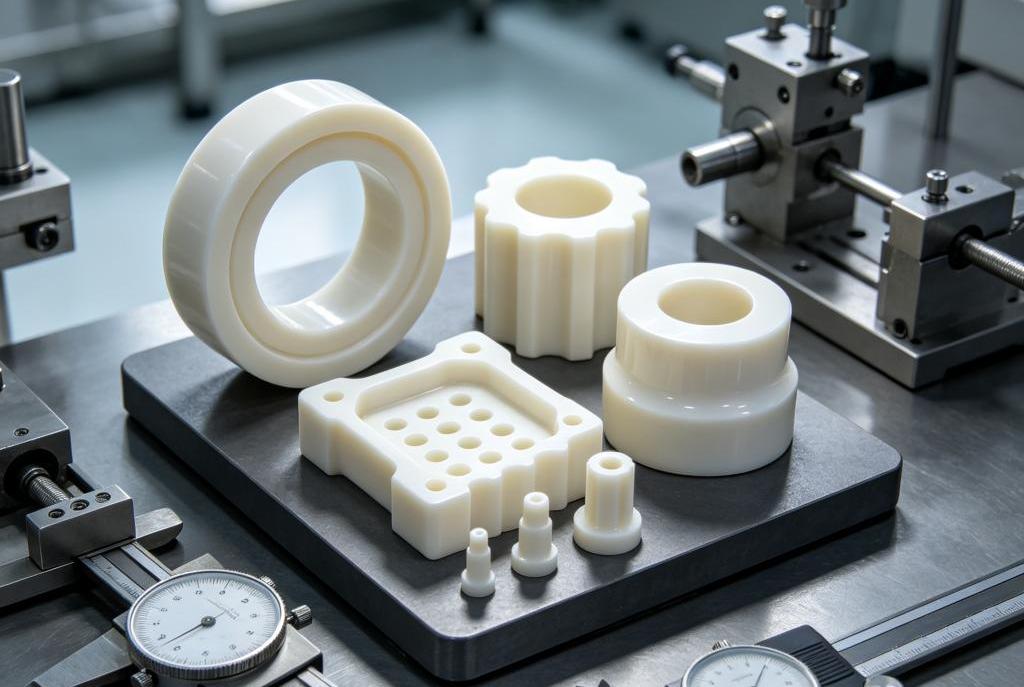
Starting from the Drawing: Requirements Confirmation and Design Optimization
Custom ceramic parts typically begin with customer drawings or 3D CAD models. The manufacturer needs to understand the part’s dimensions, التسامح, مادة, surface roughness, order quantity, and actual operating environment.
لكن, having a drawing does not mean production can begin immediately. Because ceramics have high hardness and brittleness, some metal part designs, when directly applied to ceramics, may increase machining difficulty and the risk of breakage.
لذلك, design optimization is usually required before production, such as:
- Avoiding excessively thin wall thickness to reduce cracking risk;
- Designing small holes and deep holes according to machining capabilities;
- Keeping holes at sufficient distance from edges to reduce edge chipping;
- Avoiding unnecessarily tight tolerances on non-critical dimensions to prevent added machining costs.
A professional تصميم للتصنيع (سوق دبي المالي) assessment can identify these issues before production and optimize part structure and machining plans.
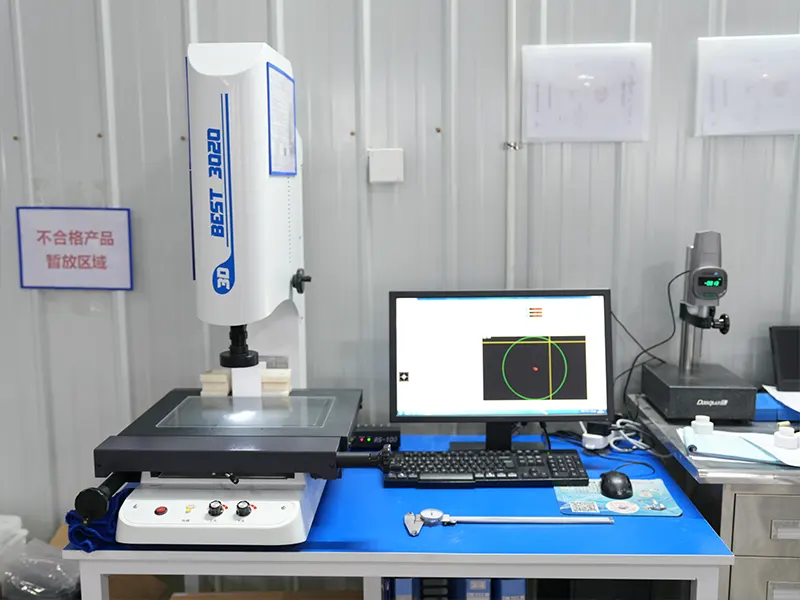
Selecting the Appropriate Ceramic Material Based on the Application
Material selection directly affects the final performance and manufacturing cost of the part.
Common technical ceramics include:
| مادة | الخصائص الرئيسية | Common Applications |
| الألومينا | العزل الكهربائي, مقاومة التآكل, chemical stability | Insulators, industrial parts |
| زركونيا | قوة عالية, good toughness | Precision and structural parts |
| نيتريد السيليكون | Wear resistance, مقاومة الصدمات الحرارية, قوة عالية | محامل, high-temperature parts |
| كربيد السيليكون | صلابة عالية, مقاومة درجات الحرارة العالية, good thermal performance | أشباه الموصلات, high-temperature equipment |
The most expensive material is not always the best choice; selection should be based on the part’stemperature, يرتدي, تآكل, كهربائي, mechanical, and thermal performance requirements.
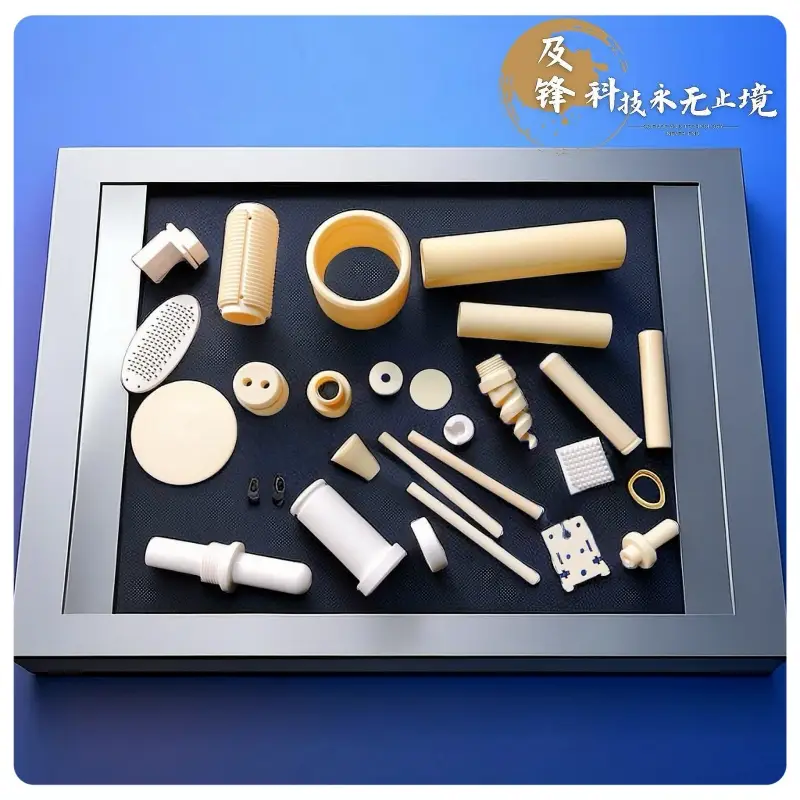
Ceramic Powder Preparation and Green Body Forming
After material selection, ceramic raw materials undergo screening, mixing, milling, and drying to achieve appropriate fineness and uniformity, providing a stable foundation for subsequent forming.
The ceramic powder is then formed into agreen body with an initial shape.
Depending on part structure and production volume, different forming methods can be chosen:
- Dry pressing: Suitable for relatively simple-shaped parts;
- Injection molding: Suitable for small, complex-shaped parts;
- الضغط متساوي الاستاتيك: Suitable for parts requiring high density uniformity and performance;
- Tape casting: Primarily used for thin ceramic sheets and ceramic films.
The formed green body also requires drying and necessary pretreatment to prepare for subsequent sintering.
Debinding and High-Temperature Sintering
After forming, the green body undergoes debinding and sintering.
Debinding is mainly used to remove organic binders added during the forming process, requiring controlled heating rates to avoid cracks and internal defects.
This is followed by high-temperature sintering, which causes ceramic particles to bond and form a dense, hard ceramic material.
Why Does Sintering Affect Dimensional Accuracy?
This is one of the important differences between custom ceramic manufacturing and metal processing.
Ceramic green bodies undergo significant shrinkage during sintering, so manufacturers must calculate shrinkage rates in advance based on material and process parameters, and apply dimensional compensation during mold and green body design.
Simply put:
Green body → Debinding → High-temperature sintering → Dimensional shrinkage → Sintered ceramic
If sintering shrinkage is not stably controlled, it can lead to dimensional deviations, تشوه, or increased machining allowances.
لذلك, the sintering process not only determines the density and performance of the ceramic but also directly affects final dimensions and batch-to-batch consistency.
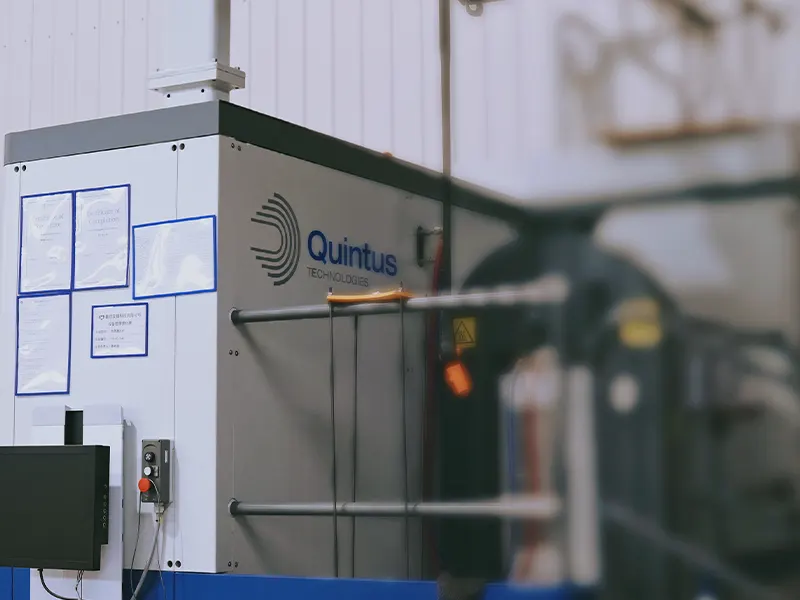
Precision Machining After Sintering
بعد التلبد, ceramics have very high hardness and wear resistance, which makes them suitable for industrial applications, but also makes subsequent machining more difficult.
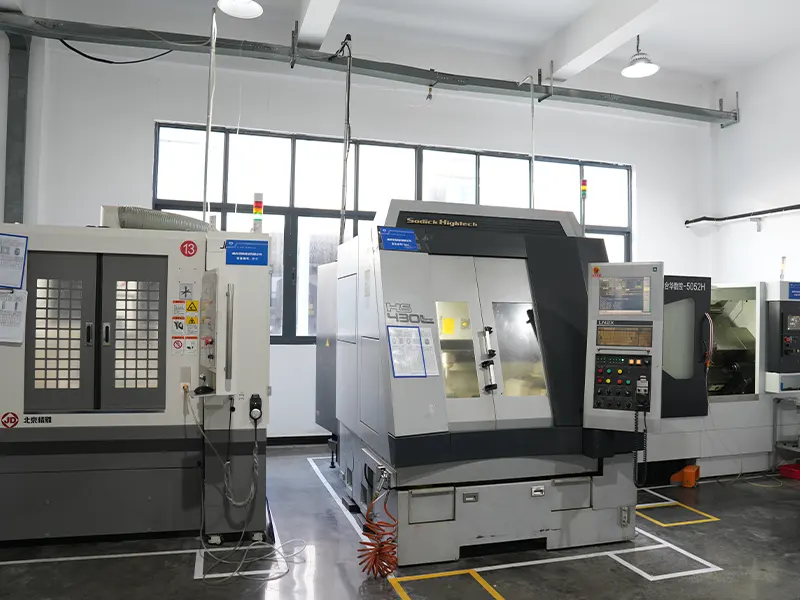
Unlike metals, sintered ceramics typically require special machining methods such asdiamond grinding, precision lapping, التصنيع باستخدام الحاسب الآلي, and precision drilling.
Ceramic machining can generally be divided into two approaches.
Green machining: Machining before sintering, when the material is relatively soft and easier to process, but must accurately account for subsequent sintering shrinkage.
Hard machining after sintering: Directly machining already sintered ceramics, which is more difficult, but allows precision control over final dimensions and is more suitable for high-precision parts.
For precision ceramic parts, critical dimensions such as outer diameters, flat surfaces, and hole diameters are typically achieved through grinding and finishing. For some high-precision parts, micron-level dimensional tolerances can be achieved with suitable materials, structures, and processes.
If the application demands higher surface quality, further steps such asاللف, mechanical polishing, or chemical mechanical polishing (CMP) can be applied.
What Determines the Cost of Custom Ceramic Parts?
The price of custom ceramic parts depends not only on material but also on the following factors:
- مادة: Different ceramic materials have different raw material and machining costs;
- Structure: Complex structures typically require more forming and machining steps;
- التسامح: Tighter tolerances require higher machining and inspection standards;
- المعالجة السطحية: Lapping, تلميع, and CMP add to post-machining costs;
- Quantity: Low-volume orders require amortization of engineering, setup, and tooling costs;
- Inspection requirements: High-precision projects typically require more rigorous inspection.
لذلك, the lowest quote does not necessarily mean the lowest total cost. For industrial customers, batch consistency, lead time, yield rate, and the ability to handle repeat orders are equally important.
How Are Custom Ceramic Parts Inspected?
Quality inspection runs throughout the entire manufacturing process, and final products must be verified against customer drawings and key performance requirements.
Common inspections include:
- Dimensional inspection: Using CMMs, optical projectors, and precision measuring tools to verify critical dimensions.
- Geometric tolerances: Inspecting flatness, roundness, cylindricity, concentricity, parallelism, and other parameters.
- Visual inspection: Checking for cracks, edge chipping, scratches, and other surface defects.
- Internal defect inspection: For special applications, non-destructive testing methods such as X-ray may be used upon request.
- Performance testing: Testing density, صلابة, العزل الكهربائي, and other properties based on material and application requirements.
Why Is Full-Process Manufacturing Capability Important?
When selecting a custom ceramic supplier, in addition to price and equipment, one question should be considered:
How many manufacturing steps can the supplier actually control in-house?
Some companies mainly handle post-sintering machining, while purchasing blanks from other suppliers. في المقابل, manufacturers capable of independently controllingpowder preparation, تشكيل, تلبيد, الآلات الدقيقة, طحن, and inspection are better positioned to achieve complete process traceability.
When dimensional or performance issues arise, they can trace back to material, تشكيل, تلبيد, and other steps, rather than only checking the final machining stage.
This also helps improvebatch consistency, process stability, and repeat-order capability.
لذلك, when selecting a supplier, it is worth asking directly:
Which manufacturing processes are done in-house? Which are outsourced?
This question is often more valuable than simply comparing quotes.
From Samples to Mass Production
Custom ceramic parts typically go through sample validation before entering mass production.
The typical process is:
Drawing evaluation → Sample making → Testing → Process optimization → Mass production → Quality inspection → Repeat orders
The sample stage allows validation of dimensions, مادة, assembly fit, and actual performance. After confirmation, the manufacturer can fix key production parameters to establish a stable manufacturing foundation for subsequent mass production.
For industrial customers, the ability toconsistently and stably produce parts that meet requirements is often more important than a one-time successful prototype.
Final Inspection, التعبئة والتغليف, and Delivery
After passing final inspection, ceramic parts must be packaged with shock-proofing, moisture-proofing, and anti-collision measures to reduce the risk of edge chipping, cracking, and surface damage during transport.
Depending on project requirements, the manufacturer may also provide quality documents such as material certificates and inspection reports. For long-term repeat orders, retaining samples and production data also helps improve consistency and traceability for subsequent batches.
The Complete Manufacturing Process for Custom Ceramic Parts
The entire process can be summarized as follows: Requirements and Drawing Evaluation → Material Selection → Powder Preparation → Molding → Debinding and Sintering → Precision Machining → Surface Treatment → Quality Inspection → Packaging and Delivery
True high-precision custom ceramic manufacturing does not rely on the final processing step to “صحيح” all problems, but rather on establishing a stable and repeatable manufacturing system from design, مواد, صب, sintering to precision machining and inspection.
