 جيفينج سيراميك

Most folks hear “ceramics” and think of a mug, a porcelain vase, or a bathroom tile. Those are common ceramic items. They go back a long way, helping shape human life for over 26,000 سنين. ما زال, they are just a small slice of the whole ceramic scene.
At the other end of the spectrum are technical ceramics (also known as advanced ceramics, engineering ceramics, or industrial ceramics). Both groups start from inorganic, non-metallic material that is fired with heat. But their makeup
In simple terms:
Traditional ceramics are defined by form and aesthetics. Technical ceramics are defined by performance and function.
To clearly understand the difference between a terracotta flowerpot and a ceramic ballistic plate capable of stopping a bullet, we examine seven critical dimensions.
Core Definition and Design Philosophy
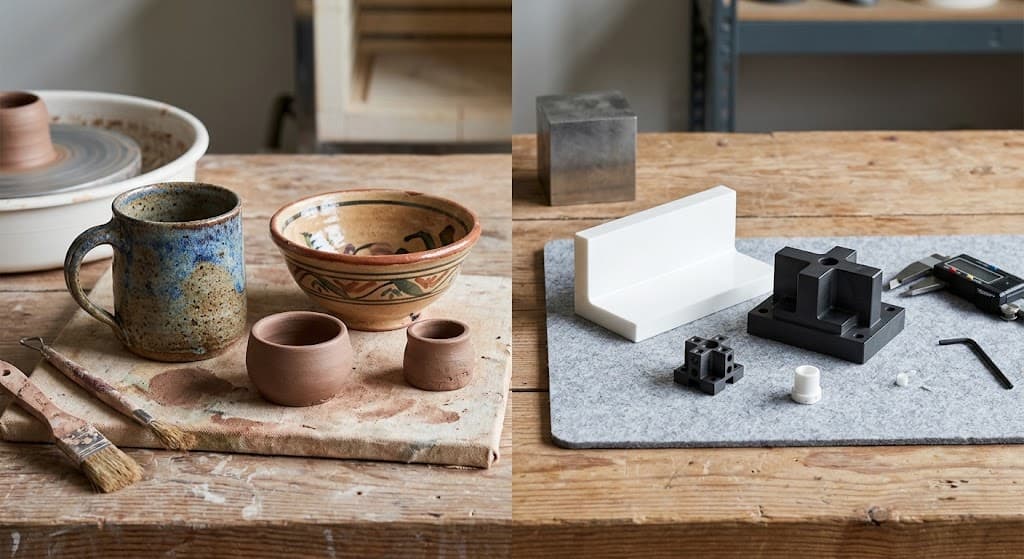
الخزف التقليدي (Non-Technical Ceramics)
These are classic clay-based products made for thousands of years. They primarily consist of natural silica, clay, and feldspar. Historically, potters depended on the natural variations of local clay. The primary focus is form, appearance, and everyday usability.
السيراميك الفني (Advanced Ceramics)
These inorganic materials are made on purpose. They come from refined man made powders like الألومينا (آل₂O₃), زركونيا (زرو₂), كربيد السيليكون (كربيد كربيد), و نيتريد السيليكون (Si₃N₄). The goal is to handle engineering problems that metals and plastics often cannot deal with. This matters most when conditions get very harsh.
Composition and Purity
This is the most fundamental difference between technical ceramics and traditional ceramics.
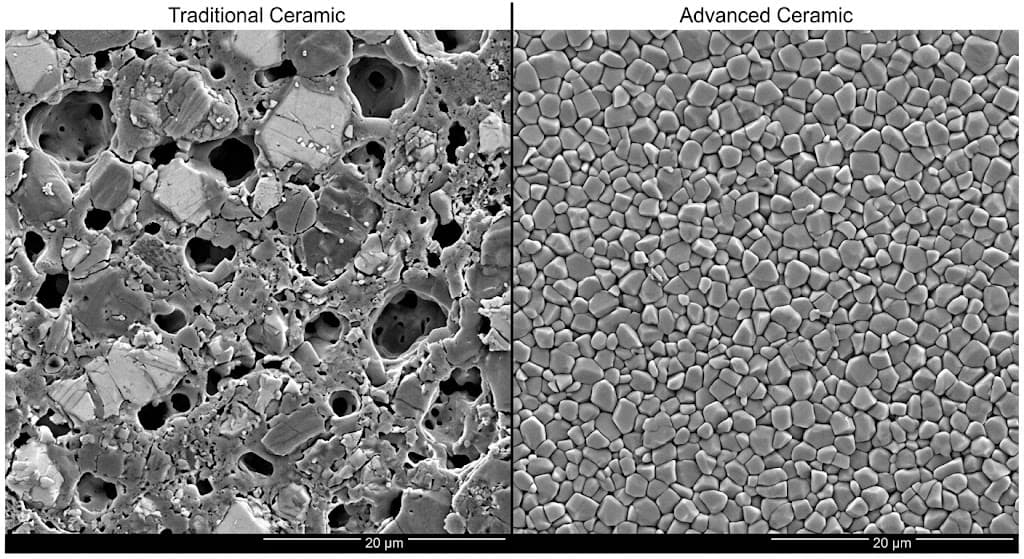
- Traditional ceramics use natural raw materials containing impurities such as iron oxide, quartz and organic substances. These impurities are usually acceptable and even contribute to the formation of colors (for example, the reddish hue of terracotta). These materials usually have porosity and can absorb moisture.
- Technical ceramics are different. They are made from artificial powders. These powders have an extremely high purity, reaching up to 99.9% or even higher. Any remaining impurities are regarded as defects. The composition of technical ceramics is carefully designed to enable it to perform at its best in specific applications. على سبيل المثال, it can be used for strong electrical insulation, or for high wear resistance.
Manufacturing Process
The production routes of the two ceramic families differ dramatically.
Traditional ceramics are made using traditional methods such as hand-pulling, صب الحقن, or extrusion molding, and are fired in kilns at relatively moderate temperatures (typically ranging from 1000 to 1200°C). Minor warping or surface defects are usually acceptable.
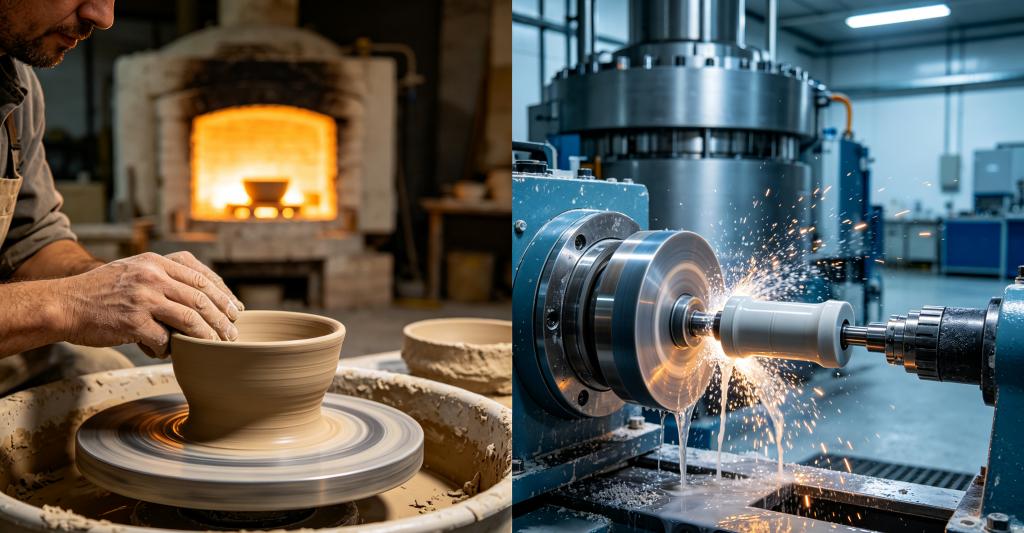
Engineering ceramics, on the other hand, require advanced manufacturing techniques, including isostatic pressing, صب الحقن, and extrusion molding. They are sintered in controlled atmospheres (sometimes in vacuum or under specific gas conditions) at higher temperatures (up to 2000°C). بعد التلبد, due to the shrinkage that occurs during densification, the components usually require diamond grinding to achieve micron-level dimensional accuracy. This post-processing step significantly increases the cost of engineering ceramics.
Mechanical and Physical Properties
Technical ceramics earn their name through superior mechanical performance.
| ملكية | الخزف التقليدي | السيراميك الفني |
| المسامية | عالي (5–15% water absorption) | Extremely low (<1%, often gas-tight) |
| قوة العاطفة | قليل (20–60 MPa) | Very high (500–1,500+ MPa) |
| صلابة | Relatively soft | Ultra-hard (often harder than tungsten carbide) |
| صلابة الكسر | Very brittle | Improved (engineered to resist crack growth) |
| كثافة | Lower (due to porosity) | Fully dense and higher |
A traditional ceramic mug can easily crack if dropped. في المقابل, a technical ceramic component used in a jet engine or high-speed bearing can withstand millions of stress cycles without significant deformation.
Thermal and Chemical Resistance
Traditional ceramics are prone to thermal shock. Rapid temperature changes can cause cracking because of porosity and the presence of quartz, which expands unevenly when heated.
Technical ceramics are specifically engineered for extreme thermal environments. كربيد السيليكون, for example, can endure temperature swings of more than 1,000°C in seconds without cracking. فضلاً عن ذلك, most technical ceramics are highly chemically inert and resist corrosion in both acidic and alkaline environments — a critical advantage in chemical processing, where metal components would degrade rapidly.
التطبيقات: Aesthetics vs. Engineering Performance
The simplest way to distinguish the two is to ask whether the component is intended primarily for appearance or for critical performance.
Traditional Ceramics Applications
- Tableware (لوحات, cups, bowls)
- Decorative tiles and vases
- Sanitaryware (toilets, sinks, bathtubs)
- Bricks and construction materials
- Art objects and figurines
Technical Ceramics Applications
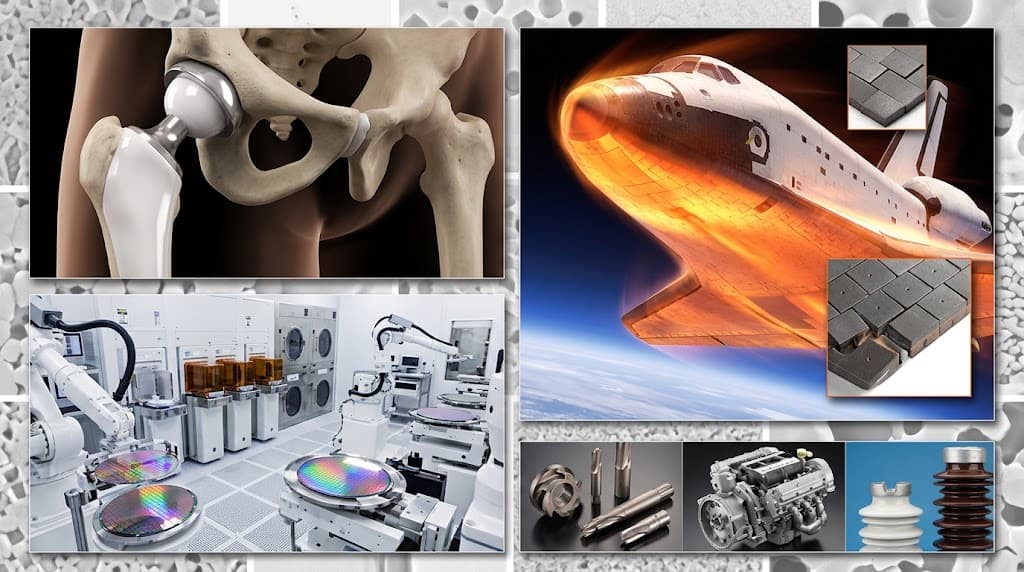
- Aerospace and defense: الدروع الحرارية, radomes, and ballistic armor plates (على سبيل المثال, boron carbide)
- طبي: bioceramic hip and knee implants, dental crowns (زركونيا)
- إلكترونيات: semiconductor substrates, عوازل شمعات الإشعال, multilayer circuit boards
- السيارات: catalytic converter substrates and high-performance ceramic brake discs
- طاقة: nuclear fuel components and high-temperature insulators
Cost and Economic Value
Traditional ceramics are inexpensive and widely available. Material cost is low; the final price is largely influenced by design, تزجيج, and labor. A basic ceramic mug costs only a few cents to produce.
Technical ceramics are significantly more expensive. A single high-precision component — such as a semiconductor wafer-handling arm or a specialized bearing — can cost thousands of dollars. The higher price reflects the cost of ultra-pure raw materials, energy-intensive sintering, and precision diamond machining. لكن, industries accept this cost because technical ceramics often last 10 ل 50 times longer than steel or other materials in extreme environments, delivering substantial long-term savings through reduced downtime and replacement frequency.
خاتمة
The fundamental difference between technical ceramics and non-technical ceramics lies in their applications and engineering control. Non-technical (traditional) ceramics are practical and economical materials, produced from natural resources and mature processes. السيراميك الفني, on the other hand, are specially designed and high-purity materials aimed at ensuring outstanding performance in demanding environments.
As various industries continue to push the limits of temperature, speed, miniaturization, and reliability, technical ceramics will play an increasingly important role. في نفس الوقت, traditional ceramics remain indispensable for the products and infrastructure we use in our daily lives.
By understanding the differences in raw materials, processing techniques, أداء, and applications, material selectors can make informed decisions, achieving a balance between performance, cost, and practicality.
