 جيفينج سيراميك

في الشراء الصناعي, يؤثر اختيار المواد بشكل مباشر على حياة المنتج, تردد الصيانة, والتكلفة الإجمالية للملكية (التكلفة الإجمالية للملكية). أحد الأسئلة الأكثر شيوعًا التي يطرحها المشترون عند تقييم المحامل, أدوات القطع, أو ارتداء المكونات: Is نيتريد السيليكون (Si₃N₄) حقا أصعب من الفولاذ? كم هو أصعب? And is the higher price justified?
The obvious answer is yes. Fully densified silicon nitride has a Vickers Hardness Number between 1,400-1,700HV (أو 14-17 المعدل التراكمي). Typical hardened bearing steel or tool steels, على الجانب الآخر, have VHN around 700-850. بعبارات بسيطة, silicon nitride is twice as hard as steel.
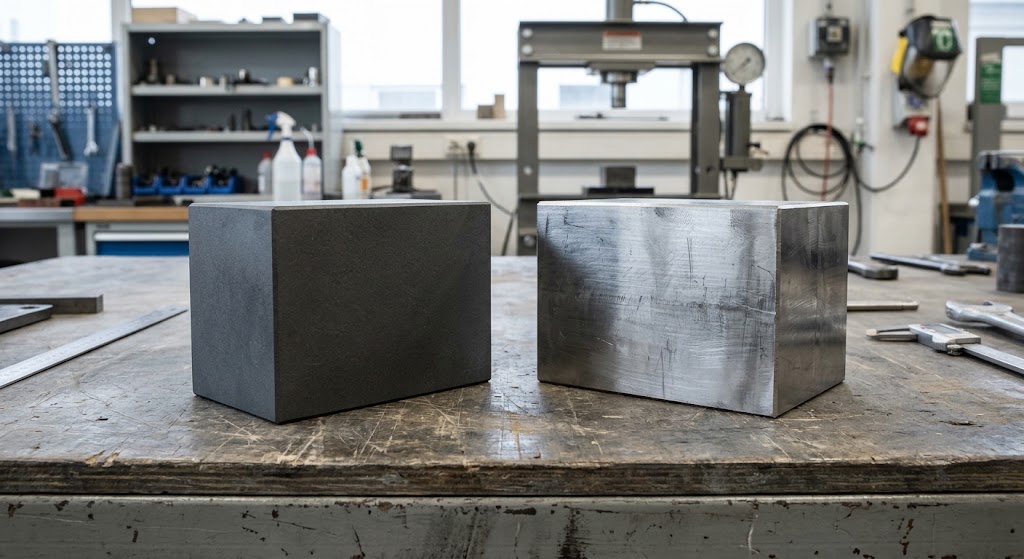
Hardness Comparison at a Glance
| مادة | Typical Vickers Hardness (الجهد العالي) | Approximate Range | Procurement Notes |
| نيتريد السيليكون (dense sintered/HIP) | 1,400–1,700 | 14–17 GPa | Standard engineering grade |
| Bearing steel (على سبيل المثال, 52100 / GCr15) | 700–850 | ~7–8.5 GPa | Most common comparison material |
| High-hardness tool steels | Up to ~900–1,000 | Still lower | Even premium grades fall short |
| Mild / الهيكلية / stainless steels | 100–300 | Far lower | Not suitable for high-wear applications |
Silicon nitride also ranks approximately 8.5–9 on the Mohs scale, while most steels fall between 4 و 7. The hardness advantage remains strong at elevated temperatures, where steel begins to soften significantly above 200–400°C.
What Higher Hardness Means for Procurement
Hardness is not just a technical number — it translates into measurable business outcomes:
- Longer service life under the same operating conditions
- Reduced replacement frequency and lower spare-parts inventory
- Less downtime and lower maintenance labor costs
- Better performance in high-speed, حمولة عالية, high-temperature, or poorly lubricated environments
One such example is that of hybrid ceramics bearings (silicon nitride balls and steel rings). Their high hardness gives rise to low friction, higher speeds, and extended life – which makes such bearings quite popular in machine tools, wind turbines, and electrical car motors.
Advantages and Trade-offs Buyers Must Weigh
Key advantages
- Superior wear resistance compared with steel
- Lower density (~3.2 g/cm³ vs. ~7.8 g/cm³ for steel) → reduced rotating mass and energy consumption
- Excellent high-temperature stability, مقاومة التآكل, and electrical insulation
- Often lower total cost of ownership despite higher unit price
Limitations and risks
- Higher purchase price
- Greater brittleness — lower impact resistance than steel
- More demanding installation and handling requirements
- Not cost-effective for low-wear, low-speed, or highly cost-sensitive applications
When Should Procurement Prioritize Silicon Nitride?
Consider silicon nitride seriously in these situations:
- High-speed bearings, precision spindles, and wind-turbine main bearings
- Metal-cutting tools, wear plates, and seals
- High-temperature engine components (على سبيل المثال, turbocharger-related parts)
- Applications where reduced maintenance or higher reliability is critical
- Lightweight or corrosion-resistant rotating components
For mild operating conditions with easy replacement access and tight budgets, high-quality steel remains the more economical choice.
Practical Purchasing Recommendations
- 1.Specify the actual running conditions (سرعة, حمولة, درجة حرارة, تشحيم, and anticipated life span) prior to performing material comparisons.
- 2.Total cost of ownership should be considered rather than just the unit cost; replacement rate, down time, and energy expenses are also important factors.
- 3.Preferrably, consider hybrid systems (balls of silicon nitride with steel rings); they frequently provide the optimum solution.
- 4.Request that the suppliers present certificates of materials which indicate hardness, كثافة, and fracture toughness.
- 5.Begin with pilot runs and validate the enhanced life of the parts prior to increasing the batch size.
خاتمة
It is apparent that silicon nitride is much harder than steel, and this characteristic can result in increased durability and reduced maintenance costs. For procurement officers, the issue is not “Is it harder?” but rather “Is the increased performance worth the additional cost?”
If you are currently considering bearings, أدوات القطع, or any wear parts, collect your operating information and do an easy TCO analysis with your vendors. The numbers will speak for themselves.
