 JiFeng Ceramics

These ceramics are appreciated for their durability, wear resistance, and ability to operate in tough industrial conditions. Nevertheless, these characteristics will not always help to ensure long-term service. Premature breakdown is possible whenever there is no proper compatibility of material characteristics, design of the seal, installation, and operating conditions.
Failure of a ceramic sealing ring typically manifests itself in cracks, edge chipping, excessive wear, and leakage. Leakage is usually just the visual manifestation of the problem, whereas the actual reasons include improper installation, thermal shock, lubrication issues, material mismatch, abrasives, and unstable equipment conditions.

Short Answer: Here are 6 ReasWhy Ceramic Mechanical Seals Fail Before Their Expected Service Life
The ceramic end face used for sealing (typically aluminum oxide or silicon carbide) can offer superb performance when chosen and installed properly. Nevertheless, in practice, the seal may become cracked, have chipped edges, suffer from excessive wear of its end face or even lose its ability to seal prematurely.
It should be noted that the leaking itself is not the cause of the issue most of the time; it is a consequence of the mechanical overload when installing the seal, drastic changes in temperatures, dry running, improper materials, particle damage, shaft misalignment, vibrations, etc.
6 Common Causes of Ceramic Mechanical Seal Failure
1. Improper Installation and Excessive Mechanical Stress
While ceramic materials possess high levels of hardness, they are usually brittle in nature. During installation process, impacts resulting from the use of hammers and wrong tools, uneven compression, inappropriate fit tolerance, or wrong alignment of the sealing faces may result in localized stress concentration.
Typical signs: Crack formation from either inner or outer diameters, chipped edge, or leakage shortly after start-up.
Precautions: Always follow the installation guidelines provided by the manufacturer. Maintain the required radial and axial clearance. Use right press fitting tooling or fixture. Avoid hammering on the ceramic surface. Check the surface flatness and concentricity before installing.
2. Thermal Shock and Excessive Temperature Changes
There will be temperature gradients in the ceramic ring because of fast temperature changes. Different parts expand or contract at different rates and the tensile stress exceeds the strength of the material. Thermal expansion coefficients and thermal shock resistance of alumina and silicon carbide differ. Some materials have good performance at steady elevated temperatures, but might fail due to thermal shock.
Typical signs: Fine crack network, radial crack or face spalling after start/stop cycles.
Precautions: Assess the rate of temperature change during start/stop operation. Choose ceramic grades with thermal shock resistance suitable for working conditions. Do not cool heat seal with cold water or introduce hot medium suddenly unless sealing is designed for this.
3. Inadequate Lubrication or Dry Running
For mechanical seals, the two ends normally depend on liquid film lubrication and cooling. In case the process fluid is not enough, the flush is inadequate, or the equipment runs dry in an incorrect environment, the two ends would suffer from high friction and overheating, resulting in thermal cracks, severe wear, and in some cases even seizing.
Typical signs: Severe scoring or polishing of the sealing faces, discolouration, and thermal cracks near the contacting area.
Prevention: Make sure that all conditions needed for proper sealing are fulfilled. Prior to operation, check the condition of the liquid and the flushing flow and pressure; also add dry-run prevention equipment in situations when the liquid might run out.
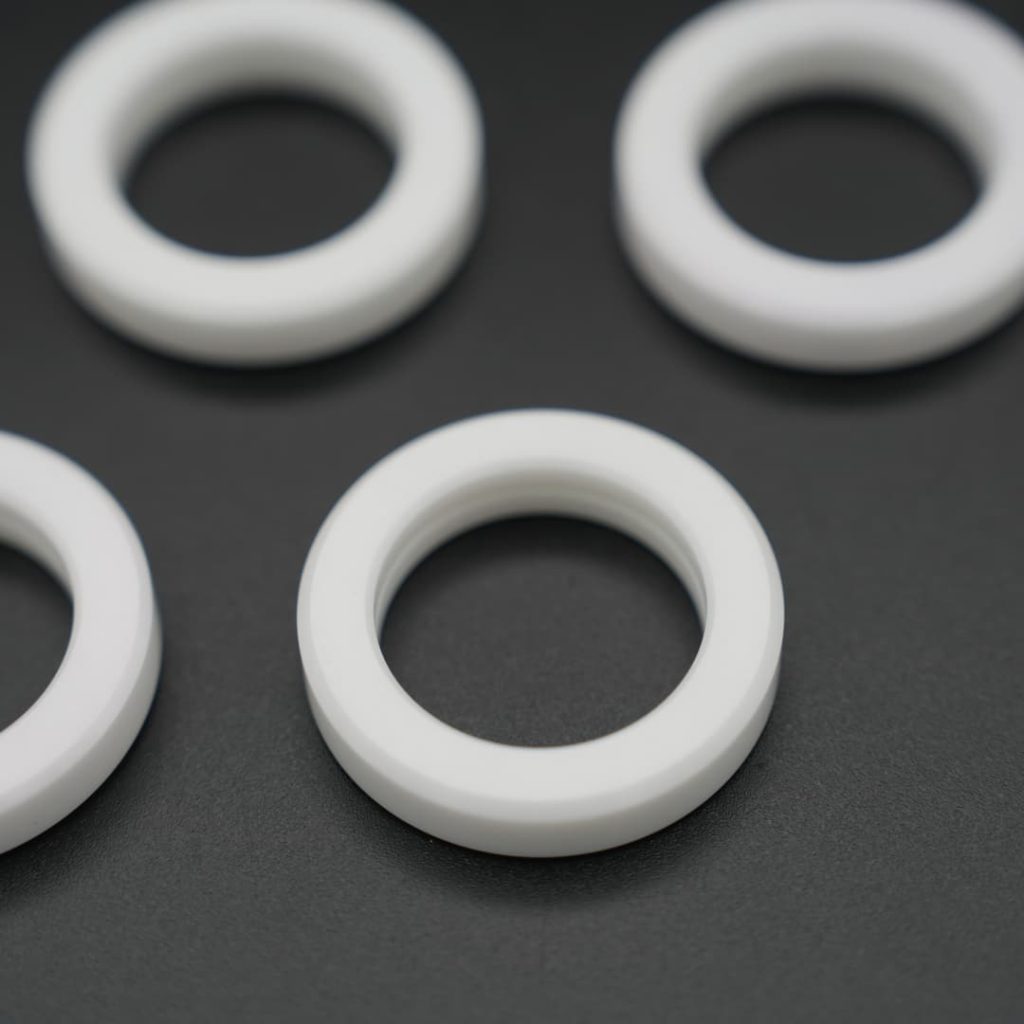
4. Incorrect Material Selection for the Operating Environment
Not all ceramics are applicable in all cases. Alumina is chemically stable, cheap, and possesses high resistance to thermal shocks. However, the hardness of alumina is lower than that of silicon carbide. Silicon carbide exhibits high hardness and heat transfer, along with resistance to wear, but some grades of silicon carbide might be eroded by some kinds of chemical environment or need special attention in selecting mating materials. It should be remembered that actual properties of the material depend on a particular grade, purity, microstructure, temperature, pressure, and sealing geometry.
Typical signs: Rapid face wear, chemical erosion, or cracking due to the conditions that the material cannot resist.
Prevention: The selection of materials involves complex considerations, taking into account not only hardness or just the name of a material, but chemical compatibility, temperature range, abrasive loading, and mechanical stresses. In case of uncertainty, a careful analysis of operating conditions is required.
5. Abrasive Particles and Contaminated Fluids
Hard particles that come into contact with the seal interface become grinding agents. Although ceramics are more rigid than metals, particles are still able to cut into faces, embed in soft mating components, or create local chip-outs. Fluid contaminants increase wear and destroy the lubricating film.
Typical signs: Grooves, debris, or uneven wear patterns on the ceramic face.
Prevention: Evaluate particle size, hardness, and concentration within the process fluid. Install proper filtering devices or cyclone separators in cases where the medium is abrasive. Use more rigid ceramic materials and suitable mating faces for harsh slurries.
6. Misalignment, Vibration, and Unstable Operating Conditions
Shaft misalignment, vibration, pressure fluctuations, or continuous start and stop cycles affect the loading pattern and seal face mating surfaces. This results in unequal wear, edge loading, or fatigue failure of the ceramic component.
Typical signs: Face wear that is non-uniform, leakage that occurs after a period of satisfactory operation, or failure of the seal under similar conditions.
Prevention: Proper shaft alignment, bearings, and vibration levels. Operating conditions should be within the seal’s design limits. The seal assembly as a whole, including springs, secondary seals, and gland should match the dynamic conditions of the application.
How to Identify the Cause of Ceramic Mechanical Seal Failure
The table below provides practical initial troubleshooting directions. It is not a final root cause analysis. In reality, most faults are often caused by multiple factors working together.
| Failure Appearance | Possible Causes | Suggested Checks |
| Cracks in the ceramic ring | Installation stress, thermal shock, abnormal mechanical loading | Installation records, temperature history, fit dimensions |
| Cracking or chipping of sealed edges | Impact during installation, localized stress concentration | Installation method, structural support, edge condition |
| Visible wear on the sealing face | Insufficient lubrication, abrasive wear from particles, or mismatch with operating conditions | State of the medium, condition of the sealing face, and operating parameters |
| Leakage occurs after a period of operation | Wear or deformation of sealing faces; abnormalities in auxiliary components | Sealing faces, resilient elements, and auxiliary systems |
| Repeated failures within a short period | Root cause unaddressed; mismatch in material selection or system design | Failure records, equipment operating conditions, materials, and structure |
When conducting the inspection, be sure to check the complete sealing components, matching end faces, auxiliary sealing elements, as well as the operation logs of the equipment, before drawing a conclusion.

How to Prevent Premature Failure of Ceramic Mechanical Seals
Prevention consists of four processes working in synergy:
- Material selection – Ensure that the correct ceramic grade is used based on the chemical environment, operating temperatures, abrasiveness, and mechanical stress.
- Precision manufacturing – Ensure dimensional accuracy and flat faces and surfaces and proper material characteristics so that the rings function as expected.
- Proper installation – Use manufacturer installation procedures, control installation and alignment, and avoid any shock and uneven loading on the ceramic rings.
- Operating-condition monitoring – Ensure continuous or periodic inspection of lubrication, temperature, vibration, and fluid cleanliness; correct deviations before they damage the seal.
Ceramic precision machining is crucial, but not everything. The seal is a system; materials, shape, secondary parts, installation, and operating conditions all need to be in harmony.
Choosing the Right Ceramic Material for Mechanical Seals
Alumina and silicon carbide (and their variants) each offer distinct advantages. Selection should consider:
- Chemical compatibility with the process fluid
- Temperature level and thermal cycling severity
- Presence of abrasives or solids
- Seal-face geometry, load, and mating material
- Required surface finish and dimensional precision
No single material is universal. Discussing the full duty conditions with a supplier who can supply both standard and custom ceramic seal rings usually yields the most reliable result.
Conclusion
Premature failure of ceramic mechanical seals is rarely caused by the ceramic material alone. Installation stress, thermal shock, inadequate lubrication, abrasive contamination, incorrect material choice, and unstable equipment conditions are the most common contributors.
By matching the material to the duty, manufacturing the rings to the required precision, installing them correctly, and monitoring the operating environment, service life can be extended significantly and unexpected downtime reduced.If you have drawings, material specifications, or process details for a ceramic seal ring application, sharing them allows a practical assessment of suitability and helps identify opportunities for longer-lasting performance.
