 JiFeng-Keramik
Fortschrittliche Keramikmaterialien – Eigenschaften, Typen und industrielle Anwendungen
Fortschrittliche Keramikmaterialien, Auch als technische Keramik bezeichnete Werkstoffe sind Hochleistungswerkstoffe, Technische Materialien, die den härtesten industriellen Bedingungen standhalten. Im Vergleich zu herkömmlicher Keramik, Metalle und Polymere, Hochentwickelte Keramikmaterialien bieten eine überlegene mechanische Festigkeit und Haltbarkeit, thermische Stabilität und elektrische Effizienz.
Aufgrund dieser bemerkenswerten Eigenschaften, Produkte aus fortschrittlichen Keramikmaterialien werden in zahlreichen Bereichen umfassend eingesetzt, Zu den Anwendungen keramischer Materialien zählen Branchen wie die Luft- und Raumfahrt, Halbleiterfertigung, medizinische Geräte, Elektronik sowie Energie- und industrielle Verschleißanwendungen.
Was sind fortschrittliche Keramikmaterialien??
Fortschrittliches Keramikmaterial ist ein anorganisches Material, nichtmetallisches Material, das speziell entwickelt und verarbeitet wird, um präzise mechanische Ergebnisse zu erzielen, Thermoelektronik, und chemische Leistungen. Im Gegensatz zu herkömmlicher Keramik, die in Haushalts- oder Bauprodukten verwendet wird, Technische Keramik wird unter strenger Qualitätskontrolle hergestellt, um sicherzustellen, dass sie den höchsten Technologiestandards entspricht.
Die Vorteile für fortschrittliche Keramikmaterialien sind:
- Außergewöhnliche Zähigkeit und Verschleißfestigkeit
- Stabilität bei hohen Temperaturen und Beständigkeit gegen Thermoschock
- Hervorragende Chemikalien- und Korrosionsbeständigkeit
- Funktionelle Leitfähigkeit oder elektrische Isolierung
- Lange Lebensdauer in extremen Umgebungen
Diese Eigenschaften Diese Eigenschaften machen Hochleistungskeramikmaterialien zur idealen Option, wenn herkömmliche Materialien versagen. Sie können auch den Anwendungsbereich keramischer Werkstoffe in den High-End-Bereichen der industriellen Produktion erweitern.
Klassifizierung von Keramik Materialien
Jifeng Ceramics ist auf Hochleistungskeramikmaterialien spezialisiert, die speziell für hochpräzise Industrieanwendungen entwickelt wurden. Zu unseren Produktkategorien gehört Zirkonoxid, Aluminiumoxid, Aluminiumnitrid, Sowohl Siliziumkarbid als auch Siliziumkarbid sind jeweils auf außergewöhnliche Haltbarkeit und thermische Stabilität ausgelegt, sowie Korrosionsbeständigkeit, sowie elektrische Isolierung.
Wir bieten hochreine Keramikpulver an, Bearbeitete Strukturbauteile und großformatige Substrate. Wir bieten auch transparente Keramik an, sowie kundenspezifische Präzisionsteile. Diese fortschrittlichen Keramikwerkstoffprodukte bieten hochwertige Leistung in der Halbleiterelektronik, Luft- und Raumfahrt, Medizin und Energie, sowie Automotive, und Textilmaschinenbereiche. Hauseigene R&D- und Präzisionsverarbeitung und lückenlose Qualitätsüberwachung Unsere Lösungen für Materialien vereinen höchste Qualität und Konsistenz, mit höchster Präzision bei der Dimensionsmessung, und ein hohes Maß an Anpassungsfähigkeit, um höchste technische Anforderungen zu erfüllen und Keramikmaterialien für eine Vielzahl von Situationen zu verbessern.
| Oxidkeramik | Nichtoxidkeramik | Keramikmatrix-Verbundwerkstoffe (CMC) | Funktionskeramik |
|---|---|---|---|
| Aluminiumoxid (Al2O3) | Siliziumkarbid (SiC) | CMC-Komponenten | Piezoelektrische Keramik |
| Zirkonoxid (ZrO2) | Siliziumnitrid (Und3N4) | Verstärkte Keramik | Biokeramik |
| Bornitrid (BN) | Dielektrische Keramik | ||
| Aluminiumnitrid (AlN) |
Leistungstabelle für Keramikmaterialien
Artikel | Einheit | Aluminiumoxid | Zirkonoxid | SiC | Siliziumnitrid |
| ||||||||
Grad | — | A-100 | A-200 | A-300 | AZ-100 | Z-100 | Z-200 | Z-300 | ZM-100 | ZB-100 | SC-200 | SN-200 | SN-100 | SN11000 |
Material | — | Al₂O₃ 97% | Al₂O₃ 99.5% | Al₂O₃ 99.7% | Al₂O₃–ZrO₂ | ZrO₂–Y₂O₃ | ZrO₂–Y₂O₃ | ZrO₂–Y₂O₃ | ZrO₂–Y₂O₃ | ZrO₂–Y₂O₃ | SiC | Si₃N₄ | Si₃N₄ | Si₃N₄ |
Farbe | — | Weißes Elfenbein | Weiß | Elfenbeinweiß | Weiß | Weiß | Weiß | Weiß | Gelb | Blau | Schwarz | Grauschwarz | Grauschwarz | Gelb |
Dichte | g/cm³ | 3.75 | 3.9 | 3.92 | 4.2 | 6.0 | 6.03 | 6.04 | 5.7 | 6.03 | 3.15 | 3.2 | 3.2 | 3.2 |
Biegefestigkeit | MPa | 280 | 320 | 370 | 480 | 900 | 950 | 1100 | 450 | 1100 | 400 | 680 | 850 | 750 |
Druckfestigkeit | MPa | 2250 | 2300 | 2450 | 2700 | 2100 | 2200 | 2300 | 1600 | 2300 | 2000 | 3000 | 3800 | 3000 |
Elastizitätsmodul | GPa | 330 | 370 | 380 | 350 | 200 | 210 | 220 | 210 | 220 | 430 | 290 | 300 | 300 |
Bruchzähigkeit | MPa·m¹ᐟ² | 3.0 | 4.0 | 4.5 | 5.5 | 9.0 | — | 9.0 | 5.5 | 7.0 | — | 6.0 | 7.0 | 7.5 |
Poissonzahl | — | 0.23 | 0.22 | 0.22 | 0.24 | 0.30 | 0.30 | 0.30 | 0.30 | 0.30 | 0.16 | 0.28 | 0.28 | 0.28 |
Härte HRA | HRA | 90 | 91 | 91 | 91 | 89 | 90 | 90 | 88 | 90 | 93 | 91.5 | 92 | 92 |
Vickers-Härte | HV1 | 1450 | 1550 | 1600 | 1600 | 1250 | 1450 | 1450 | 1240 | 1450 | 2100 | 1600 | 1650 | 1650 |
Wärmeausdehnungskoeffizient | 10⁻⁶ K⁻¹ | 7.1 | 6.8 | 6.8 | 9.2 | 10.0 | 10.0 | 10.0 | 10.0 | 10.0 | 4.5 | 3.2 | 3.2 | 3.2 |
Wärmeleitfähigkeit | W/(m·K) | 25 | 32 | 32 | 8 | 3 | 3 | 3 | 3 | 3 | 100 | 26 | 40 | 70 |
Thermoschockbeständigkeit | ΔT, °C | 200 | 220 | 220 | 470 | 400 | 400 | 400 | — | 400 | 400 | 600 | 800 | 800 |
Max. Nutzungstemperatur. (Oxidierend) | °C | 1200 | 1400 | 1650 | 1000 | 1000 | 1000 | 1000 | 850 | 1000 | 1400 | 1000 | 1300 | 1300 |
Max. Nutzungstemperatur. (Reduzierend/inert) | °C | 1200 | 1400 | 1700 | 1000 | 1000 | 1000 | 1000 | 850 | 1000 | 1650 | 1200 | 1400 | 1400 |
Volumenwiderstand (20 °C) | Oh·cm | 10¹⁴ | 10¹⁵ | 10¹⁵ | 10¹⁴ | 10¹³ | 10¹² | 10¹² | 5×10¹³ | 10¹² | 10⁵ | 10¹⁴ | 10¹⁴ | 10¹⁴ |
Spannungsfestigkeit | kV/mm | 16 | 20 | 22 | 16.5 | 19 | 15 | 17 | 19 | 17 | 0 | 10 | 12 | 16 |
Dielektrizitätskonstante (1 MHz) | — | 11.5 | 11.0 | 10.0 | 11.0 | 28 | 30 | 30 | 27 | 30 | — | 12 | 11 | 10 |
Dielektrischer Verlustwinkel (20 °C, 1 MHz) | tanδ | 3×10⁻³ | 1×10⁻³ | 1×10⁻³ | 2×10⁻² (9 GHz) | 2×10⁻³ | 2×10⁻³ | 2×10⁻³ | 2×10⁻³ (1 GHz) | 2×10⁻³ | — | 4×10⁻³ (1 GHz) | 5×10⁻³ (1 GHz) | 3×10⁻³ (1 GHz) |
Industrielle Anwendungen keramischer Materialien
Halbleiter & Elektronik
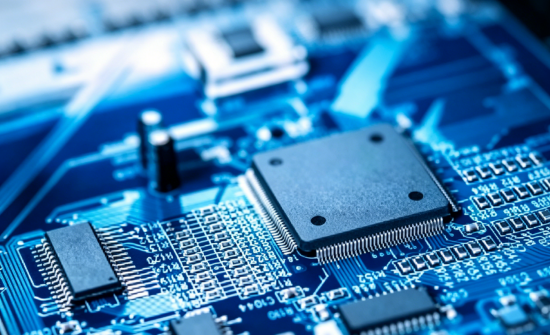
Fortschrittliche Keramikmaterialien dienen als wesentliche Isolationssubstrate sowie als hochpräzise Wafer-Handhabungskomponenten. Ihre hervorragende Wärmeleitfähigkeit sowie ihr elektrischer Widerstand ermöglichen eine effektive Wärmekontrolle in Mikrochips mit hoher Leistung sowie in empfindlichen elektronischen Schaltkreisen. Dies gehört zu den wichtigsten Anwendungen keramischer Werkstoffe.
Luft- und Raumfahrt & Luftfahrt
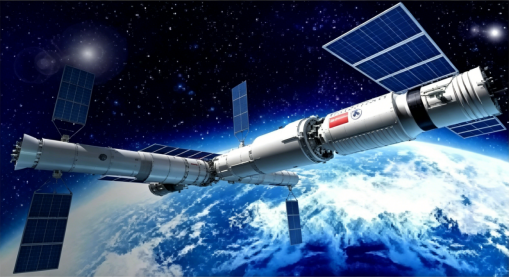
Technische Keramik ist entscheidend für die Schaffung leichter und hochtemperaturbeständiger Strukturen wie Turbinenschaufeln oder Hitzeschilde. Sie können extremen Temperaturen und Oxidation standhalten, Die Leistung der Triebwerke sowie die Sicherheit im Flug werden erheblich verbessert, und auch die Erweiterung des Designs und Layouts von Hochleistungskeramikmaterialien.
Medizinische Geräte
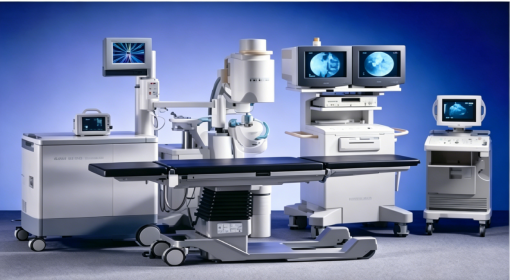
Aufgrund ihrer hohen Biokompatibilität werden Hightech-Keramikprodukte häufig in Zahnimplantaten eingesetzt, orthopädische Prothetik, sowie hochwertige chirurgische Instrumente. Sie bieten eine hohe Verschleißfestigkeit und Stabilität in der Körperumgebung, was sie zu einem wesentlichen Bestandteil keramischer Werkstoffanwendungen macht.
Industrielle Verschleißteile
Entwickelte fortschrittliche Keramikmaterialien wie Ventile, Siegel, und Düsen, bieten außergewöhnliche Leistung gegen Reibung und hohen Druck. Ihre Härte ist extrem hoch, was die Lebensdauer der Geräte deutlich verlängert, Gleichzeitig werden die Wartungskosten in hochindustriellen Prozessen gesenkt.
Energie & Chemische Industrie
Diese Materialien sind für den Umgang mit aggressiven Chemikalien bei erhöhten Temperaturen unverzichtbar. Keramikauskleidungen und -membranen bieten eine unübertroffene Korrosionsbeständigkeit, Gewährleistung der strukturellen Integrität und Zuverlässigkeit der kritischen Energieerzeugungsinfrastruktur.