 JiFeng-Keramik
Aluminiumoxid-Keramikmaterialien
Aluminiumoxidkeramik ist im Grunde ein keramisches Material, bei dem A-Al₂O₃ wird zur Hauptkristallphase. Es ist, nicht nur relativ günstig und leicht zu bekommen, aber es hat auch ein starkes mechanisches Verhalten, gute elektrische Isolierung, und geringer dielektrischer Verlust, Allerdings können die Zahlen im wirklichen Leben etwas variieren. Für technische Zwecke, Aluminiumoxidkeramiken liegen üblicherweise bei einem Al₂O₃-Gehalt im Bereich von ca 75% Zu 99.9%. Und dieser Al₂O₃-Gehalt, Ja, es beeinflusst wirklich, was Sie damit machen können – unterschiedliche Inhalte bedeuten unterschiedliche Eigenschaften und unterschiedliche Arten von Anwendungen.
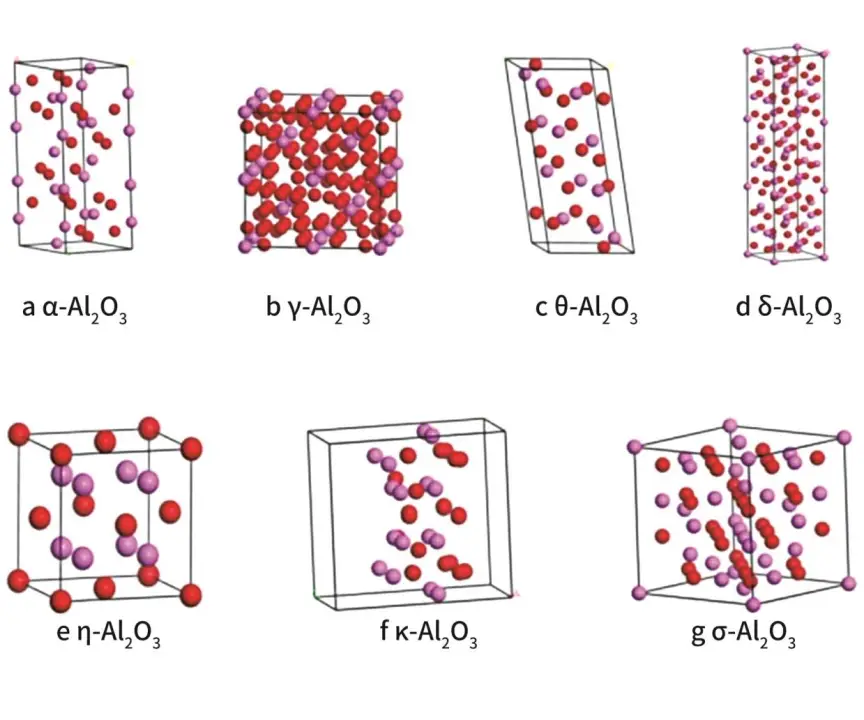
Kristalline Formen von Aluminiumoxid
Aluminiumoxid (Al₂O₃) Es wird normalerweise gesagt, dass es in mehr als zehn kristallinen Anordnungen auftritt, wie α , C , B , oder , D , ich , H , κ-Al₂O₃, und dann auch noch ein amorpher Teil. Aus dieser ganzen Liste, diejenigen, über die die Leute am meisten reden, sind α-Al₂O₃, γ-Al₂O₃, und β-Al₂O₃. Diese verschiedenen Zustände von Aluminiumoxid weisen deutliche Unterschiede in der Art und Weise auf, wie sie aufgebaut sind, sowie in ihren Eigenschaften, Das wiederum führt letztendlich dazu, dass sie dahingehend gesteuert werden, wo sie gebraucht werden.
β-Al2O3 ist ein Polyaluminatmineral, und es hat einen sehr hohen Al₂O₃-Gehalt. In seiner chemischen Zusammensetzung, Es gibt einen bestimmten Gehalt an Erdalkalimetalloxiden plus Alkalimetalloxiden, und abhängig von den Bedingungen, es ist in der Lage, Ionenleitfähigkeit zu zeigen, mehr oder weniger.
γ-Al₂O₃ nimmt eine kubische Struktur vom Spinelltyp an, Es neigt jedoch dazu, thermisch fragil zu sein und wird bei steigenden Temperaturen instabil. Seine mechanischen und elektrischen Eigenschaften sind nicht so stark. Trotzdem, Es hat eine große spezifische Oberfläche und eine ziemlich ausgeprägte chemische Aktivität, also nach einigen technischen Abstimmungen oder technischen Verbesserungen, es kann in ein adsorbierendes Material umgewandelt werden, Das ist sozusagen der Hauptnutzungsweg.
Aluminiumoxidkeramik, mit α-Al₂O₃ (Korundphase) als einzige Hauptkristallphase, besitzen eine hohe Härte, Hochtemperaturstabilität, und hervorragende elektrische Isolationseigenschaften, Damit sind sie das bevorzugte Material für Verschleißfestigkeit, strukturell, und elektronische Keramik.
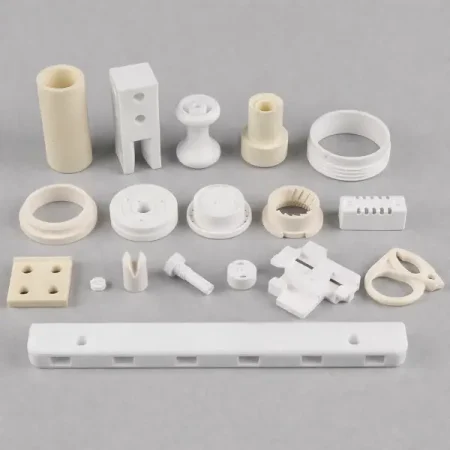
Vorteile von Aluminiumoxid (Al₂O₃) Keramik
Hervorragende elektrische Isolierung & Hoher Volumenwiderstand
Aluminiumoxidkeramik bietet eine hervorragende elektrische Isolierung und einen hohen Durchgangswiderstand, Damit sind sie ideal für elektronische Substrate, Isolatoren, und Radarkomponenten. Sie verhindern Kurzschlüsse und sorgen für eine stabile Leistung in Hochspannungs- und Hochfrequenzanwendungen.
Überlegene mechanische Festigkeit & Härte
Mit hoher mechanischer Festigkeit und extremer Härte, Aluminiumoxidkeramik bietet eine hervorragende Verschleißfestigkeit. Sie verlängern die Lebensdauer mechanischer Teile wie Dichtungen, Ventile, und Düsen, Reduzierung der Wartungskosten.
Hohe thermische Stabilität & Oxidationsbeständigkeit
Aluminiumoxidkeramik behält ihre strukturelle Integrität bei hohen Temperaturen und ist beständig gegen Oxidation. Dies macht sie zuverlässig für Hochtemperaturanwendungen wie Tiegel, Schutzrohre, und feuerfeste Auskleidungen.
Hervorragende chemische Korrosionsbeständigkeit
Aluminiumoxid ist chemisch inert und gegenüber den meisten Säuren äußerst beständig, Alkalien, und korrosiven Umgebungen. In der Chemie- und Energieindustrie leistet es zuverlässig seinen Dienst, Schutz der Ausrüstung vor Beschädigung.
Bewährt, Vielseitig & Kostengünstiges Material
Als eine der ausgereiftesten Hochleistungskeramiken, Aluminiumoxid bietet gleichbleibende Qualität und Kosteneffizienz. Aufgrund seiner breiten Verfügbarkeit und bewährten Verarbeitungsmethoden eignet es sich sowohl für Standard- als auch für kundenspezifische Präzisionskomponenten.
Eigenschaften von Aluminiumoxid (Al₂O₃) Keramik
Al₂O₃ Keramik hat ein breites Anwendungsspektrum. Aufgrund der unterschiedlichen Al₂O₃ Inhalt, ihre Eigenschaften und Verwendungszwecke variieren entsprechend.
| Al₂O₃-Reinheit | Materialtyp | Hauptmerkmale | Typische Anwendungen |
|---|---|---|---|
| ≥ 99.9% | Ultrahochreines Aluminiumoxid | Extrem hohe elektrische Isolierung, ausgezeichnete chemische Reinheit, überlegene thermische Stabilität, geringer dielektrischer Verlust | Halbleiterkomponenten, elektronische Substrate, optische und Laserkomponenten, Hochspannungsisolierung |
| 99.5% – 99.9% | Hochreines Aluminiumoxid | Hohe mechanische Festigkeit, hervorragende Verschleißfestigkeit, gute Wärmeleitfähigkeit, hohe Spannungsfestigkeit | IC-Substrate, elektronische Pakete, Präzisionsisolatoren, Medizin- und Laborkomponenten |
| 99% | Technisches Aluminiumoxid | Ausgewogene mechanische Festigkeit und Kosteneffizienz, gute Verschleiß- und Korrosionsbeständigkeit | Gleitringdichtungen, Lager, Ventilkomponenten, Industrielle Verschleißteile |
| 96% – 98% | Technisches Aluminiumoxid | Hohe Härte, gute elektrische Isolierung, kostengünstig, einfach zu verarbeiten | Elektrische Isolatoren, Keramikrohre, Buchsen, Strukturbauteile |
| 92% – 95% | Industrielles Aluminiumoxid | Mäßige Stärke, gute Thermoschockbeständigkeit, wirtschaftliche Materialauswahl | Ofenteile, Wärmedämmkomponenten, feuerfeste Stützen |
| ≤ 90% | Niedrigreines Aluminiumoxid | Höhere Porosität, geringere mechanische Festigkeit, verbesserte Wärmedämmung | Ofenmöbel, Hitzeschilde, Filterunterstützungen, unkritische Bauteile |
Was ist der Herstellungsprozess für Aluminiumoxidkeramik??

Basierend auf den Produktleistungsanforderungen (wie mechanische Festigkeit, Isolierung, und Wärmeleitfähigkeit), Es wird Aluminiumoxidpulver mit der entsprechenden Reinheit und den entsprechenden Spezifikationen ausgewählt. Durch Mahlen und Mischen in der Kugelmühle, Hinzufügen von Spurenmengen von Leistungsmodifikatoren, und dann Sprühgranulierung, Es werden rieselfähige kugelförmige Partikel erhalten, Vorbereitung für die spätere Formgebung.
- Die Umformtechnik wird je nach Produktform und Anforderungen ausgewählt, einschließlich Trockenpressen, isostatisches Pressen, Spritzguss, und Tapecasting.
- Das Hauptziel besteht darin, eine gleichmäßige Dichte des Grünkörpers sicherzustellen und Risse oder Verformungen während des Sinterns aufgrund von Spannungskonzentrationen zu verhindern.
- Dies ist ein entscheidender Schritt zur Erzielung der endgültigen Leistung des Materials. Der Prozess umfasst die Entbinderung, um organische Bindemittel zu entfernen, Anschließend erfolgt das Sintern bei hohen Temperaturen. Dieser Vorgang erfordert eine genaue Steuerung der Heizkurve, Haltezeit, und Abkühlgeschwindigkeit, um die Pulverpartikel zu verdichten und zu verbinden, Bildung einer robusten Mikrostruktur.
- Fortschrittliche Techniken wie heißisostatisches Pressen oder Funkenplasmasintern können das Kornwachstum weiter unterdrücken, was zu einem nahezu porenfreien Ergebnis führt, sehr dichte Struktur.
- Die gesinterten Rohlinge erfordern eine hochpräzise Bearbeitung durch Diamantwerkzeugschleifen, läppen, Polieren, und sogar Laserschneiden, um strenge Maß- und Oberflächenanforderungen zu erfüllen.
- Das Endprodukt wird umfassenden Tests unterzogen, einschließlich Dichte, Porosität, Mikrostruktur (WELCHE), und mechanische Eigenschaften.
Jifeng Ceramics bringt Aluminiumoxid-Keramikmaterialien, Reinheit, von der es ausgeht 92% bis zu 99.9% , Und ja, es kommt darauf an, was Sie suchen. Wir nutzen unterschiedliche Formungsarten, wie Trockenpressen, Schlickerguss, isostatisches Pressen, Spritzguss, sogar Gelguss, So können wir den unterschiedlichen Erwartungen der Kunden sowie den technischen Anforderungen für komplexere Teiledesigns gerecht werden.
Jifeng Ceramics bietet auch atmosphärisches Sintern an, Heißpressen, plus international fortschrittliche heißisostatische Press- und drucklose Sinteröfen. Darüber hinaus, Es gibt mehrere Präzisionskeramikverarbeitungs- und Testeinrichtungen, denn komplizierte Strukturen und hochpräzise Teile tolerieren in der Regel keine „nahe genug“ Ergebnisse.
Mit modernster Verarbeitungsausrüstung und langjährigem Praxis-Know-how, Wir können eine vollständige Kette von Optionen unterstützen, Von der Materialauswahl über die Designoptimierung bis hin zur individuellen Verarbeitung, Wir helfen ihnen dabei, qualitativ hochwertige Aluminiumoxidkeramikprodukte zu erhalten.
Wenn Sie Aluminiumoxidplatten kaufen müssen, Stangen, Röhren, oder individuell gefertigte Teile, Bitte kontaktieren Sie uns. Unsere Experten helfen Ihnen gerne weiter.
Häufig gestellte Fragen zu Aluminiumoxidkeramik
Ist Aluminiumoxidkeramik spröde??
Aluminiumoxidkeramik ist härter als die meisten Metalle, aber es ist auch von Natur aus spröder. Das bedeutet nicht, dass es unzuverlässig ist. In den meisten industriellen Anwendungen, richtige Dicke, Trägerdesign, und Installation reduzieren das Risiko von Rissen oder Absplitterungen erheblich. Für stark beanspruchte Bereiche, Häufig kommen Keramik-Metall-Verbundkonstruktionen zum Einsatz.
Welchen Aluminiumoxid-Reinheitsgrad sollte ich für meine Anwendung wählen??
Die richtige Reinheit hängt von den Arbeitsbedingungen ab. 92% Aluminiumoxid wird häufig für den allgemeinen Verschleißschutz verwendet. 95% Zu 97% Aluminiumoxid bietet ein gutes Festigkeitsgleichgewicht, Verschleißfestigkeit, und Kosten. 99% Aluminiumoxid wird für Hochtemperatur- oder elektrische Isolationsanwendungen bevorzugt. Durch die Auswahl der richtigen Sorte können Überkonstruktionen und unnötige Kosten vermieden werden.
Kann Aluminiumoxidkeramik Stahl- oder Gummiauskleidungen ersetzen??
Aluminiumoxidkeramik kann in vielen Verschleißanwendungen Stahl oder Gummi ersetzen, insbesondere dort, wo Abrieb die Hauptfehlerursache ist. In Systemen mit extremen Stößen oder Vibrationen, Eine Hybridlösung aus Keramik und Metall ist oft effektiver. Bei der Materialauswahl sollte immer die gesamte Betriebsumgebung berücksichtigt werden.
Wo werden am häufigsten Aluminiumoxid-Verschleißkeramikauskleidungen verwendet??
Verschleißkeramikauskleidungen aus Aluminiumoxid werden häufig im Bergbau eingesetzt, Kraftwerke, Schüttguthandling, chemische Verarbeitung, und Zementindustrie. Typische Anwendungen sind Rutschen, Trichter, Pipelines, Ellenbogen, und Bereiche, die einem kontinuierlichen Strahlmittelfluss ausgesetzt sind.
Wie lange halten Aluminiumoxid-Keramikkomponenten normalerweise??
Die Lebensdauer hängt von der Materialqualität ab, Installationsqualität, und Betriebsbedingungen. In vielen abrasiven Umgebungen, Aluminiumoxidkeramik hält drei- bis zehnmal länger als herkömmliche Stahlauskleidungen. Diese verlängerte Lebensdauer reduziert häufig die Wartungs- und Ausfallkosten.
Sind Aluminiumoxid-Keramikteile korrosions- und chemikalienbeständig??
Aluminiumoxidkeramik weist gegenüber den meisten Säuren eine hervorragende Beständigkeit auf, Alkalien, und chemische Medien. Dadurch eignen sie sich für korrosive Umgebungen, in denen Metallteile schnell beschädigt werden. Jedoch, Die Kompatibilität sollte dennoch für extreme Bedingungen überprüft werden.
Können Aluminiumoxid-Keramikteile individuell angepasst werden??
Ja. Aluminiumoxidkeramikkomponenten können in der Materialqualität individuell angepasst werden, Größe, Dicke, Form, und Montageart. Durch die individuelle Anpassung wird sichergestellt, dass die Keramik richtig zur Ausrüstung passt und unter realen Betriebsbedingungen zuverlässig funktioniert.
