 Céramique JiFeng

Pour des secteurs comme l'aérospatiale, énergie nucléaire, et chimie énergétique où les matériaux doivent résister à des tests environnementaux extrêmes, y compris des températures extrêmes supérieures à 1400 ℃, agents corrosifs sévères, rayonnement neutronique, choc thermique extrême, et une forte usure, les métaux subissent généralement un fluage, oxydation, ou une défaillance par corrosion dans de telles situations. Les matériaux céramiques conventionnels ont du mal à optimiser leurs propriétés. Céramique SiC, avec leurs excellentes propriétés globales, sont devenus les “matière d'étoiles” dans un environnement extrême.
Carbure de silicium (SiC) est un composé covalent composé de silicium et de carbone, avec diverses formes cristallines telles que l'α-SiC et le β-SiC. Céramiques SiC et composites SiC/SiC préparés grâce à des procédés avancés tels que le frittage par réaction, dépôt chimique en phase vapeur (IVC), et eutectique transitoire des nano-implants (NITE) présentent des performances exceptionnelles en matière de résistance à haute température, résistance à la corrosion, et résistance aux radiations. Cet article passera systématiquement en revue les principaux avantages, cas de candidature, et perspectives de développement des céramiques SiC en environnements extrêmes, fournir des références pour des applications de recherche et d'ingénierie dans des domaines connexes.
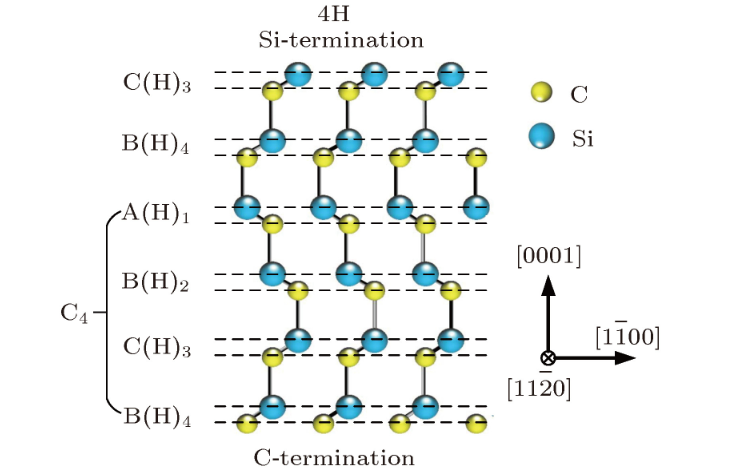
Propriétés fondamentales des céramiques SiC
Les performances supérieures de la céramique SiC proviennent de sa microstructure et de ses propriétés de liaison uniques.:
- Propriétés physiques: Dureté extrêmement élevée (juste derrière le diamant), faible densité (environ 3.2 g/cm³), conductivité thermique élevée (dépassant de loin celui de la plupart des matériaux céramiques), et faible coefficient de dilatation thermique.
- Propriétés mécaniques: Haute résistance et module élastique élevé (380-430 GPa), excellente résistance aux chocs thermiques (ΔT peut atteindre 1100K).
- Propriétés thermiques: Peut fonctionner à des températures supérieures à 1400°C pendant une longue période, et même maintenir l'intégrité structurelle à des températures proches de 3 000 °C., avec une dégradation minimale de la résistance à haute température.
- Autres caractéristiques: Bonnes propriétés semi-conductrices, section efficace d'absorption des neutrons faible, et une excellente stabilité chimique.
Ces propriétés fondamentales permettent aux céramiques SiC de fonctionner exceptionnellement bien dans des conditions extrêmes., ce qui en fait une alternative clé aux matériaux traditionnels.
SiC Cminerai UNavantages dans Eextrême Eenvironnements
- Stabilité thermique et rétention de résistance dans des conditions de haute température
L’un des points forts de la céramique SiC est son excellente rétention de résistance à haute température.. À 1400℃, sa résistance ne montre pratiquement aucune détérioration significative, bien supérieur à la plupart des alliages métalliques et des céramiques d'oxyde. Ceci est attribué à la forte structure de liaison covalente du SiC., ce qui lui confère un point de fusion et une résistance au fluage extrêmement élevés.
Dans les turbines à gaz, moteurs aérospatiaux, et systèmes de propulsion de fusée, Les matériaux SiC peuvent résister à une exposition continue à haute température tout en conservant la stabilité dimensionnelle et l'intégrité mécanique.. Sa conductivité thermique élevée peut également réduire efficacement le stress thermique et augmenter la durée de vie des composants.
- Résistance exceptionnelle à la corrosion et à l’oxydation
Les céramiques SiC présentent une inertie extrêmement forte dans de nombreux environnements corrosifs, comme les acides, socles , sels fondus, et même de la vapeur à haute température. Quand il fait très chaud dans une atmosphère oxydative, une couche protectrice compacte de SiO₂ se forme directement sur la surface; il arrête alors l'oxydation supplémentaire, assez efficacement. A cause de ça, ils s'habituent assez souvent, par exemple dans les réacteurs chimiques, matériel de génie maritime , et fours à haute température.
Par rapport aux matériaux métalliques, Le SiC est moins sujet à la corrosion électrochimique; par rapport à d'autres céramiques, sa résistance à la corrosion se classe parmi les meilleures des céramiques de précision.
- Forte résistance aux radiations et adaptabilité à l’environnement nucléaire
Dans le domaine de l'énergie nucléaire, les avantages de la céramique SiC sont particulièrement évidents. Il présente un faible gonflement induit par les radiations, dégradation minimale des performances mécaniques, et faibles caractéristiques d'activation. Même sous des doses d'irradiation neutronique pouvant atteindre 10²⁶ n/m², il peut maintenir une excellente stabilité dimensionnelle et une excellente résistance.
Les composites SiC sont devenus un matériau candidat important pour les carburants tolérants aux accidents (ATF) bardage, améliorant considérablement la sécurité des réacteurs à eau légère et permettant une combustion et des températures de combustible plus élevées. Des études ont montré que ses performances telles que la conductivité thermique et la résistance à la flexion se dégradent peu après irradiation., bien supérieur aux alliages de zirconium traditionnels.
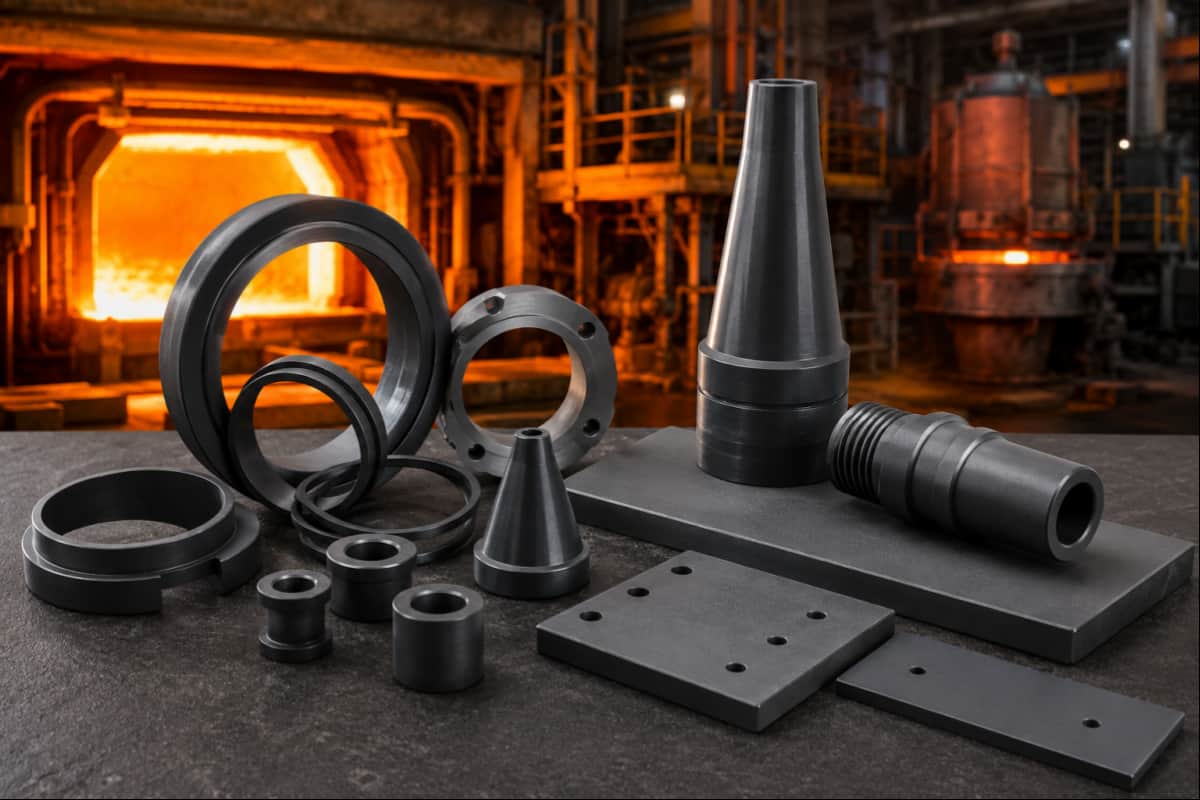
- Résistance aux chocs thermiques, usure et fiabilité mécanique
Les céramiques SiC sont connues pour leur dureté élevée, et une très bonne résistance à l'usure, De plus, ils ont une bonne résistance aux chocs thermiques, ce qui leur permet de supporter des changements rapides de température sans se fissurer trop facilement.. A cause de ça, ils conviennent bien aux pièces à friction à grande vitesse (comme les disques de frein de voiture) et également pour les réglages d'impact plus durs tels que les tuyères de fusée ou les systèmes de protection thermique.
- Léger, haute résistance et performances complètes
La combinaison d'une faible densité et d'une résistance spécifique élevée permet aux matériaux SiC d'obtenir une réduction de poids significative dans le domaine aérospatial.. En même temps, son faible coefficient de dilatation thermique assure la stabilité de la précision sous des températures extrêmes.
Comparaison des céramiques SiC avec d'autres matériaux
| Performance | Céramiques SiC | Céramique d'alumine | Acier inoxydable |
| Résistance aux hautes températures | ★★★★★ | ★★★★☆ | ★★★☆☆ |
| Durabilité | ★★★★★ | ★★★★☆ | ★★☆☆☆ |
| Conductivité thermique | ★★★★★ | ★★☆☆☆ | ★★★☆☆ |
| Résistance à la corrosion | ★★★★★ | ★★★★☆ | ★★★☆☆ |
| Résistance aux chocs thermiques | ★★★★★ | ★★★☆☆ | ★★☆☆☆ |
| Durée de vie | ★★★★★ | ★★★★☆ | ★★★☆ |
Dans l'ensemble, les performances globales de la céramique SiC sont plus remarquables dans des environnements extrêmes tels que des températures élevées, usure élevée, et forte corrosion.
Lequel jeindustries UNconcernant Best Sadapté à Use SiC Ccéramiques?
À mesure que les équipements industriels évoluent vers une plus grande efficacité, une plus grande précision, et une durée de vie plus longue, le champ d'application des céramiques SiC continue de s'étendre.
Les principales industries comprennent:
- Fabrication de semi-conducteurs: Équipements de haute propreté tels que les porte-plaquettes, tubes de four, composants chauffants, etc..
- Industrie chimique: Pompes résistantes à la corrosion, garnitures mécaniques, vannes et équipement de réaction.
- Industrie métallurgique: Tiges et rouleaux de four, composants de support à haute température et équipements de traitement thermique.
- Nouveau champ d'énergie: Échangeurs de chaleur, équipement de fabrication de batteries et composants haute température.
- Aérospatial: Composants structurels haute température, composants résistants à l'usure et pièces clés dans des environnements spéciaux.
Ces industries exigent généralement que les matériaux puissent fonctionner de manière stable pendant une longue période dans des environnements difficiles., et les céramiques SiC répondent précisément à cette exigence.
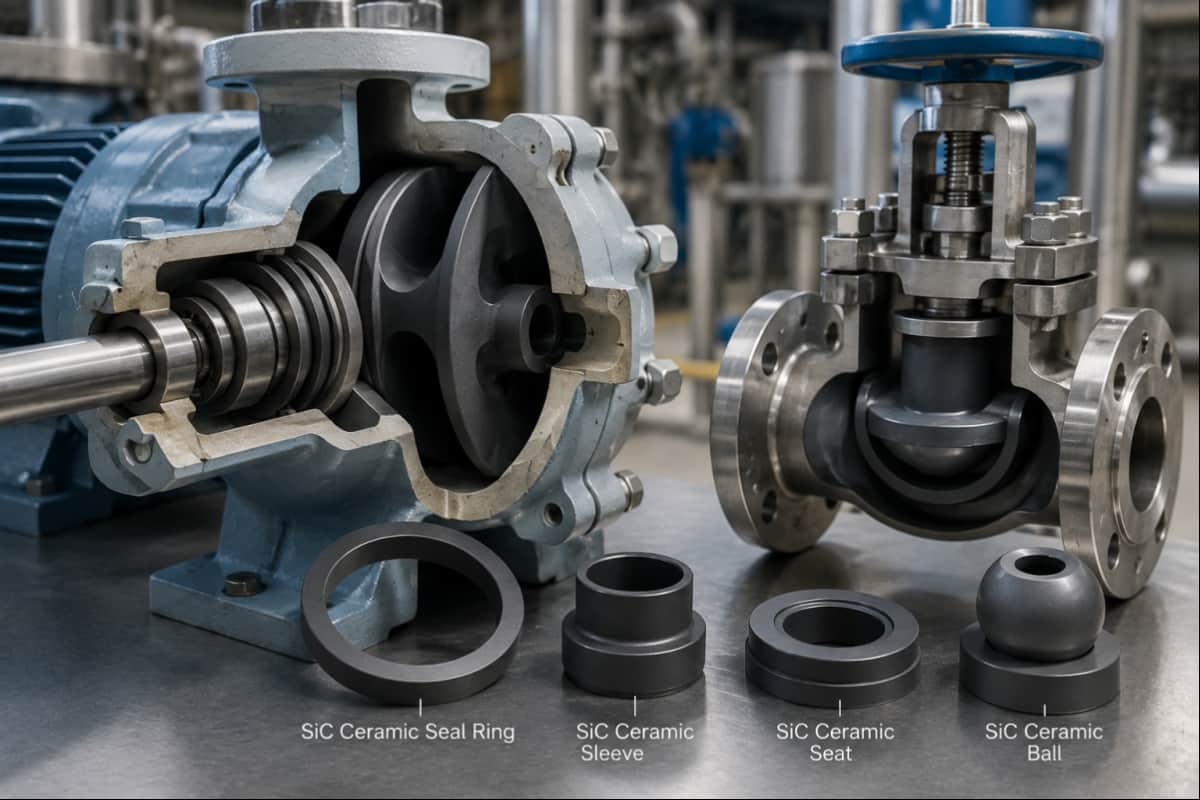
Quoi Sdevrait être Nnoté Wpoule Uchanter SiC Ccéramiques?
Bien que les céramiques SiC possèdent d'excellentes propriétés, les facteurs suivants doivent toujours être pris en compte lors de la conception et de la sélection:
Le coût initial est élevé: Par rapport aux matériaux ordinaires, le prix d'achat est plus élevé, mais le coût d'utilisation à long terme est généralement inférieur.
Le traitement est difficile: En raison de sa dureté extrêmement élevée, cela nécessite généralement l'utilisation d'outils diamantés pour un traitement précis.
Il a encore la fragilité de la céramique: Bien que la force soit élevée, sa résistance aux chocs est encore inférieure à celle des métaux. Donc, pendant la conception, il faut éviter qu'il soit soumis à des charges d'impact sévères.
En sélectionnant la nuance SiC appropriée, processus de fabrication et précision dimensionnelle basés sur les conditions de travail réelles, les avantages du matériau peuvent être pleinement exploités.
Conclusion
Carbure de silicium (SiC) céramique, grâce à leurs nombreux avantages tels que la résistance aux températures élevées, résistance à la corrosion, résistance aux radiations, et résistance aux chocs thermiques, deviennent un matériau clé pour soutenir l’ingénierie des environnements extrêmes. Avec l'avancement de la science des matériaux et de la technologie de fabrication, Le SiC jouera un rôle plus important dans l'aérospatiale, utilisation propre de l'énergie nucléaire, exploration de l'espace profond, et champs d'énergie verte.
