 Céramique JiFeng

Céramiques techniques (également connue sous le nom de céramique avancée ou céramique haute performance) refer to engineering ceramic materials manufactured from strictly controlled natural or synthetic powders and endowed with specific mechanical, thermique, électrique, chimique, optique, ou fonctions biologiques. Par rapport à la céramique traditionnelle, les céramiques techniques exigent une plus grande stabilité des performances, fiabilité, et précision d'application, and have become critical supporting materials in high-end manufacturing sectors such as semiconductors, nouvelle énergie, and healthcare.
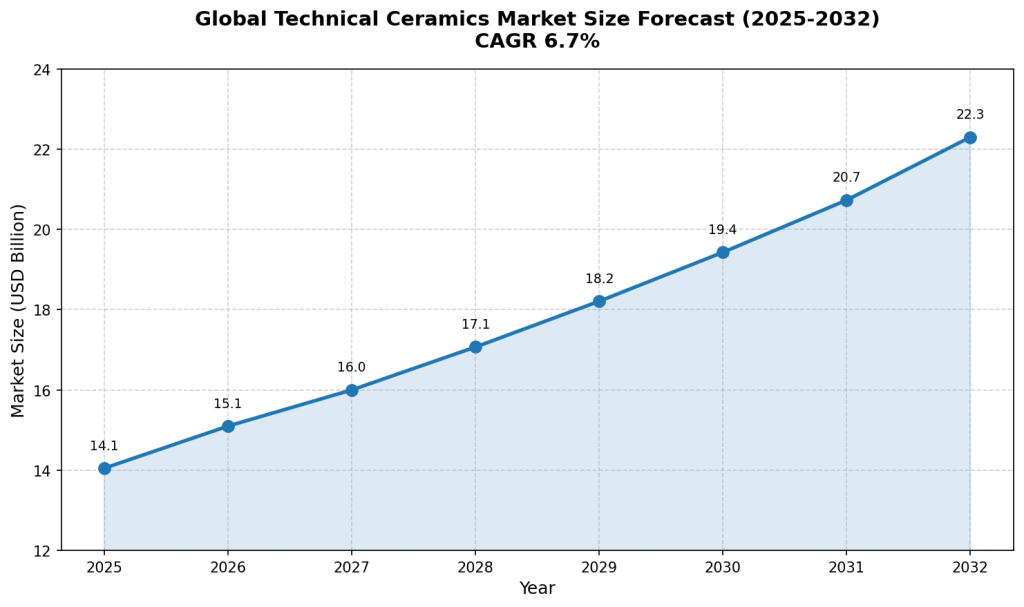
In terms of market size, global technical ceramics sales reached approximately USD 14.05 milliards en 2025 and are projected to reach USD 22.30 billion by 2032, representing a compound annual growth rate (CAGR) of about 6.7%. Another estimate places global sales at around USD 15.1 milliards en 2026. Against this growth backdrop, the period 2026–2030 will be a critical window for technical ceramics to transition from scale expansion toward structural upgrading. This article focuses on the core driving factors during this stage while also examining constraints and development trends.
Market Structure: Functional Ceramics Dominate, China Emerges as a Key Growth Pole
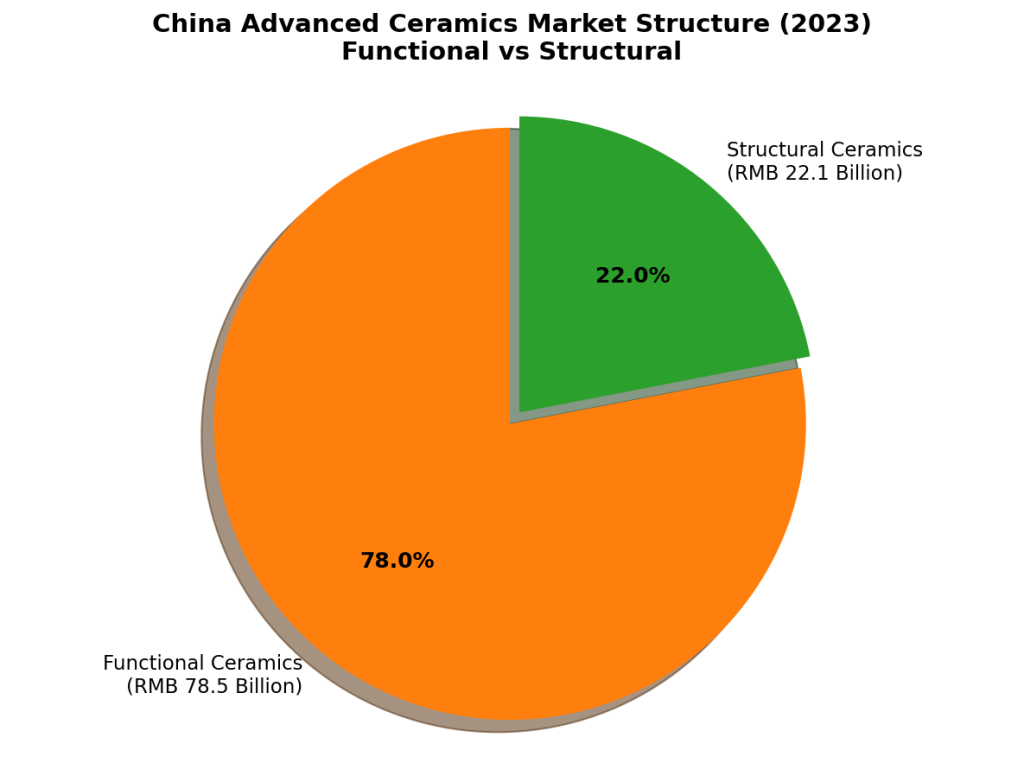
By application, technical ceramics can be divided into structural ceramics and functional ceramics. Functional ceramics currently account for more than 70% of the market and constitute the primary contributor to growth. Structural ceramics mainly provide mechanical performance support, while functional ceramics deliver electrical, thermique, biocompatibility, and other properties that directly serve high-value downstream applications.
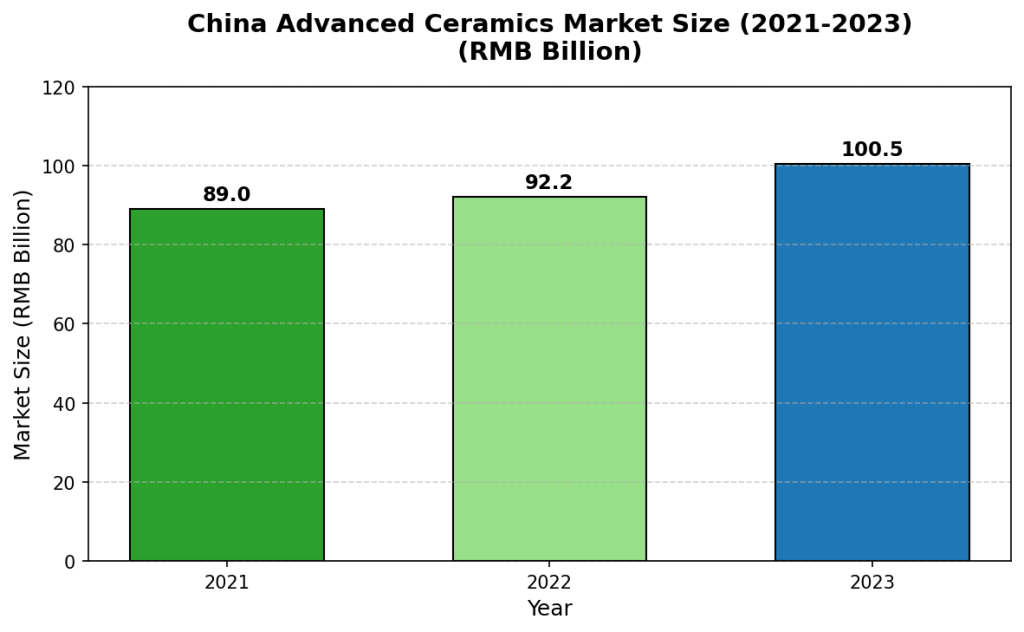
China’s market performance has been particularly notable. Dans 2021, China’s technical ceramics market reached approximately RMB 89 billion, accounting for about 23% of the global total. Par 2023, it had grown to roughly RMB 100.5 billion, of which advanced functional ceramics accounted for about RMB 78.5 billion and advanced structural ceramics about RMB 22.1 billion. China is not only an important demand market but is also accelerating its presence in certain midstream manufacturing segments, gradually reshaping the global supply-demand landscape.
On the global competitive front, Japanese and German manufacturers continue to dominate the high-end market. Kyocera is the world’s largest advanced ceramics supplier, offering more than 200 ceramic materials. NGK holds a strong position in ceramic heaters for semiconductor equipment, while Niterra (formerly NGK Spark Plug) maintains a significant share in electrostatic chucks. High technical barriers and customer qualification requirements in the premium segment ensure relative stability of the competitive landscape in the near term, while still leaving structural opportunities for companies with core capabilities.
This structural characteristic implies that growth from 2026 à 2030 will be driven primarily by functional ceramics, with China’s expanding market scale and deepening applications serving as an important pillar of global growth.
Three High-Growth Main Lines: Core Sources of Driving Factors
Ceramics for Semiconductors and Power Electronics: The Core Medium- to Long-Term High-Growth Track
Global semiconductor capacity expansion and the iteration of power devices continue to release demand for high-purity ceramic structural components and functional substrates. Materials such as aluminum nitride substrates with high thermal conductivity and precision ceramic structural parts are seeing deeper application in wafer fabrication, conditionnement, and power modules. Semiconductor equipment imposes extremely stringent requirements on material purity, tolérance dimensionnelle, particle release control, and stability in plasma environments, making technical ceramics an irreplaceable critical material.
The driving logic of this track is clear: volume growth from capacity expansion on one hand, and performance upgrades driven by advanced process nodes and higher power density on the other. Depuis 2026 à 2030, as the global semiconductor heavy-asset investment cycle continues and power electronics advance toward higher voltages and frequencies, demand for related ceramics is expected to maintain relatively high growth rates, forming the most certain medium- to long-term growth engine for the market.
New Energy and Electric Vehicles: Dual Pull from High-Voltage Platforms and Material Substitution
SiC MOSFETs have become the core technology for 800 V high-voltage platforms, directly driving demand for ceramic substrates and battery insulation materials. The requirements of electric vehicles for lightweighting, efficient heat dissipation, and insulation reliability are elevating technical ceramics from auxiliary materials to critical components.
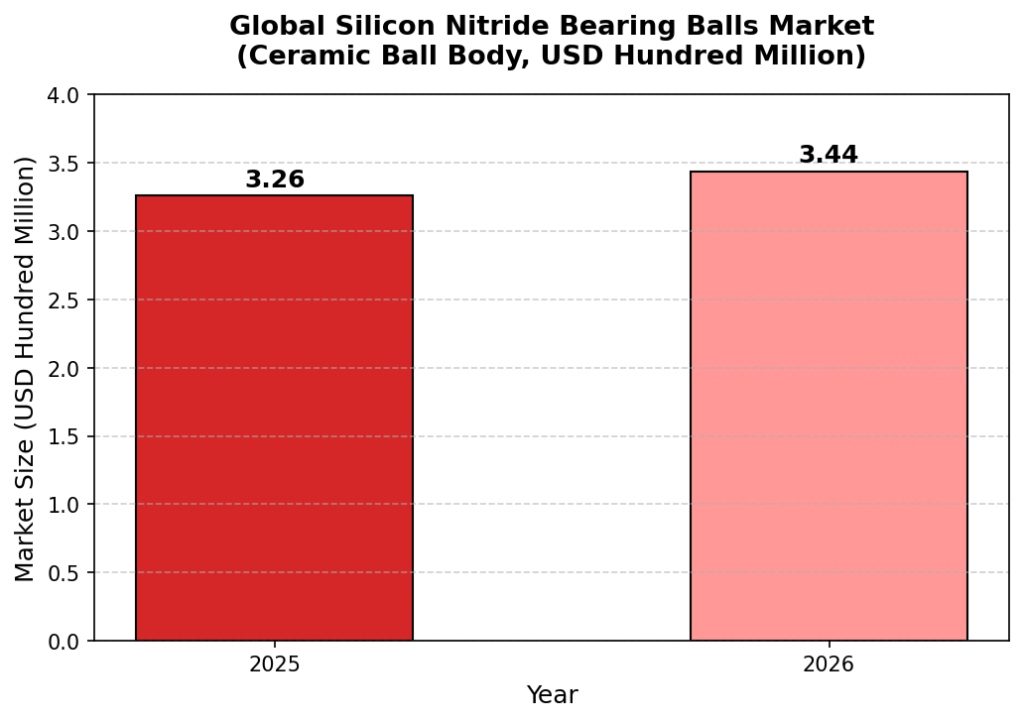
Parmi ceux-ci, silicon nitride bearing balls are on the eve of volume expansion. The global market was approximately USD 326 million in 2025 and is projected to reach about USD 344 million in 2026 (ceramic ball body only). As demand rises for high-speed, low-friction, long-life bearings in electric drive systems, the penetration rate of silicon nitride ceramic balls is expected to accelerate. Although this segment remains relatively small in absolute size, its growth potential is significant and represents an important source of elasticity within the new-energy main line.
The essence of the new-energy driver is “material substitution + system upgrading.” The value of ceramics in thermal management, isolation, and wear resistance as replacements for metals and polymers is being more systematically evaluated by downstream customers, thereby opening sustained volume-expansion space.
Biomedical Ceramics: A Product-Upgrading Direction Driven by Precision Medicine
Bioceramics such as zirconia are accelerating penetration in the precision-medicine field and have become one of the main directions of product upgrading. The combined advantages of biocompatibility, résistance mécanique, and aesthetic performance enable ceramic materials to continue replacing traditional materials in high-end applications such as implants and restorations. With demographic changes and rising healthcare consumption, demand for biomedical ceramics shows strong certainty. The extremely high requirements for material purity and surface-quality control also favor companies with accumulated technical capabilities in forming differentiated advantages.
Together, these three main lines constitute the core driving forces of market growth from 2026 à 2030: semiconductors provide medium- to long-term certainty, new energy contributes elasticity and substitution space, and biomedical applications deliver stable structural upgrading opportunities.
Constraints: Real-World Limitations on the Effectiveness of Drivers
Despite the clear growth outlook, the entire technical-ceramics value chain still faces significant challenges that will affect the pace and quality of driver realization.
Technical barriers across the full chain remain high. Powder synthesis, formation, frittage à haute température, and precision grinding form an interconnected sequence that requires substantial R&D investment and long technology-accumulation cycles, making it difficult for new entrants to establish complete capabilities in the short term.
High-end powders and equipment still depend on external supply. Certain high-purity ceramic powders and specialized sintering equipment remain concentrated among limited suppliers, making supply-chain security and cost control critical variables. En outre, downstream qualification cycles such as automotive-grade certification can take 18–36 months, further lengthening the time from technology breakthrough to large-scale volume.
Homogenized competition in the mid- and low-end segments is intensifying. Relatively low barriers have attracted a large number of manufacturers into mid- and low-end fields, continuously compressing profitability and potentially diverting part of the growth dividend while affecting overall industry capital returns.
These constraints imply that while overall market growth may be robust, the companies that can truly capture the high-growth dividend will be those possessing accumulated strengths in high-end powders, usinage de précision, customer qualification, and system solutions.
Industry Development Trends: Reinforcement and Extension of Driving Factors
Technical ceramics are evolving toward higher material purity, more complex structures, tighter dimensional tolerances, lower particle release, and more complete surface quality, while requiring stable performance under harsh environments involving plasma, vide, corrosive chemicals, high voltage, haute température, and rapid thermal cycling.
Product development has shifted from simple material selection to collaborative optimization of composition, microstructure, formation, frittage, usinage de précision, traitement de surface, and component assembly. This shift raises technical barriers while strengthening the binding between materials and end applications.
Customer requirements are upgrading in parallel. Semiconductor and electronics customers place greater emphasis on contamination control, thermal-expansion matching, performances diélectriques, résistance au plasma, flatness, and traceability. Industrial users are beginning to evaluate the substitution value of technical ceramics for metals, polymers, verre, and cemented carbides from a full life-cycle cost perspective. These changes will further reinforce the driving effects of the three high-growth main lines and may give rise to new niche application scenarios.
Conclusions and Outlook
Dans l'ensemble, the global technical ceramics market from 2026 à 2030 will be driven by the three main lines of semiconductors and power electronics, new energy and electric vehicles, and biomedical applications under a functional-ceramics-dominated structure, supporting the expected CAGR of approximately 6.7%. Continued expansion of the Chinese market and deepening of high-end applications will provide important incremental growth for the global market.
The key to growth quality lies in breakthroughs in high-end capabilities. Powder purity, process collaboration, customer qualification, and full life-cycle cost advantages will determine whether companies can truly seize structural opportunities. Homogenized competition in the mid- and low-end segments and supply-chain constraints constitute the main risks and must be mitigated through technological differentiation and supply-chain security strategies.
En résumé, technical ceramics have moved from a “material selection” stage into a “system solutions” stage. Under the combined trends of semiconductor capacity expansion, electrification upgrading, and medical precision, the market from 2026 à 2030 is expected to achieve simultaneous improvements in scale and quality, with companies possessing core technical capabilities standing to gain significant excess returns.
References
[1] TY Data. Technical Ceramics Market Enters High-Performance Upgrading Phase. October 2026.
Source of global technical ceramics sales data: USD 14.05 milliards en 2025, USD 22.30 milliards en 2032, CAGR 6.7%.
[2] AskCI. 2023 China Advanced Ceramics Materials Market Size and Segment Forecast Analysis. April 2023.
Source of China market data: RMB 89 milliards en 2021 (≈23% of global), approximately RMB 100.5 milliards en 2023; advanced functional ceramics ≈ RMB 78.5 billion, advanced structural ceramics ≈ RMB 22.1 billion.
[3] Research Nester. Silicon Nitride Balls Market Size, Partager & Forecast 2026–2035.
Source of silicon nitride bearing balls (ceramic ball body only) data: approximately USD 326 million (USD 325.62 million) in 2025 and USD 344 million (USD 344.08 million) in 2026.[4] QYResearch. Global Technical Ceramic Market Reports (multiple editions).
Reference for multi-caliber global market estimates and competitive landscape (including major players such as Kyocera).
