 Céramique JiFeng

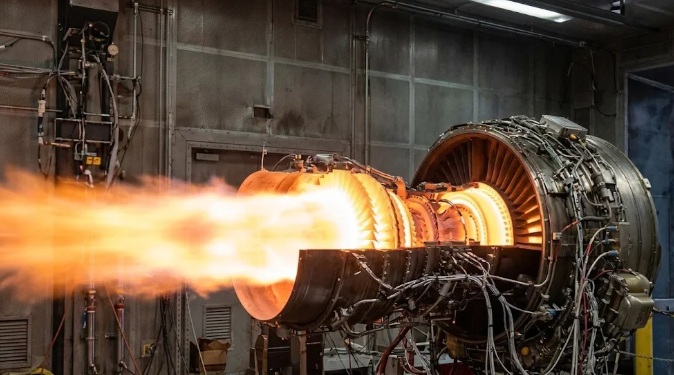
À l’intérieur de la turbine haute pression d’un moteur CFM LEAP 18 carénages de turbine, et aucun d'entre eux n'est en métal. They’re ceramic, and GE has already shipped more than 100,000 d'entre eux. Engineers turned to advanced ceramics because the best alloys need a lot of cooling air to survive in that part of the engine. Ceramics tolerate more heat at about a third of the weight, but they crack more readily. Below is how they actually perform, where they fly, where they fall short, and how to pick one.
Le Short UNréponse
They hold their strength at temperatures that soften metals, and they weigh far less. GE says its ceramic matrix composites run at 2,400°F (about 1,300°C), roughly 500°F above the most advanced alloys, at one-third the weight (GE Reports). Silicon nitride is a monolithic example: one high-temperature grade still measures 499 MPa in bending at 1,400°C (Kyocera).
The catch is toughness. A ceramic that shrugs off extreme heat can still chip if it’s knocked. Most of what follows is about managing that trade.

Why Metals R.un Ôut of R.oom
Nickel alloys carry jet engines a long way, but only with help. Cool air is bled from the compressor and routed through the hot parts, and that air isn’t producing thrust. GE’s CMC lead Sanjay Correa has said engineers are “running out of headroom in metals.” A material that tolerates the heat directly needs less cooling air, so more of the airflow does useful work, and lighter parts reduce the load on everything around them.
How the Main Ceramics Materials Compare
Numbers beat adjectives here. This table uses one manufacturer’s published measurements for three grades. Your supplier’s grade will differ, so read it as a guide to the pattern, not a spec sheet.
| Propriété | Alumine (99.7%) | Carbure de silicium | Nitrure de silicium |
| Résistance à la flexion, room temperature (MPa) | 430 | 445 | 738 |
| Bending strength at 1,200°C (MPa) | 292 | 535 | 594 |
| Résistance à la rupture (MPa·m½) | 4.3 | 2–3 | 6.4 |
| Dilatation thermique, 40–800°C (10⁻⁶/°C) | 8.0 | 4.4 | 2.9 |
| Conductivité thermique (W/m·K) | 32 | 200 | 64 |
Source: Kyocera in-house representative values for grades AO480S, SC1000 and SN282A. They are not guaranteed specifications.
The pattern is clear. Alumina loses about a third of its room-temperature strength by 1,200°C. Silicon nitride loses about a fifth, and Kyocera still reports 468 MPa at 1,500°C. Silicon carbide stays above its room-temperature strength through 1,200°C and conducts heat roughly six times better than alumina, which is why it shows up where heat has to be spread out. It is also the least tough of the three. Zircone, boron nitride and aluminum nitride appear in aerospace too, mostly as thermal barriers, insulators and heat spreaders.
Where Céramiques avancées Fly
Engine hot sections
CMC shrouds first flew in the LEAP, and the GE9X widened their use to combustor liners and turbine nozzles. A GEnx test engine ran 2,800 endurance cycles, and GE reported its CMC parts in pristine condition at teardown. These CMCs are silicon carbide fibers inside a silicon carbide matrix, and the fibers are what give the material metal-like toughness instead of the brittleness of a plain ceramic.
Hypersonic leading edges
NASA notes that sharp leading edges on hypersonic vehicles can face temperatures above 2,000°C, and it has studied hafnium and zirconium diboride ceramics for the job. Their melting points, 3,245°C for zirconium diboride and 3,380°C for hafnium diboride, leave plenty of room. Early versions were weak and cracked under thermal shock. Sandia traced much of that to processing: clumped powder, uneven microstructure and impurities at grain boundaries. The material was fine. The manufacturing wasn’t.
Space optics
ESA’s Herschel telescope carries a 3.5-metre mirror made almost entirely of silicon carbide, which ESA describes as the largest piece of ceramic ever manufactured. Twelve segments were brazed together at 1,400°C and machined to about 3 mm d'épaisseur, so the whole telescope weighs 320 kilos. A glass mirror of that size would weigh around a tonne and a half. The same material family sits behind Jifeng’s silicon carbide mirror.
Where Céramiques avancées Struggle
Ceramics fail with little warning. There’s almost no plastic deformation to give you a heads-up, so a small flaw can grow into a fracture. Look at the table: silicon carbide’s toughness is 2 à 3 MPa·m½, against 6.4 for the silicon nitride grade. Choc thermique, machining cost, joining ceramic to metal and long certification timelines add friction too.
None of that rules ceramics out. It means the design has to account for it from day one: gentle thermal gradients, rounded corners, and compressive loading wherever possible.
Comment Choose Céramiques avancées
Start with three questions. What are the peak and sustained temperatures? What kind of load is it: impact, bending or thermal cycling? And what happens if the part fails?
Then use the table as a rough guide. Moderate temperatures and cost pressure point to alumina. Sustained load near 1,200 to 1,400°C, or heavy thermal cycling, points to silicon nitride. Stiffness, heat spreading and optics point to silicon carbide. Past 1,500°C, where the table runs out of data, you’re into CMC or ultra-high-temperature territory, and the choice becomes a research question.
What to UNsk a Supplier
Ask for bend-strength data at your service temperature, not just room temperature. Ask how density and microstructure are controlled, since Sandia’s experience shows how much that matters. Ask about machining tolerances and batch traceability.
Jifeng works with alumina, zircone, nitrure de bore, nitrure de silicium, silicon carbide and aluminum nitride, and handles R&D, frittage, precision machining and testing in-house. You can read more on its aerospace page and its qualité et tests page. If you have a drawing and a service temperature, demander un devis.
FAQ
What is the maximum temperature advanced ceramics can withstand?
It depends on the type. The silicon nitride grade above keeps strength to 1,500°C, and diboride ceramics are being developed for use above 2,000°C.
Are ceramics better than metals for jet engines?
In the hottest sections they can be, because they’re lighter and need less cooling air. Elsewhere, the toughness of metals still wins.
What is a ceramic matrix composite?
Ceramic fibers embedded in a ceramic matrix. GE uses silicon carbide fibers in a silicon carbide matrix.
Which advanced ceramic is best for aerospace?
There’s no single winner. Match the material to the temperature, load and failure risk, as in the section above.
If heat is your main problem and you can design around brittleness, advanced ceramics deserve a serious look.
