 JiFeng-Keramik

In vielen industriellen Umgebungen, Bei der Auswahl der Komponentenmaterialien ging es in der Vergangenheit hauptsächlich um metallische Werkstoffe: Edelstahl, Aluminiumlegierungen, Kupferlegierungen, und Titanlegierungen sind gängige Optionen. Jedoch, in Umgebungen, die hohe Temperaturen erfordern, Isolierung, Verschleißfestigkeit, Korrosionsbeständigkeit, Leichtbau, oder hohe Präzision, Metallische Werkstoffe sind nicht immer die optimale Lösung.
Deshalb zieht Hochleistungskeramik zunehmend Ingenieure an’ Aufmerksamkeit.
Bei der hier besprochenen Hochleistungskeramik handelt es sich nicht um Alltagskeramik, sondern technische Keramikmaterialien wie Aluminiumoxidkeramik, Zirkonkeramik, Siliziumnitridkeramik, Aluminiumnitrid-Keramik, Siliziumkarbidkeramik, und Bornitrid-Keramik. Diese werden typischerweise in Maschinen verwendet, Elektronik, Halbleiter, Vakuumausrüstung, Wärmemanagement, Chemikalien, medizinische Geräte, und neue Energiefelder.
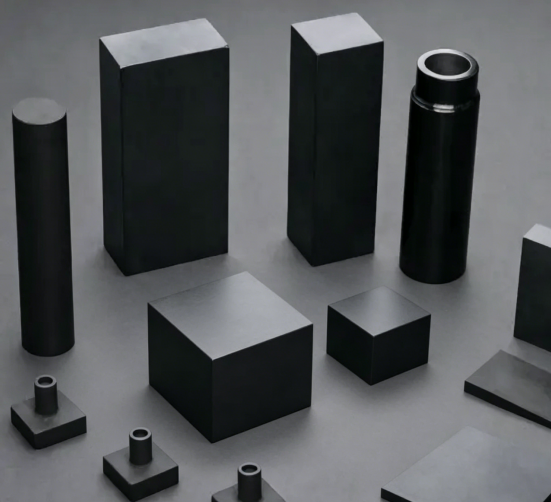
Was ist Hochleistungskeramik??
Im Gegensatz zu traditioneller Keramik, die für Haushaltsprodukte verwendet wird, Hochleistungskeramik wird aus hochveredelten Materialien in präzise kontrollierten Herstellungsprozessen hergestellt. Sie sind darauf ausgelegt, in anspruchsvollen Industrieumgebungen, in denen herkömmliche Materialien häufig versagen, eine konstante Leistung zu liefern.
Gängige technische Keramikmaterialien enthalten:
- Aluminiumoxid (Al₂O₃)
- Zirkonoxid (ZrO₂)
- Siliziumnitrid (Si₃N₄)
- Siliziumkarbid (SiC)
- Aluminiumnitrid (AlN)
- Bornitrid (BN)
Jedes Material bietet einzigartige mechanische Eigenschaften, Thermal-, und elektrische Eigenschaften, Dadurch können Ingenieure die beste Lösung für bestimmte Anwendungen auswählen.
Was PProbleme DO Afortgeschritten CKeramik SWölfe?
Viele Leute, die neu im Bereich Keramikteile sind, fragen: Ist Keramik günstiger als Metall??
Bezogen auf die Bearbeitungskosten pro Einzelteil, Hochwertige Keramik hat eigentlich keinen Vorteil. Ihr wirklich unersetzlicher Vorteil liegt in ihrer Fähigkeit, komplexen und rauen Arbeitsumgebungen standzuhalten, denen Metalle einfach nicht standhalten können.
Metalle werden weicher, Rost, und verformen sich bei hohen Temperaturen; In stark korrosiven Umgebungen müssen sie schnell ausgetauscht werden; Sie sind als Leiter in Hochspannungsanwendungen, die eine Isolierung erfordern, völlig unbrauchbar; Metalle verschleißen bei Hochgeschwindigkeitsreibung schnell, Dies führt zu einer drastischen Reduzierung der Präzision und Lebensdauer der Geräte; Halbleiter- und Vakuumgeräte erfordern ebenfalls kontaminierte Materialien, formstabil, und äußerst sauber – Anforderungen, die Metalle nur schwer erfüllen können.
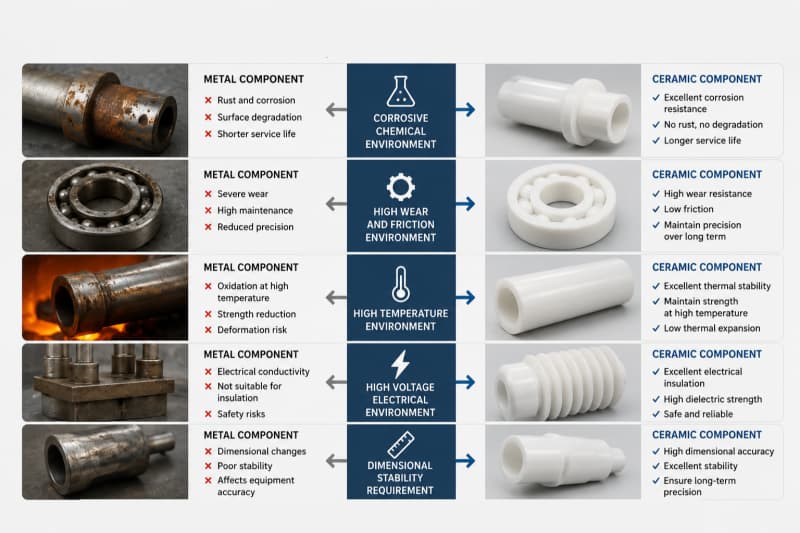
Sechs Gründe, warum Hochleistungskeramik zur bevorzugten Wahl wird
Hochleistungskeramik ist nicht ohne Grund teuer; Ihr Wert liegt in der langfristigen Haltbarkeit, stabiler Betrieb, und besondere Eigenschaften, die Metalle nicht erreichen können.
- Große Verschleißfestigkeit
Härter als gehärteter Stahl. Keramikteile bleiben dauerhaft maßhaltig, Reduzierung des Wartungsaufwands und Verlängerung der Gerätelebensdauer.
- Starke Korrosionsschutzeigenschaft
Beständig gegen Säuren, Laugen und korrosive Gase. Ideal für Chemikalien, Pharma- und Umweltflüssigkeitsausrüstung, um unerwartete Abschaltungen zu vermeiden.
- Stabil bei hohen Temperaturen
Im Gegensatz zu Metallen, die unter Hitze erweichen/oxidieren, Keramik behält Festigkeit und Form für Öfen, Halbleiter- und Wärmeverarbeitungsgeräte.
- Hervorragende elektrische Isolierung
Aluminiumoxid und AlN bieten eine gute Isolierung und thermische Stabilität, weit verbreitet in Halbleitern, Elektronik und Hochspannungsgeräte.
- Zuverlässige Dimensionsstabilität
Die geringe Wärmeausdehnung verhindert Verformungen bei Temperaturänderungen, unerlässlich für die Präzision, optische und Halbleitergeräte.
- Niedrigere langfristige Gesamtkosten
Höhere Anschaffungskosten als bei Metall, Eine längere Lebensdauer und weniger Austausch reduzieren jedoch die gesamten Lebenszykluskosten.
Auswahl des richtigen Keramikmaterials
Jede Art von Hochleistungskeramik hat ihre eigenen Stärken, und es gibt keine universellen Ersatzstoffe. Die Auswahl muss sich an den konkreten Einsatzbedingungen orientieren:
- Aluminiumoxidkeramik: Größtes Anwendungsspektrum, mäßige Gesamtkosteneffizienz, verschleißfest, isolierend, und korrosionsbeständig; die erste Wahl für herkömmliche isolierende und verschleißfeste Konstruktionsteile.
- Zirkonoxidkeramik: Höhere Zähigkeit und Schlagfestigkeit, guter Präzisionsbearbeitungseffekt, Geeignet für hochpräzise Teile wie Präzisionswellen, Kolben, und Positionierungskomponenten.
- Siliziumnitrid-Keramik: Hohe Temperaturbeständigkeit, Thermoschockbeständigkeit, und hohe Belastbarkeit; Wird hauptsächlich im Hochgeschwindigkeitsbereich verwendet, verschleißfest, und Hochtemperaturbedingungen, wie Lagerkugeln und Schweißstifte.
- Aluminiumnitrid-Keramik: Es zeichnet sich vor allem durch eine hohe Wärmeleitfähigkeit und Isolierung aus; ein spezielles Material für Wärmeableitungssubstrate in der Elektronik, Halbleiter, und LEDs.
- Siliziumkarbidkeramik: Hohe Temperaturbeständigkeit, starke Korrosionsbeständigkeit, und extreme Verschleißfestigkeit; die bevorzugte Wahl für Komponenten in rauen Umgebungen wie chemische Dichtungen, Düsen, und Buchsen.
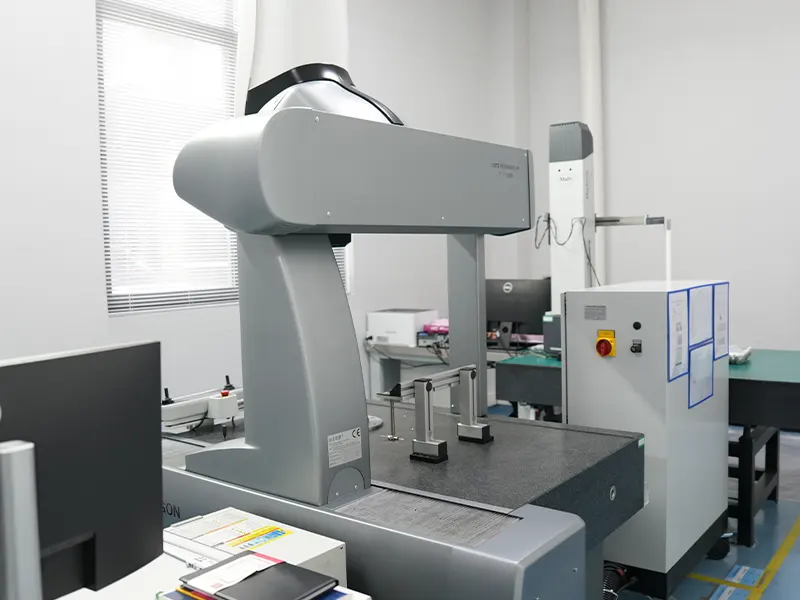
Beurteilen Sie Hochleistungskeramik niemals nur anhand des Materialnamens
Sogar innerhalb derselben Kategorie von Aluminiumoxidkeramiken, verschiedene Reinheiten, Formulierungen, Formverfahren, und Sinterprozesse können zu unterschiedlichen tatsächlichen Eigenschaften führen. Ähnlich, Zirkonoxidkeramiken können je nach Stabilisatorsystem unterschiedliche Eigenschaften aufweisen, Kornstrukturen, und Verarbeitungsmethoden.
Bei der Auswahl von Keramik für Ingenieurprojekte, Es wird empfohlen, zumindest die folgenden Informationen zu klären:
- Betriebstemperaturbereich;
- Ob elektrische Isolierung oder Wärmeleitfähigkeit erforderlich ist;
- Ob es mit korrosiven Medien in Kontakt kommt;
- Ob es Stößen standhält, Reibung, oder zyklische Belastungen;
- Dimensional, Toleranz, und Anforderungen an die Oberflächenrauheit;
- Ob die Menge für das Prototyping bestimmt ist, Kleinserienfertigung, oder langfristige Produktion;
- Ob Metallisierung, Hartlöten, oder eine Keramik-Metall-Verbindung erforderlich.
Diese Informationen sind aussagekräftiger als nur zu fragen “Welche Keramik ist die Beste?”
Zusammenfassung
Hochleistungskeramik wird zunehmend eingesetzt Präzisionsindustriekomponenten. Der wesentliche Grund dafür liegt nicht darin, dass das Konzept neu ist, Sie können jedoch eine Leistungskombination bieten, die für Metallwerkstoffe unter bestimmten rauen Bedingungen nur schwer gleichzeitig zu erreichen ist: Verschleißfestigkeit, Isolierung, Korrosionsbeständigkeit, hohe Temperaturbeständigkeit, Wärmeleitfähigkeit, geringe Umweltverschmutzung, und Dimensionsstabilität.
Jedoch, Der erfolgreiche Einsatz keramischer Bauteile hängt oft nicht nur vom Materialnamen ab, sondern auch auf die konstruktive Gestaltung, Verarbeitungsmöglichkeiten, Prozesswege, und die Anpassung an die tatsächlichen Arbeitsbedingungen.
