 JiFeng-Keramik

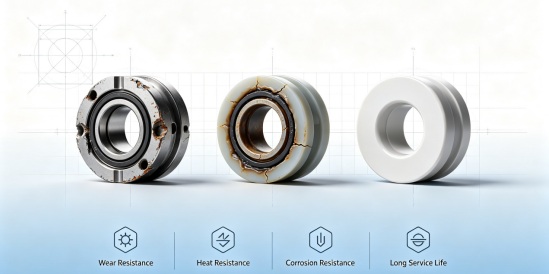
Alle sechs Monate wird eine Pumpendichtung ausgetauscht. Eine Metallführungsschiene ist nach einem Jahr Dauerbetrieb außerhalb der Toleranzgrenzen abgenutzt. Eine Ofenkomponente, die oxidiert und ausfällt, bevor der Produktionszyklus endet. Dabei handelt es sich nicht um isolierte Wartungsprobleme, sondern um Symptome eines Materialauswahlproblems. Zu den häufigsten Ausfallmechanismen gehört Hitze, Verschleiß oder chemische Schäden, Sowohl Metalle als auch Kunststoffe befinden sich von Anfang an in einem harten Kampf. Für diese Situationen ist verschleißfeste technische Keramik konzipiert, ein völlig anderes Leistungsprofil bieten, durch messbare Daten gestützt.
Das eigentliche Problem mit Metallen und Kunststoffen in anspruchsvollen Umgebungen
In anspruchsvollen Industrieumgebungen, Herkömmliche Materialien versagen oft aufgrund vorhersehbarer physikalischer Einschränkungen.
Wo Metalle zu kurz kommen
Der Standard für gehärteten Stahl, das für verschleißkritische Bauteile eingesetzt wird, ist deutlich weniger hart als technische Keramik. Darüber hinaus, während der Spitzenwert von Stahl bei etwa liegt 800 Vickers (HV) und das Aluminiumoxid (Al₂O₃) beginnt um 1,500 HV und das Siliziumkarbid (SiC) übertrifft die 2,500 HV. Daher, Keramik ist in der Lage, gehärteten Stahl um ein Vielfaches zu überdauern 10-50 unter der abrasiven Umgebung. Auch Metalle leiden unter Temperaturen und Korrosion. Edelstahl wird oberhalb von 500 °C deutlich schwächer und erfordert teure Beschichtungen zur Bekämpfung der chemischen Zersetzung, während Zirkonoxidkeramik während der gesamten Zeit inert bleibt 1-14 pH-Bereich und Beibehaltung der strukturellen Integrität über 1.600 °C hinaus, Die Leitfähigkeit metallischer Materialien schließt diese Materialien oft von Halbleiter- oder Hochspannungsanwendungen aus.
Wo Kunststoffe noch früher versagen
Technische Kunststoffe wie PEEK weisen eine gute chemische Beständigkeit auf, Dennoch stoßen sie tendenziell an eine kleine Leistungsobergrenze. In der Praxis, ihre Betriebsgrenze liegt bei etwa 260°C, und sobald sie diesen Punkt erreicht haben, werden sie weicher, dann verlieren die Teile an Maßhaltigkeit , was für dichte Baugruppen wie Dichtungen ziemlich katastrophal ist, und Lager. Darüber hinaus, Kunststoffe zeigen auch „Kriechen“, das heißt, Unter ständiger mechanischer Belastung verformen sie sich im Laufe der Zeit allmählich. In hochreinen Umgebungen wie pharmazeutischen Arbeiten, oder Halbleiterproduktion, Dies wird noch schlimmer, da auch die Sorge um die Freisetzung von Mikropartikeln und die Migration von Chemikalien besteht. Wenn Sie also eine wirklich extreme Hitzetoleranz benötigen, exakte Dimensionsstabilität, oder Reinraumverarbeitung, Technische Keramik tritt mit einer Leistungsfähigkeit an, mit der weder Metalle noch Kunststoffe wirklich mithalten können.
Wie sich die Leistung verschleißfester technischer Keramik unterscheidet – die Daten
Technische Keramik ist nicht einfach “härtere Metalle.” Sie basieren auf unterschiedlichen materiellen Prinzipien, und ihre Vorteile unter anspruchsvollen Bedingungen sind quantifizierbar.
Härte und Verschleißfestigkeit
Der Härtevorteil technischer Keramik gegenüber Metallen ist nicht inkrementell, sondern kategorisch. Der folgende Vergleich verdeutlicht das Ausmaß des Unterschieds:
| Material | Vickers-Härte (HV) | Relative Lebensdauer |
| Kohlenstoffstahl | 200–400 | 1× |
| Gehärteter Werkzeugstahl | 600–800 | 1.5–2× |
| SPÄHEN (Plastik) | ~50 | 0.3–0,5× |
| Aluminiumoxid (Al₂O₃) | 1,500–1.800 | 10–30× |
| Siliziumkarbid (SiC) | 2,500+ | 20–50× |
| Zirkonoxid (ZrO₂) | 1,200–1.400 | 8–20× |
In abrasiven Schlammpumpenanwendungen, Al₂O₃-Auskleidungskomponenten erreichen regelmäßig Standzeiten 15 Zu 20 mal länger als gleichwertige Gusseisenkomponenten unter identischen Betriebsbedingungen.
Thermische Stabilität
Der Unterschied in der Temperaturleistung zwischen Keramik und Metall wird bei kontinuierlichen Hochtemperaturbetrieben am schwerwiegendsten. Si₃N₄ behält eine Biegefestigkeit von über 600 MPa bei 1.200 °C – eine Temperatur, bei der die meisten technischen Metalle längst ihre strukturelle Nützlichkeit verloren haben. SiC kombiniert eine außergewöhnliche Hochtemperaturfestigkeit mit einer Wärmeleitfähigkeit von 120 W/m·K, Dies macht es nicht nur als Strukturmaterial wirksam, sondern auch als Wärmemanagementmaterial in anspruchsvollen thermischen Umgebungen.
Chemische Inertheit
Bei Prozessen, bei denen aggressive Chemikalien zum Einsatz kommen, Die Korrosionsbeständigkeit technischer Keramik kann einen ganzen Fehlerprozess verhindern, der eine ständige Kontrolle durch Metalle erfordert. ZrO₂ und Al₂O₃ sind in stark sauren Umgebungen fest (mit Ausnahme von Flusssäuren für das Aluminiumoxid) sowie starke Laugen und oxidierende Bedingungen. Im Gegensatz zu Edelstahl, die in chloridhaltigen Medien mit Konzentrationen von nur einigen hundert Teilen einer Million zu Lochfraß neigen können. Diese Keramiken zeigen keine nennenswerte Verschlechterung, wenn sie den gleichen Bedingungen ausgesetzt werden.
Reibung und Oberflächenleistung
Keramik-auf-Keramik-Kontakte erzeugen dazwischen trockene Reibungskoeffizienten 0.1 Zu 0.3 im Vergleich zwischen 0.5 bis zu 1.2 in Stahl-auf-Stahl. In Situationen, in denen die Schmierung eine Herausforderung sein kann, zeitweilig oder nicht erwünscht — Lebensmittelverarbeitungsgeräte und medizinische Geräte, sowie Halbleiterwerkzeuge, Diese Unterscheidung ermöglicht den sicheren Betrieb von Keramikteilen in Umgebungen, in denen Metalle aufgrund der Wechselwirkung von Schmiermitteln unzulässigen Verschleiß oder Verunreinigungen verursachen.
5 Szenarien, in denen technische Keramik die beste Leistung erbringt
1. Dichtungsringe für Chemiepumpen
Der Zustand: Mit abrasiven Partikeln beladene Flüssigkeit, Chemikalien, die ätzende Wirkungen haben, und kontinuierliche Rotationsreibung bei hohen Geschwindigkeiten.
Standardstahl, und Wolframkarbid-Dichtungsringe für anspruchsvolle Chemiepumpenanwendungen müssen im Allgemeinen jeden Tag ausgetauscht werden 6 – 12 Monate. SiC-Dichtungsflächen innerhalb desselben Prozesses haben normalerweise eine Lebensdauer zwischen 1 und 2 Jahren 3 Und 7 Jahre. das eine Härte, die dem Verschleiß durch abrasive Substanzen widersteht, mit chemischer Inertheit kombiniert, Dies verhindert eine korrosionsbedingte Verschlechterung. Zwei Fehlermechanismen, die zum Austausch von Metalldichtungen führen, gelten nicht für SiC.
2. Komponenten für die Halbleiterfertigung
Der Zustand: Ultrareine Umgebung ohne Toleranz gegenüber metallischen Verunreinigungen, wiederholte Plasmaexposition, Temperaturwechsel.
Komponenten aus Aluminiumlegierungen, die in Plasmaätzkammern verwendet werden, erzeugen unter Ionenbeschuss Metallmikropartikel – Partikel, die auf Siliziumwafern landen und Defekte erzeugen, die nicht behoben werden können. Al₂O₃ und Bornitrid (BN) Kammerauskleidungen erzeugen keine metallischen Verunreinigungen, halten der Plasmachemie ohne Zersetzung stand, und die Dimensionsstabilität über Tausende von thermischen Zyklen hinweg aufrechtzuerhalten. In der Halbleiterfertigung, Hierbei handelt es sich nicht um Leistungsvorteile, sondern um Zugangsvoraussetzungen.
3. Textile Drahtführungen
Der Zustand: Hochgeschwindigkeitsgarn läuft bei 1,000 Zu 2,000 Meter pro Minute im Dauerkontakt mit der Führungsfläche.
Stahldrahtführungen in Hochgeschwindigkeits-Textilmaschinen verschleißen innerhalb weniger Wochen nach der Installation sichtbar, und die dadurch entstehende Oberflächenbeeinträchtigung – Mikrorillen und raue Stellen – wirkt sich direkt auf die Garnqualität in Form erhöhter Bruchraten und Oberflächenfehler aus. Al₂O₃-Drahtführungen halten in der gleichen Anwendung um den Faktor 5 länger als Stahl 15 Zu 25, während ihre hervorragende Oberflächenbeschaffenheit die Garnbruchrate messbar reduziert. Die Ökonomie ist einfach: weniger Führungswechsel, weniger Ausfallzeiten, und gleichzeitig eine bessere Produktqualität.
4. Hochtemperatur-Brennhilfsmittel
Der Zustand: Temperaturen über 1.400°C, wiederholter Temperaturwechsel, Kontakt mit keramischen oder elektronischen Bauteilen, die gebrannt werden.
Brennhilfsmittel aus Metall oxidieren bei den Brenntemperaturen zunehmend, Es verunreinigt die zu sinternden Produkte und erfordert einen Austausch, da es sich verformt und schwächer wird. Si₃N₄- und SiC-Brennhilfsmittel behalten ihre strukturelle Integrität über Tausende von Brennzyklen hinweg, erzeugt keine kontaminierenden Oxidspezies, und unterstützt eine strengere Dimensionskontrolle der gebrannten Produkte. Beim Sintern von Präzisionselektronikkomponenten, wobei die Kontaminationstoleranz in Teilen pro Million gemessen wird, Diese Unterscheidung ist absolut.
5. Hochgeschwindigkeits-Präzisionslagerkugeln
Der Zustand: Spindellager arbeiten oben 50,000 U/min, eingeschränkte Schmierung, kombinierte radiale und axiale Belastung.
Si₃N₄-Keramiklagerkugeln haben eine Dichte von ca 40% weniger als Stahl, Dadurch wird die Zentrifugalkraft auf den Lagerring verringert, wenn diese mit höheren Drehzahlen betrieben werden. Der Wärmeausdehnungskoeffizient (3.2 × 10⁻⁶/°C) ist deutlich geringer als bei Stahllagern (12 × 10⁻⁶/°C),Dadurch bleibt das Innenspiel der Lager bei Temperaturschwankungen erhalten, die zu Stahllagern oder übermäßigem Spiel führen können. Für Hochgeschwindigkeitsspindeln für Werkzeugmaschinen sowie medizinische Geräte, bei denen es auf Präzision ankommt, Si₃N₄-Hybridlager haben unter den gleichen Betriebsbedingungen durchweg eine drei- bis fünfmal längere Lebensdauer als entsprechende Ganzstahllager.
Der Fall in einem Satz
In Betriebsumgebungen, in denen Verschleiß auftritt, erhöhte Temperatur, und chemische Belastung sind die Hauptursachen für Ausfälle, Verschleißfeste technische Keramik übertrifft nicht einfach nur Metalle und Kunststoffe – sie beseitigt Fehlerarten, die Metalle und Kunststoffe unabhängig von der Qualität oder Oberflächenbehandlung nicht lösen können.
Ausgangspunkt jeder Bewertung ist eine klare Beschreibung des tatsächlichen Fehlermechanismus in der aktuellen Komponente: Was ist die Ursache dafür, dass es scheitert?, zu welchem Tempo, und unter welchen konkreten Bedingungen.
Beim Tragen, Hitze oder Korrosion ist die Antwort, Die Leistungsdaten der technischen Keramik zeigen weiterhin in die gleiche Richtung, irgendwie ausnahmslos.
JiFeng-Keramik fertigt präzisionsgefertigt, abriebfeste Keramikteile. Senden Sie uns Ihre Bauteilzeichnungen mit den realen Betriebsumständen, und unser Engineering-Team ermittelt das am besten geeignete Material und Design für Ihren spezifischen Anwendungsfall.
