 吉峰陶磁器
吉峰陶磁器

Among advanced ceramic materials, boron nitride (BN) is a very special material. Unlike traditional ceramics such as alumina and zirconia, which mainly function through high hardness, 高強度, そして耐摩耗性, the value of boron nitride lies more in the combination of various properties.
Boron nitride ceramics can simultaneously possess excellent high-temperature stability, 熱伝導率, 電気絶縁, 低い熱膨張, chemical inertness, self-lubrication, and good mechanical processing performance. This means it can solve some problems that traditional ceramic materials have difficulty addressing simultaneously, such as needing both heat dissipation and insulation in high-temperature environments, or needing corrosion resistance while also having low friction and precision processing.
Currently, boron nitride has been applied in semiconductor, エレクトロニクス, 航空宇宙, 冶金, high-temperature processing, and precision industries. 吉峰陶磁器 also regards BN ceramics as an important advanced non-oxide ceramic material and provides related materials and precision processing services.
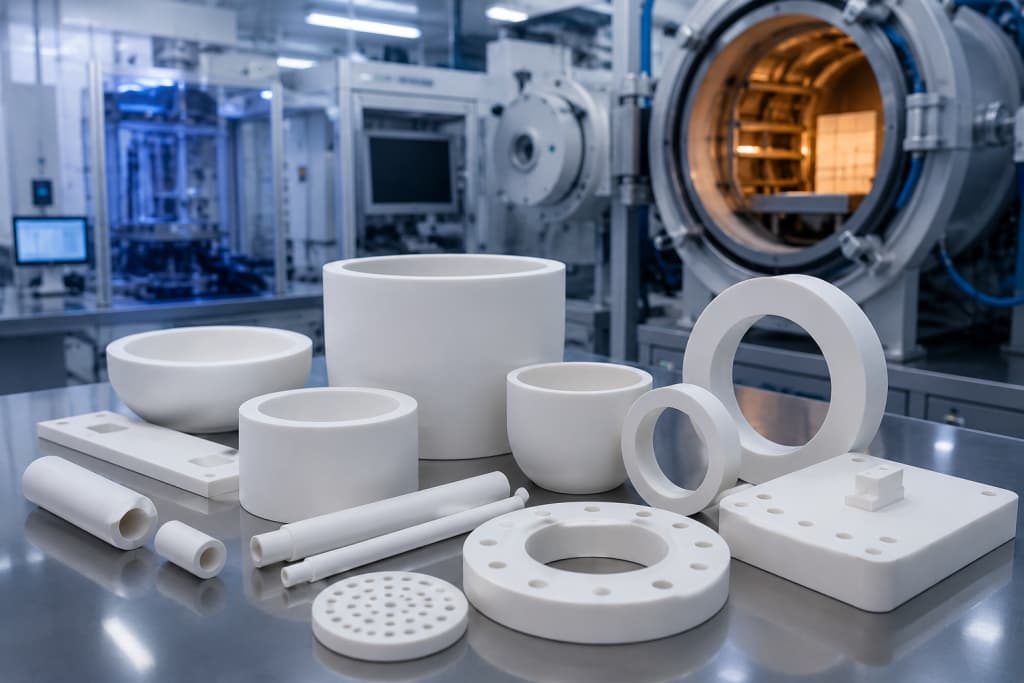
What Is Boron Nitride Ceramic?
窒化ホウ素 is an advanced non-oxide ceramic material composed of boron and nitrogen elements, with the chemical formula BN. Due to the crystal structure of hexagonal boron nitride (h-BN) having certain similarities to graphite, and the material usually being white or grayish-white, it is also commonly referred to as “white graphite”.
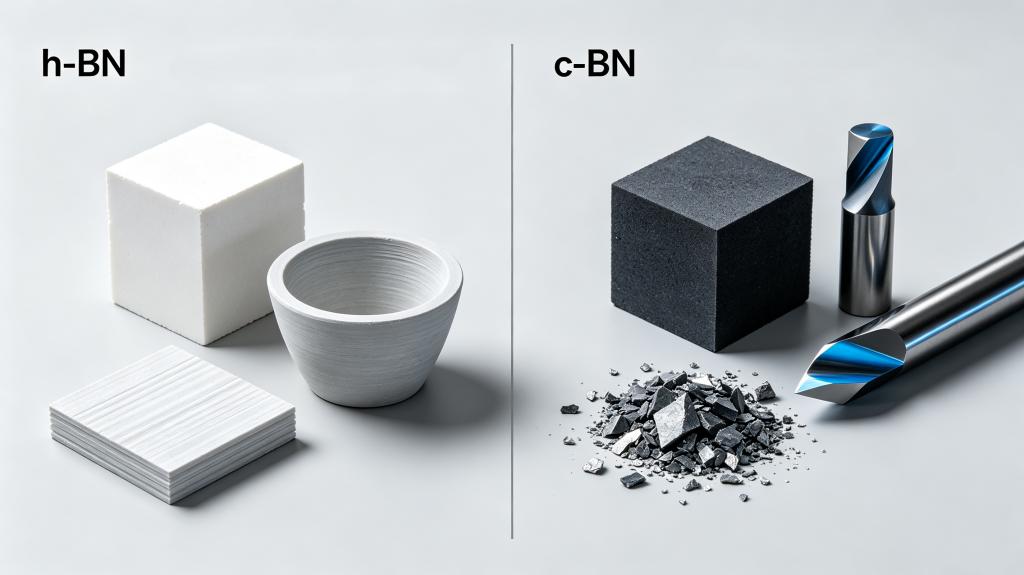
Depending on the crystal structure, BN can form various crystal forms. その中で, the most important for industrial applications are hexagonal boron nitride (h-BN) and cubic boron nitride (c-BN), as well as other forms such as wurtzite boron nitride (w-BN).
その中で, h-BN has a typical layered crystal structure. The layers are mainly combined through relatively weak forces, so interlayer slip is easily generated. This special structure is the basis for BN’s low friction, self-lubrication, and good machinability.
c-BN has a three-dimensional structure similar to diamond, with extremely high hardness and belonging to super-hard materials. したがって, it is mainly used in cutting tools, grinding tools, 耐摩耗性コンポーネント.
まとめ
- h-BN places greater emphasis on high-temperature stability, 熱伝導率, 電気絶縁, self-lubrication and machinability.
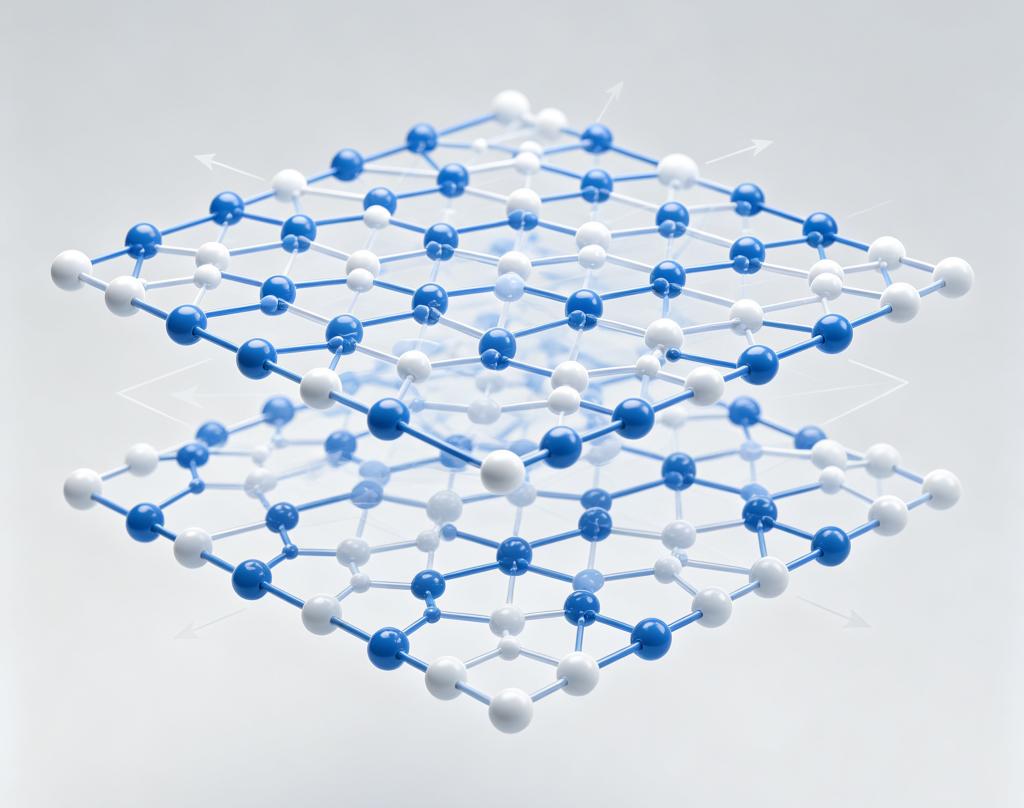
- c-BN, on the other hand, emphasizes extremely high hardness, wear resistance and cutting performance.
したがって, when discussing the special properties and industrial applications of “BN ceramics”, it is usually necessary to first clarify which specific crystal form is being used.
The Unique Properties of Boron Nitride Ceramics
The most prominent feature of boron nitride is its ability to simultaneously meet several seemingly contradictory performance requirements:
1. Excellent high-temperature resistance and thermal stability
The theoretical melting point can reach approximately 3000°C. It can withstand a usage temperature of nearly 3000°C in an inert atmosphere and can operate stably at approximately 900–1000°C in an oxidizing atmosphere. 同時に, it has excellent thermal shock resistance, and it does not crack even in an environment of rapid cooling and heating at 1500°C.
2. Coexistence of high thermal conductivity and high insulation performance
The thermal conductivity of hot-pressed boron nitride ceramics can reach 33 W/m・K, and the thermal conductivity of high-purity hexagonal boron nitride can even reach 56.94 W/m・K, approaching the levels of metals such as aluminum and copper. 同時に, it is an excellent electrical insulator, with a dielectric strength of approximately 4.5 times that of aluminum oxide, and it can maintain stable insulation performance even at high temperatures. これ “高い熱伝導率 + high insulation” combination is particularly valuable in the heat dissipation of electronic devices.
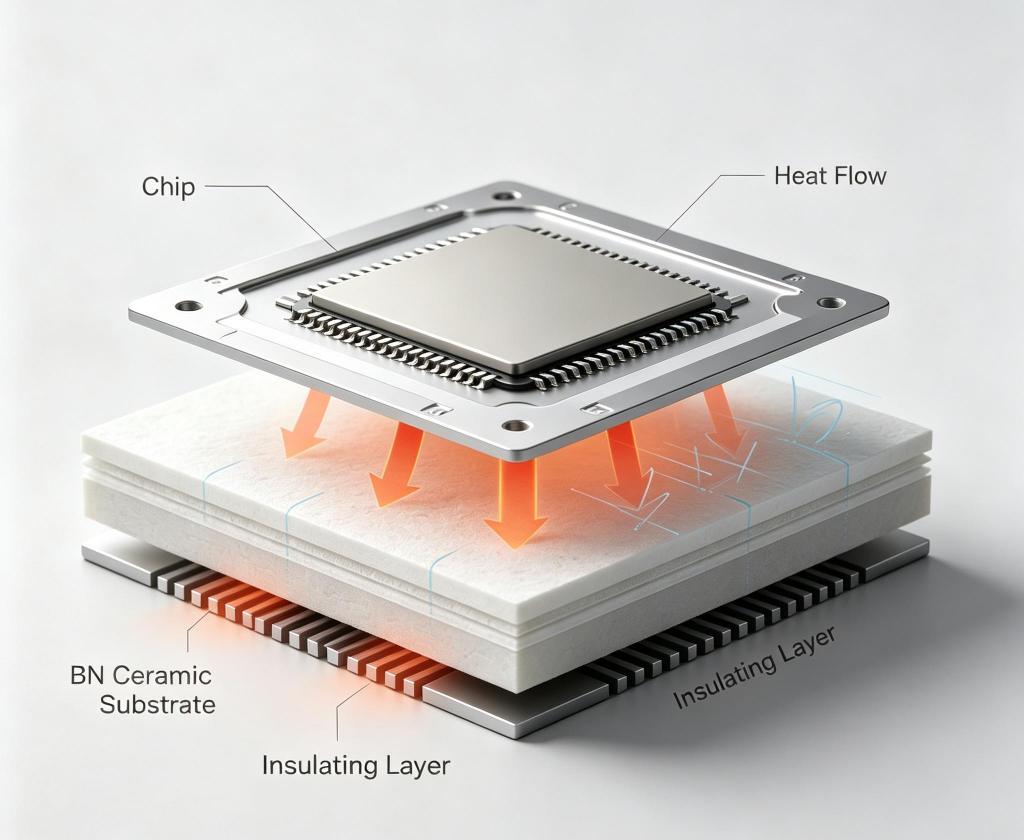
3. Low thermal expansion and dimensional stability
The thermal expansion coefficient is approximately 4.5×10⁻⁶/K, second only to quartz glass. It can still maintain good dimensional stability under extreme temperature fluctuations and is suitable for precision and high thermal shock scenarios.
4. Excellent chemical inertness and corrosion resistance
It is chemically inert to most molten metals, glass, and slag, and does not react significantly with acids, 基地, and molten salts. It is particularly suitable for use in corrosive environments.
5. Self-lubrication and easy machinability
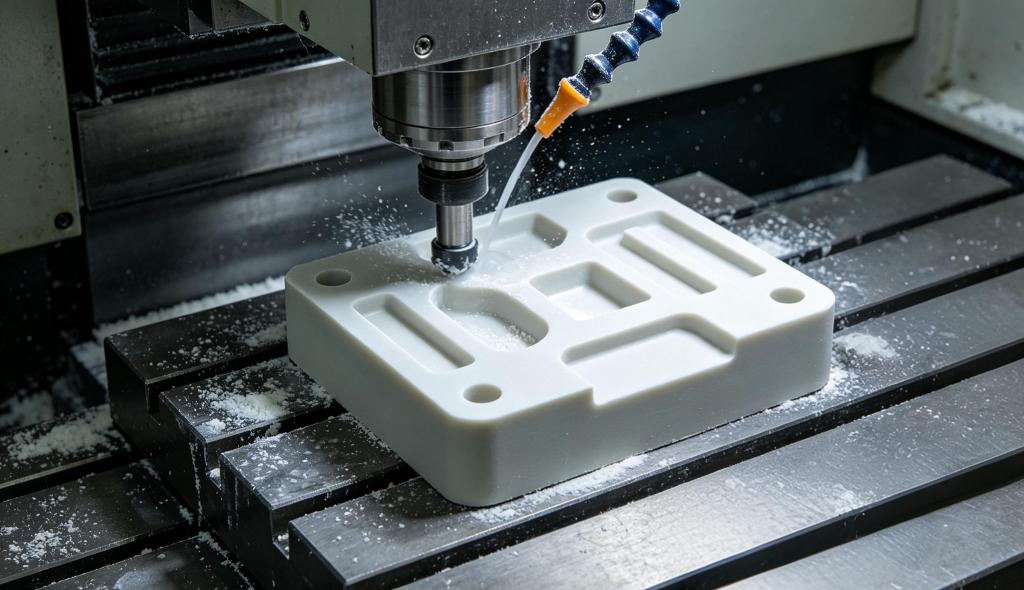
The layered structure gives it a low friction coefficient similar to graphite and self-lubricating properties. Its Mohs hardness is only 2, different from most hard and brittle ceramics, and it can be directly machined with ordinary high-speed steel tools, capable of manufacturing complex-shaped parts.
As the industry has summarized: “The unique feature of boron nitride is that it possesses a layered crystal structure similar to that of graphite. This structure endows it with low friction properties, self-lubrication capabilities, 優れた熱安定性, and outstanding electrical insulation properties. したがって, in practical engineering applications, boron nitride is not used to compete in ‘who is harder’, but rather to address some problems that traditional ceramics cannot fully handle.”
h-BN vs. c-BN: What Is the Difference?
Although both h-BN and c-BN belong to boron nitride, their crystal structures are different, which leads to significant differences in performance and application directions.
| 財産 | 六角BN (h-BN) | 立方晶BN (c-BN) |
| 結晶構造 | Layered | Cubic |
| 硬度 | Relatively low | Extremely high |
| Main Characteristics | 熱伝導率, 絶縁, self-lubrication, 高温耐性 | Superhardness, 耐摩耗性, cutting performance |
| Typical Color | 白 / grayish-white | 黒 / amber |
| Primary Applications | Crucibles, heat dissipation, 絶縁, lubrication | 切削工具, abrasives, ドリル |
| Machining | Relatively easy | Mainly used in superhard material applications |
Special Applications of Boron Nitride Ceramics
半導体とエレクトロニクス
Modern electronic devices have increasingly higher demands for heat dissipation, while some components must also maintain excellent electrical insulation properties. BN can utilize its own thermal conductivity and insulation characteristics to provide material solutions for such devices.
Typical applications include:
- Semiconductor packaging components
- Heat dissipation components for high-power electronic devices
- High-voltage insulators
- Microwave dielectric windows
- High-frequency equipment components
- Semiconductor processing equipment components
Especially in high-temperature environments for electronic and semiconductor manufacturing, the high-temperature stability and chemical inertness of BN further enhance its application value.
High-Temperature Crucibles and Furnace Components
During the processes of semiconductor manufacturing, metallurgy and material processing, the crucible needs to come into prolonged contact with high-temperature materials. したがって, it must simultaneously meet the following requirements:
- High temperature stability
- Resistant to thermal shock
- 化学的不活性性
- 寸法安定性
- Not prone to react with processing materials
BN can well meet these requirements and is often used in high-temperature crucibles, evaporation vessels, furnace linings and other high-temperature containers. For some industrial processes with strict requirements for pollution control, high-purity BN materials are particularly valuable.
Metallurgy and Metal Processing
Used for manufacturing crucibles, high-temperature containers, side sealing plates for continuous casting, non-crystalline ribbon nozzles and other components for melting and smelting semiconductors. By leveraging its non-wetting property and erosion resistance towards metals, it ensures the stability of the smelting process. Cubic boron nitride is a high-quality super-hard material for high-speed cutting tools and geological drill bits, with better thermal stability than diamond.
Aerospace and High-Temperature Components
Aerospace application materials not only need to withstand extreme temperatures, but also must possess good thermal stability, dimensional stability, and specific electrical or thermal properties.
BN can be applied to some high-temperature aerospace components, such as:
- High-temperature components related to engines
- Thermal protection components for spacecraft
- Components related to Hall electric propulsion
- High-temperature antennas and related components
These applications demonstrate one of the core values of BN: it can provide thermal stability, 電気絶縁, or specific electromagnetic properties simultaneously in high-temperature environments, rather than relying solely on mechanical strength.
Chemical and Industrial Equipment
The chemical inertness and low friction properties of BN also make it suitable for use in chemical and industrial equipment. 例えば, in components such as pumps, バルブ, and anti-corrosion linings, the material needs to be exposed to chemical media, and there may also be issues such as friction, temperature changes, and long-term operation.
BN can utilize its chemical stability, self-lubrication, 高温耐性, and electrical insulation properties to meet the material requirements of some special industrial equipment.
Pyrolytic Boron Nitride (PBN)
In addition to conventional BN ceramics, pyrolytic boron nitride (PBN) is also a material worthy of attention in semiconductor manufacturing. PBN possesses high purity characteristics and can be used in environments where the purity and high-temperature stability of the materials are highly demanded.
Typical applications include:
- Semiconductor heaters
- Semiconductor crucibles
- High-temperature processing components
したがって, if the application environment has high requirements for purity, temperature and material contamination control, it is necessary to further evaluate PBN and other high-purity BN materials based on the specific process.
Why Is Boron Nitride Difficult to Replace in Some Applications?
From the perspective of materials engineering, what makes BN truly unique is not that it has “the highest performance in one aspect”, but that it resolves the contradictions among multiple performances.
熱伝導率 + 電気絶縁
For electronic and semiconductor devices, BN can help solve the problem of “requiring heat dissipation but not being conductive”.
高温 + 化学的不活性性
For processing environments involving molten metals, glass and high-temperature semiconductors, BN can withstand high temperatures while maintaining good chemical stability.
Self-Lubrication + 被削性
For high-temperature sliding, demolding and complex structure parts, BN can offer low friction performance, and is easier to process than many hard ceramics.
したがって, the value of BN ceramics cannot simply be compared with other materials by asking “who is harder” または “who has the highest temperature resistance”. A more accurate understanding is that BN is suitable for engineering scenarios that require addressing multiple issues such as high temperature, heat dissipation, 絶縁, chemical stability, 摩擦, and processing simultaneously.
How to Choose the Right Boron Nitride Ceramic?
初め, it is necessary to determine the working temperature and the environmental atmosphere. The performance of BN in different environments such as air, vacuum, and inert atmosphere varies, so it is necessary to select the appropriate material grade based on the actual working conditions. Secondly, the main function of the material needs to be determined.
If the main requirements are:
- High-temperature insulation → h-BN can be given priority consideration
- High-temperature heat dissipation → high-purity h-BN can be considered
- Solid lubrication → h-BN is usually more suitable
- High-temperature crucible → the purity, temperature and chemical environment need to be comprehensively considered
- Semiconductor processing → the material purity and special materials such as PBN need to be given priority consideration
- Ultra-hard cutting → c-BN should be considered
加えて, you need to consider:
- 熱伝導率
- 電気絶縁
- Thermal expansion
- 耐薬品性
- Operating atmosphere
- 材料の純度
- Component dimensions
- Machining tolerance
- Surface requirements
For custom BN ceramic parts, the selection of materials, 成形, sintering and precision processing usually need to be evaluated as a whole.
結論
Boron nitride ceramics, with their unique layered structure, have achieved the integration of high thermal conductivity and electrical insulation, high temperature resistance and easy processing, chemical inertness and self-lubrication, among other properties. This solves the engineering challenges that traditional ceramic materials cannot meet simultaneously. Whether it is electronic heat dissipation, aerospace thermal protection, or metallurgical high-temperature containers and ultra-hard cutting tools, boron nitride demonstrates irreplaceable value.
