 吉峰陶磁器
吉峰陶磁器

Ceramic parts are all over contemporary industry from electronic insulators to medical implants to mechanical components that wear extremely well. しかし, two components made of the same ceramic powder may perform totally differently, based on a single process: 焼結. This process is driven by heat and transforms loose clay into a strong, functional solid. The decisions made during the process (temperature, time, atmospheric pressure, cooling rate) will be directly in the component’s quality, accuracy, and dependability.
What Is Ceramic Sintering?
The Basic Definition and Process
焼結, also referred to as sintered ceramic “green bodies”, involves heating them at temperatures lower than their melting points until individual powder particles fuse and bond together, using heat energy instead for diffusion across particle boundaries, eventually eliminating gaps and producing a solid mass structure.
Key Stages of Sintering
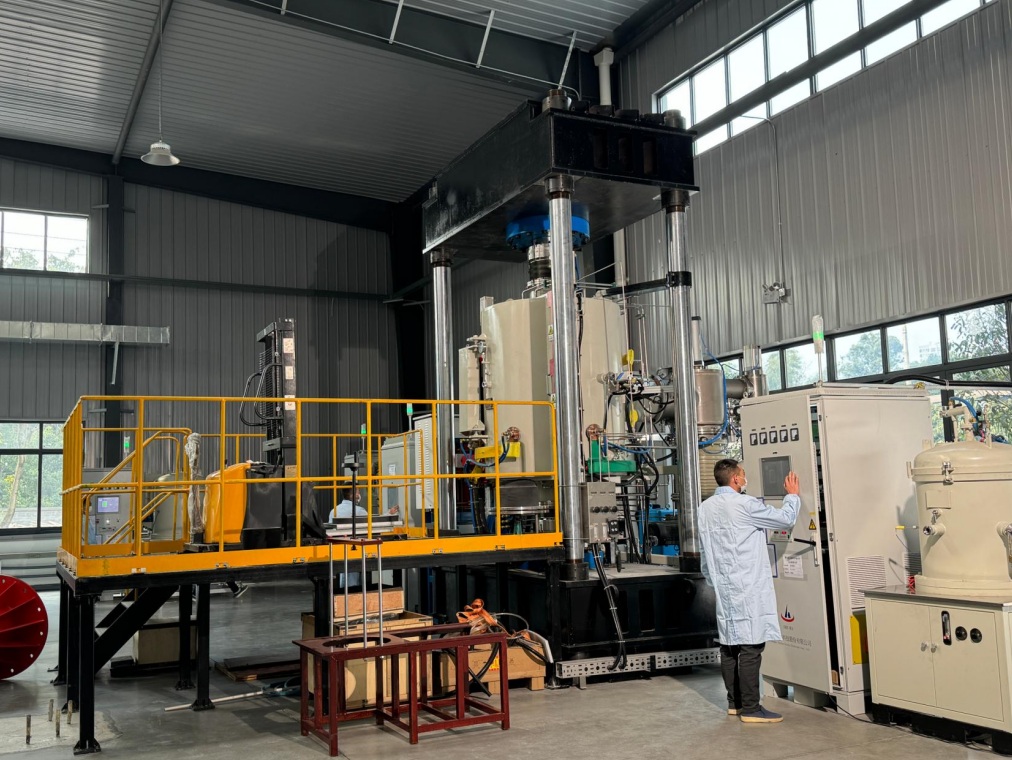
The process generally takes place in three phases: the initial bonding of particles (neck creation between grain) followed by the middle phase of densification (pore expansion and elimination), and the final stage of grain growth. Each stage has a specific time frame in which the right conditions can result in a dense, fine-grained microstructure. しかし, the wrong conditions leave flaws behind.
Why Sintering Is a Critical Step in Ceramic Manufacturing
From Green Body to Functional Part
Before sintering, ceramic green bodies are delicate and porous – closer to compacted chalk than an end product. Sintering is what transforms that fragile shape into something with real mechanical, thermal and electrical performance; failing this step could result in disastrous consequences; no amount of downstream machining or coating can make up for it.
The Link Between Sintering and Final Performance
Because sintering directly controls density and grain structure, it effectively sets the ceiling on everything a ceramic part can do afterward — how much load it can bear, how it dissipates heat, and how consistently it performs across a production batch.
How Sintering Parameters Affect Ceramic Part Performance
Sintering Temperature and Density
Temperature is the primary significant variable. Alumina-based ceramics have been studied and found that the relative density increased steadily as the temperature of sintering increased and reached a peak of 99.8 % at 1175 ℃ before microstructural changes started to impact increasing density when temperatures were higher. If the temperature is too low, particles don’t completely bond, resulting in residual porosity. If the concentration is too high, the material could be at risk of abnormal growth of the grain, or even melting in a localized area.
Sintering Time and Grain Growth
Holding a part at peak temperature longer generally increases grain size, and grain size has a direct trade-off with mechanical properties. Studies on dielectric ceramics confirmed that grain size increases progressively with both higher sintering temperature and longer holding time, with temperature having the stronger effect of the two. Coarser grains can trap pores inside themselves rather than allowing them to escape, which quietly undermines density even as the part “looks” more sintered.
Heating and Cooling Rate: Microcracks and Residual Stress
Rapid, uneven heating or cooling creates thermal gradients across a part. In dense ceramics, those gradients generate internal stress that shows up later as microcracking, warping, or reduced fracture toughness — defects that are often invisible until the part fails in service.
Atmosphere Control and Material Purity
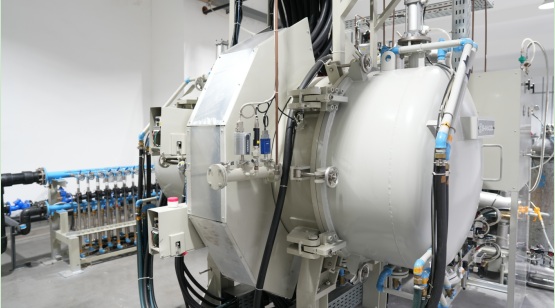
The sintering environment — whether it is reducing, oxidizing or vacuum determines how the ceramic interacts chemically with its surroundings while it is firing. A bad atmosphere could cause contamination, oxidation or unintentional phases, reducing the purity of the ceramic and, along with it electrical or chemical resistance.
Shrinkage Rate and Dimensional Accuracy
As pores close and particles pull together, the part shrinks — often by 10-20% depending on the material and initial powder packing. Since shrinkage can’t be exactly uniform, dimensional precision depends on precisely precise, reliable sintering profile, particularly for parts that are measured in microns.
Common Performance Issues Caused by Improper Sintering
Porosity and Reduced Mechanical Strength
Incomplete densification causes pores to scatter throughout the microstructure. They act as stress concentrators that reduce the strength of the flexural structure, increasing the likelihood to cracking under stress.
Warping and Dimensional Deviation
Uneven shrinkage, inconsistent heating or poor support during firing could cause a piece to shrink beyond tolerance, resulting in costly rework, or even rejection.
Uneven Grain Structure and Brittleness
Unusual or inconsistent growth of grains results in weak points at the grain boundary. Instead of a uniform fine-grained, smooth structure, the part is left with an array of large and tiny grains that break irregularly.
How to Optimize Sintering for Better Ceramic Performance
Precise Temperature Profiling
Rather than a single target temperature, well-optimized sintering uses a full profile — ramp rate, dwell time, and controlled cooling — tailored to the specific ceramic composition and part geometry.
Material-Specific Sintering Curves
Different ceramic materials can densify at a variety of temperatures and rates. アルミナ, zirconia and silicon nitride for instance, all require different sintering curves. Using an identical profile across all materials is a frequent source of uneven quality.
Quality Control and Testing After Sintering
The measurement of density, the dimensional examination, and microstructural analysis following Sintering determine whether the batch is up to standard before it is moved down the line, catching any flaws that aren’t yet rectifiable.
よくある質問
What temperature is used for ceramic sintering?
It varies widely by material, typically ranging from around 1000°C for some technical ceramics to well over 1700°C for ultra-high-temperature ceramics, with density and grain size shifting significantly across that range.
Does sintering always cause shrinkage?
はい. When particles bond and pores are closed, the part contracts from its green-body size. This is why dimensional planning has to consider shrinkage prior to.
What is the effect of sintering on the durability of ceramics?
More dense and finer and more uniform grain structure are generally associated with greater hardness. しかし, porosity and uneven or coarse grains can reduce it.
Partner with Experts for Reliable Ceramic Sintering
Sintering doesn’t have a single switch to flick It’s actually a series of interlocking elements that determine whether a component is able to reach its full potential or fails to meet the specifications. Temperature, time, atmospheric and cooling rates all leave marks on grain structure, density and dimensional precision. For manufacturers, that means consistent, high-performance ceramic parts depend on tightly controlled, material-specific sintering expertise — not guesswork. If you’re sourcing ceramic components where performance and precision matter, working with a manufacturer that understands these variables in depth makes the difference between a part that works and one that simply looks finished.
