 吉峰陶磁器
吉峰陶磁器

航空宇宙などの業界向け, 原子力エネルギー, 材料が極限の環境試験に耐えなければならないエネルギー化学, 1400℃を超える極端な温度を含む, 重度の腐食性物質, 中性子線, 極度の熱衝撃, そして激しい摩耗, 金属は通常クリープ現象を起こします, 酸化, またはそのような状況での腐食故障. Conventional ceramic materials find it hard to optimize their properties. SiC ceramics, with their excellent overall properties, have become the “material of stars” in the extreme environment.
炭化ケイ素 (SiC) is a covalent compound composed of silicon and carbon, with various crystal forms such as α-SiC and β-SiC. SiC ceramics and SiC/SiC composites prepared through advanced processes such as reaction sintering, chemical vapor deposition (CVI), and nano-implant transient eutectic (NITE) exhibit outstanding performance in high-temperature strength, 耐食性, and radiation resistance. This article will systematically review the core advantages, application cases, and development prospects of SiC ceramics in extreme environments, providing references for research and engineering applications in related fields.
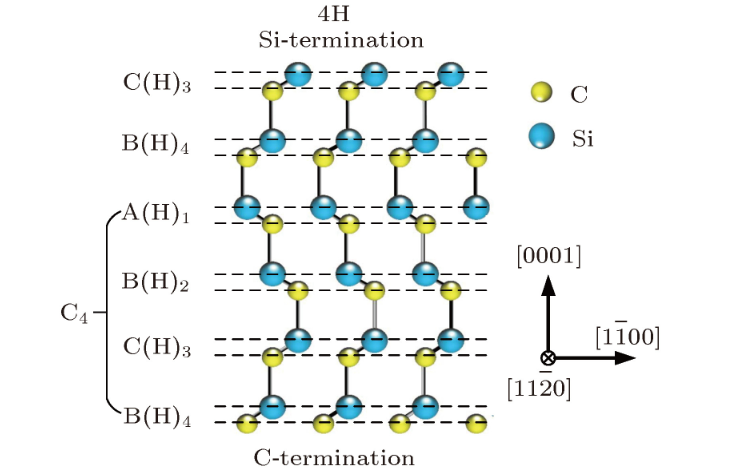
Fundamental Properties of SiC Ceramics
The superior performance of SiC ceramics stems from its unique microstructure and bonding properties:
- Physical properties: 非常に高い硬度 (ダイヤモンドに次ぐ), 低密度 (approximately 3.2 g/cm3), 高い熱伝導率 (far exceeding that of most ceramic materials), and low thermal expansion coefficient.
- Mechanical properties: High strength and high elastic modulus (380-430 GPa), 優れた耐熱衝撃性 (ΔT can reach 1100K).
- Thermal properties: Can operate at temperatures above 1400°C for a long time, and even maintain structural integrity at temperatures approaching 3000°C, with minimal strength degradation at high temperatures.
- Other characteristics: Good semiconductor properties, low neutron absorption cross-section, and excellent chemical stability.
These fundamental properties enable SiC ceramics to perform exceptionally well under extreme conditions, making them a key alternative to traditional materials.
SiC’s Core あdvantages in Extreme Environments
- Thermal stability and strength retention under high-temperature conditions
One of the major highlights of SiC ceramics is its excellent retention of strength at high temperatures. At 1400℃, its strength shows almost no significant deterioration, far superior to most metal alloys and oxide ceramics. This is attributed to the strong covalent bond structure of SiC, which gives it an extremely high melting point and creep resistance.
In gas turbines, aerospace engines, and rocket propulsion systems, SiC materials can withstand continuous high-temperature exposure while maintaining dimensional stability and mechanical integrity. Its high thermal conductivity can also effectively reduce thermal stress and increase the service life of components.
- Outstanding corrosion and oxidation resistance
SiC ceramics show an extremely strong sort of inertness in many corrosive surroundings, like acids, 基地 , molten salts, and even high-temperature steam. When things get really hot in an oxidative atmosphere, a compact SiO₂ protective layer forms right on the surface; it then stops additional oxidation, pretty effectively. Because of that, they get used pretty often, for example in chemical reactors, marine engineering hardware , and high-temperature kilns.
Compared to metal materials, SiC is less prone to electrochemical corrosion; compared to other ceramics, its corrosion resistance ranks among the top in precision ceramics.
- Strong radiation resistance and adaptability to nuclear environment
In the field of nuclear energy, the advantages of SiC ceramics are particularly prominent. It exhibits low radiation-induced swelling, minimal mechanical performance degradation, and low activation characteristics. Even under neutron irradiation doses as high as 10²⁶ n/m², it can maintain excellent dimensional stability and strength.
SiC composites have become an important candidate material for accident-tolerant fuel (ATF) cladding, significantly enhancing the safety of light water reactors and enabling higher fuel burnup and temperatures. Studies have shown that its performance such as thermal conductivity and bending strength degrades minimally after irradiation, far superior to traditional zirconium alloys.
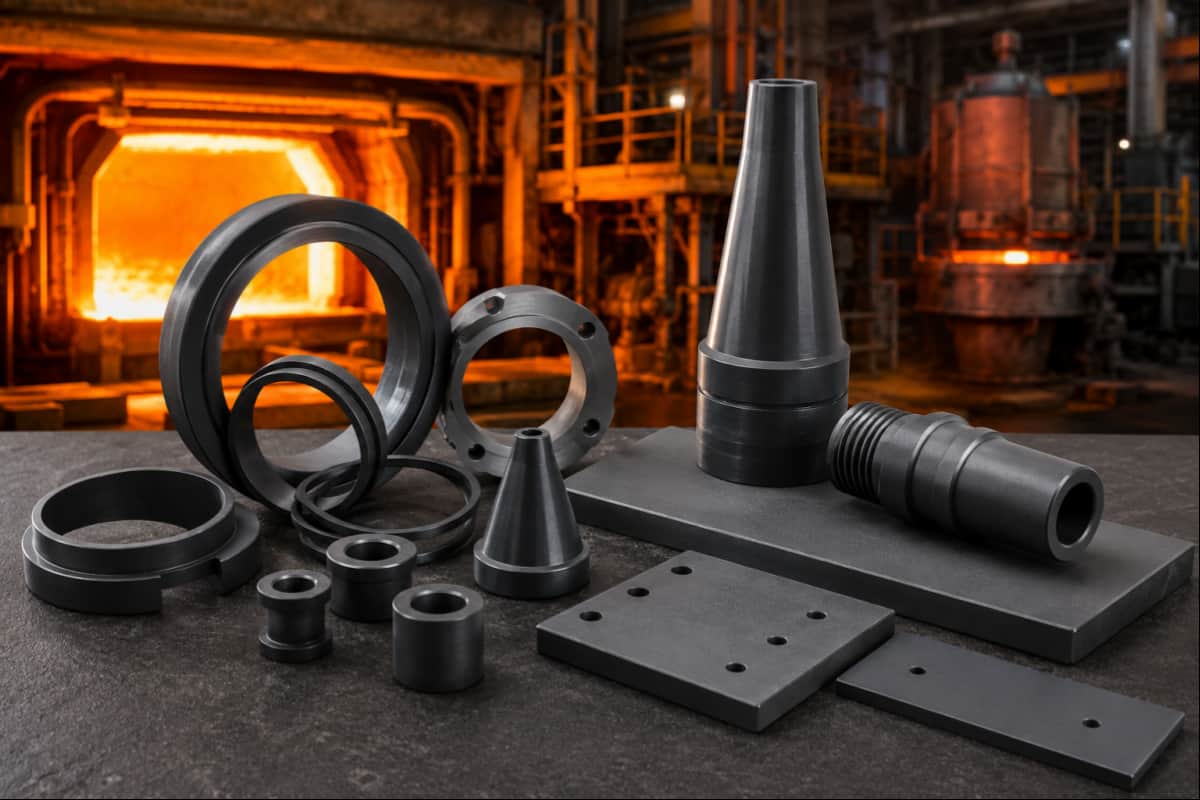
- Resistance to thermal shock, wear and mechanical reliability
SiC ceramics are kinda known for high hardness, and really excellent wear resistance, plus they have decent thermal shock resistance so they can take quick shifts in temperature without cracking too easily. Because of that, they fit well for high speed friction parts (like car brake discs) and also for harsher impact settings such as rocket nozzles or thermal protection systems.
- 軽量, high strength and comprehensive performance
The combination of low density and high specific strength enables SiC materials to achieve significant weight reduction in the aerospace field. 同時に, its low thermal expansion coefficient ensures accuracy stability under extreme temperature cycling.
Comparison of SiC Ceramics with Other Materials
| パフォーマンス | SiC Ceramics | アルミナセラミックス | ステンレス鋼 |
| 高温耐性 | ★★★★★ | ★★★★☆ | ★★★☆☆ |
| Durability | ★★★★★ | ★★★★☆ | ★★☆☆☆ |
| Heat Conductivity | ★★★★★ | ★★☆☆☆ | ★★★☆☆ |
| 耐食性 | ★★★★★ | ★★★★☆ | ★★★☆☆ |
| Resistance to Thermal Shock | ★★★★★ | ★★★☆☆ | ★★☆☆☆ |
| 耐用年数 | ★★★★★ | ★★★★☆ | ★★★☆ |
全体, the comprehensive performance of SiC ceramics is more outstanding in extreme environments such as high temperatures, high wear, and strong corrosion.
どれの 私ndustries あre Best Suited to Use SiC Cセラミックス?
As industrial equipment evolves towards higher efficiency, higher precision, and longer lifespan, the application scope of SiC ceramics continues to expand.
The main industries include:
- Semiconductor manufacturing: High cleanliness equipment such as wafer carriers, 炉管, heating components, 等.
- Chemical industry: Corrosion-resistant pumps, メカニカルシール, valves and reaction equipment.
- Metallurgical industry: Kiln rods and rollers, high-temperature supporting components and heat treatment equipment.
- New energy field: Heat exchangers, battery manufacturing equipment and high-temperature components.
- 航空宇宙: High-temperature structural components, wear-resistant components and key parts under special environments.
These industries generally require that the materials be able to operate stably for a long time in harsh environments, and SiC ceramics precisely meet this requirement.
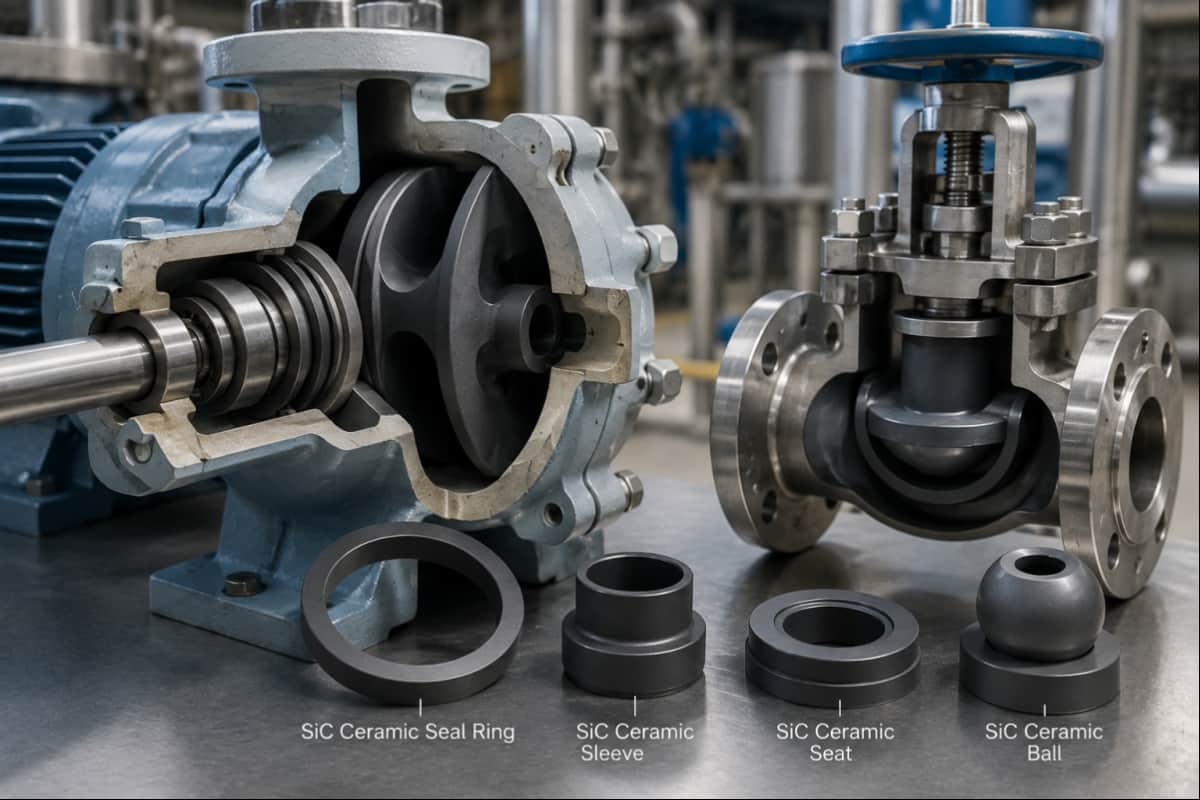
何 Should be Noted When Using SiC Cセラミックス?
Although SiC ceramics have excellent properties, the following factors still need to be taken into consideration during design and selection:
Initial cost is high: Compared to ordinary materials, the purchase price is higher, but the long-term usage cost is usually lower.
Processing is difficult: Due to its extremely high hardness, it usually requires the use of diamond tools for precise processing.
It still has the brittleness of ceramics: Although the strength is high, its impact resistance is still inferior to that of metals. したがって, during design, it should be avoided from being subjected to severe impact loads.
By selecting the appropriate SiC grade, manufacturing process and dimensional accuracy based on the actual working conditions, the material’s advantages can be fully exploited.
結論
炭化ケイ素 (SiC) セラミックス, due to their comprehensive advantages such as high temperature resistance, 耐食性, radiation resistance, および耐熱衝撃性, are becoming a key material for supporting extreme environment engineering. With the advancement of materials science and manufacturing technology, SiC will play a greater role in aerospace, nuclear energy clean utilization, deep space exploration, and green energy fields.
