 JiFeng-Keramik

Die Auswahl des falschen Keramikmaterials sieht in den Daten normalerweise nicht wie ein kleiner Fehler aus. Es entsteht ein rissiger Teil, ein Siegel, das nicht hält, oder eine Komponente wird Monate früher als geplant außer Betrieb genommen. Aluminiumoxid und Zirkonoxid sind im Grunde die beiden Keramiken, die Sie in technischen Katalogen am häufigsten sehen, aber sie verhalten sich anders, wenn sie geschoben werden – durch Last, durch Hitze, und durch Abnutzung. Wenn Sie eine klare Sicht für die Beschaffung wünschen, Es ist hilfreich, sie anhand der drei Punkte zu vergleichen, die für die meisten Entscheidungen ausschlaggebend sind, nämlich Rohkosten, mechanische Leistung und die tatsächliche Lebensdauer im realen Betrieb.
Aluminiumoxid vs. Zirkonoxid auf einen Blick
| Eigentum | Aluminiumoxid (Al₂O₃) | Zirkonoxid (Y-TZP) |
| Härte (Mohs) | ~9 | ~8–8,5 |
| Bruchzähigkeit | ~3–4 MPa·√m | ~5–10 MPa·√m |
| Biegefestigkeit | ~300–400 MPa | ~900–1.400 MPa |
| Wärmeleitfähigkeit | ~30 W/m·K | ~2–3 W/m·K |
| Relative Rohstoffkosten | Untere | 3–5x höher |
| Der bekannteste Handelsname | “Technische Keramik” Arbeitstier | “Keramikstahl” |
Die Zahlen lassen bereits das Muster erkennen: Aluminiumoxid ist hinsichtlich der Wärmeleitfähigkeit erfolgreicher, Härte und Preis; Zirkonoxid ist der Gewinner in Sachen Biegefestigkeit und Zähigkeit. Im Rest dieses Artikels werden die Gründe erläutert — und wie wichtig jeder Vorteil tatsächlich ist.
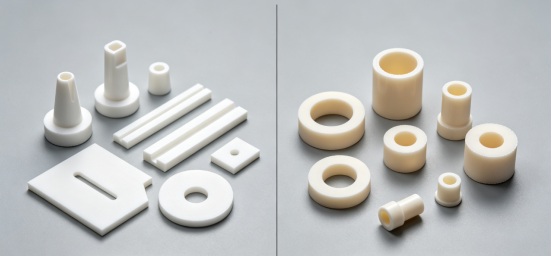
Was sind Aluminiumoxid- und Zirkonoxidkeramiken??
Aluminiumoxid ist eine Form von Aluminiumoxid(Al₂O₃) ist eine der fortschrittlichsten und am weitesten verbreiteten technischen Keramiken, die für ihre Mischung aus elektrischer Isolierung geschätzt wird, Härte und Kosteneffizienz. Dies ist die beliebteste Option für Allzweck-Verschleißkomponenten oder -Substrate, sowie Isolatoren.
Zirkonoxid kann als Zirkoniumoxid bezeichnet werden (ZrO₂) das fast immer in seiner Yttriumoxid-stabilisierten tetragonalen Form verwendet wird (Y-TZP). Durch die Stabilisierung von Zirkonoxid mit Yttriumoxid entsteht die Kristallstruktur, Dies verleiht Zirkonoxid die Fähigkeit, der Ausbreitung von Rissen zu widerstehen, weshalb es auch seinen gebräuchlichen Namen trägt, “Keramikstahl.” Im Fall von Aluminiumoxid, Das ist eine allgemeine Wahl, Zirkonoxid ist die Wahl für Teile, die Stößen oder Spannungskonzentrationen ausgesetzt sind, oder wiederholtes Dehnen.
Leistungsvergleich: Härte, Zähigkeit, und thermisches Verhalten
Härte und Verschleißfestigkeit
Aluminiumoxid liegt am höchsten Punkt der Mohs-Skala, das knapp unter Siliziumkarbid und Diamant und Siliziumkarbid liegt, Aus diesem Grund ist es die beliebteste Wahl für Anwendungen mit kontinuierlichem Gleitverschleiß, wie z. B. Führungen, Buchsen und Umgang mit abrasiven Medien. Zirkonia ist etwas weicher, Allerdings ist es äußerst verschleißfest, Deshalb ist der tatsächliche Unterschied nur in den anspruchsvollsten Bereichen relevant.
Bruchzähigkeit und Schlagfestigkeit
Dies ist der Punkt, an dem die beiden Materialien am deutlichsten voneinander abweichen. Aluminiumoxid weist typischerweise eine Risszähigkeit von etwa 3–4 MPa·√m auf. Jedoch, Mit Yttriumoxid stabilisiertes Zirkonoxid kann etwa 5–10 MPa·√m erreichen – in bestimmten Formulierungen, mehr als zweimal. Der Unterschied ist auf die Transformationsverstärkung zurückzuführen. Wenn sich im Zirkonoxid Risse bilden, Die Belastung führt zu einer lokalen Phasenänderung innerhalb der umgebenden Körner, das sich ein wenig ausdehnt und dann den Riss effektiv abdichtet, bevor er sich ausbreiten kann. Aluminiumoxid ist nicht mit einem Selbstheilungsmechanismus ausgestattet. Aus diesem Grund funktioniert es am besten unter kontinuierlichen Druckkräften, ist jedoch anfälliger für Brüche bei plötzlichen Stößen und Kantendruck.
Thermische und elektrische Eigenschaften
Wärmeleitfähigkeit von Aluminiumoxid, um 30 W/m·K, geht es darum 10 Mal mehr als Zirkonoxid. Dies macht es zur besten Wahl für Komponenten, die Wärme ableiten, sowie für elektronische Substrate. Es ist auch ein großartiger elektrischer Isolator. Es wird häufig in isolierten Durchführungen und Unterlegscheiben verwendet. Die geringe Wärmeleitfähigkeit von Zirkonoxid ist jedoch ideal für Anwendungen, die Wärmebarrieren erfordern, In Kombination mit seiner größeren Temperaturausdehnung ist Zirkonoxid anfälliger für Stöße als Aluminiumoxid. Dies ist ein Aspekt, der Kunden, die das denken, häufig verärgert “härter” automatisch bedeutet “besser bei Hitze.”
Kostenvergleich: Warum Zirkonoxid mehr kostet als Aluminiumoxid
Rohstoffkosten
Aluminiumoxid wird aus Bauxit hergestellt, ein reichlich vorhandener und kostengünstiger Rohstoff. Zirkonoxid benötigt Yttriumoxid als Stabilisator, und Yttrium ist ein Seltenerdelement, dessen Vertriebskette begrenzter und preisempfindlicher ist. Dies allein ist der Grund für einen erheblichen Teil des Preisunterschieds zwischen den beiden Stoffen.
Bearbeitungs- und Verarbeitungskosten
Als größter Kostenfaktor, der jedoch oft nicht berücksichtigt wird, ist die Dichte von Zirkonoxid höher als die von Aluminiumoxid und dichtere Keramiken sind schwieriger zu schleifen, läppen und polieren, bis die endgültige Toleranz erreicht ist. Einige Unternehmen berichten, dass das Schleifen von Zirkonoxidstücken um ein Vielfaches länger dauert als bei vergleichbaren Aluminiumoxidkomponenten, was sich direkt in höheren Bearbeitungskosten und Verschleiß an der Ausrüstung niederschlägt. Bei Präzisionsteilen mit engen Toleranzen trägt in der Regel die Verarbeitungszeit und nicht die Kosten für das Rohpulver am meisten zu den Kosten des Endprodukts bei.
Die Gesamtbetriebskosten-Perspektive
Ein höherer Stückpreis bedeutet nicht automatisch höhere Betriebskosten pro Jahr. Wenn die Zähigkeit von Zirkonoxid verhindert, dass ein Teil in einer spannungsreichen Anwendung vorzeitig ausfällt, Die Gesamtbetriebskosten können niedriger ausfallen als bei einem günstigeren Aluminiumoxidteil, das doppelt so oft ausgetauscht werden muss. Dies ist die Berechnung, die die Materialauswahl bestimmen sollte – nicht der angegebene Preis pro Teil allein.
Lebensdauer: Welches Material hält in realen Anwendungen länger?
Die Lebensdauer hängt weniger davon ab, um welches Material es sich handelt “besser” und mehr darüber, welches dem vorherrschenden Fehlermodus des Teils entspricht.
Verschleißdominante Anwendungen
Bei Anwendungen, bei denen die Hauptgefahr ein ständiger abrasiver Kontakt ist – Buchsen, Düsen, Führungsschienen, Verschleißplatten – die überlegene Härte von Aluminiumoxid sorgt in der Regel für eine längere Lebensdauer bei geringeren Kosten pro Teil.
Auswirkungen- oder stressdominante Anwendungen
Wo das vorherrschende Risiko das Chipping ist, Kantenrisse, oder zyklische mechanische Beanspruchung – kleine Präzisionsbauteile, Ventilkomponenten, Strukturteile unter Gleitkontaktbeanspruchung, oder dünnwandige Geometrien – die Bruchzähigkeit von Zirkonoxid setzt sich normalerweise durch, Die Lebensdauer wird oft weit über das hinaus verlängert, was Aluminiumoxid im gleichen Arbeitszyklus erreichen kann.
Thermozyklische Anwendungen
Für Teile, die einer schnellen Erwärmung und Abkühlung ausgesetzt sind, Die höhere Wärmeleitfähigkeit von Aluminiumoxid sorgt im Allgemeinen für eine bessere Temperaturwechselbeständigkeit, trotz seiner geringeren Zähigkeit. Zirkonoxid kann weiterhin in thermisch zyklischen Umgebungen verwendet werden, erfordert jedoch in der Regel konservativere Gestaltungsspielräume, um Risse zu vermeiden.
Thermozyklische Anwendungen
Für Teile, die schnell erhitzt und abgekühlt werden, Die höhere Wärmeleitfähigkeit von Aluminiumoxid ist oft der Grund dafür, dass es Thermoschocks etwas besser standhält, obwohl seine Zähigkeit geringer ist. Zirkonoxid kann in thermisch zyklischen Aufbauten immer noch überleben, In den meisten Fällen sind jedoch konservativere Designspielräume erforderlich, damit es am Ende nicht reißt.
Zuw zur Auswahl: Aluminiumoxid oder Zirkonoxid per Anwendung
Elektrische Isolatoren, Substrate, und wärmeableitende Komponenten → Aluminiumoxid
Verschleißfeste Buchsen, Führer, Gegenstände zur Handhabung von Schleifmitteln → Aluminiumoxid
Kleinere Präzisionsteile unter Gleit- oder Stoßbeanspruchung (Dichtungsringe, Ventilkomponenten, Kolben) → Zirkonoxid
Dünnwandige Teile oder kantenempfindliche Formen, die zum Absplittern neigen → Zirkonoxid
Medizinische Implantate, plus tragende Strukturkeramik → Zirkonoxid
Kostensensibel, Großserien-Standardteile → Aluminiumoxid
Wenn Ihre Bewerbung nicht in eine einzige Box passt, Der sicherste Weg ist das Versenden der Zeichnung, die Arbeitstemperatur, die Beladungsbedingungen und die chemische Belastung auf einmal für einen Keramikhersteller. Anschließend können sie die Kompromisse gegen Ihr tatsächliches Ausfallrisiko abwägen, anstatt dass Sie anhand allgemeiner Regeln raten.
Anpassen des Materials an den Fehlermodus, Nicht nur der Preis
Aluminiumoxid und Zirkoniumoxid „konkurrieren“ nicht wirklich um die gleiche Aufgabe. Es handelt sich eher um unterschiedliche Antworten auf unterschiedliche technische Probleme. Aluminiumoxid bringt Härte mit sich, gutes thermisches Verhalten, und Kosteneffizienz für Umgebungen, in denen Verschleiß herrscht , und Hitze sind die Hauptgeschichte. Zirkonoxid verleiht Bauteilen Zähigkeit und Festigkeit, die durch Rissbeständigkeit und Schlagfestigkeit leben und sterben. Bei der richtigen Entscheidung geht es also nicht nur darum, „Wer gewinnt“ auf dem Datenblatt, sondern vielmehr darum, welches Material tatsächlich zu der Art und Weise passt, wie Ihr Teil im wirklichen Leben wahrscheinlich versagen wird.
Referenz
- ASTM International. (2018). Standardtestmethode zur Messung der Bruchzähigkeit von Hochleistungskeramik bei Raumtemperatur(ASTM C1421-18). https://www.astm.org/c1421-18.html
- ASTM International. (2018). Standardtestmethode für die Thermoschockbeständigkeit von Hochleistungskeramik(ASTM C1525-18). https://www.astm.org/c1525-18.html
- ASTM International. (1975/2025). Standardspezifikation für Aluminiumoxid-Keramiksubstrate in elektronischer Qualität(ASTM D2442-75R25). https://www.astm.org/d2442-75r25.html
- (n.d.). Das Strukturparadoxon: Ein technischer Leitfaden für Zirkonoxidkeramik[Weißes Papier]. https://pdf.benchchem.com/74/The_Structural_Paradox_A_Technical_Guide_to_Zirconia_Ceramics.pdf
- Ceramitec Europa. (n.d.). Leitfaden zur Auswahl technischer Keramik. https://www.ceramitec-eu.com/technical-ceramics-selection-guide/
